Italiano
 Polski

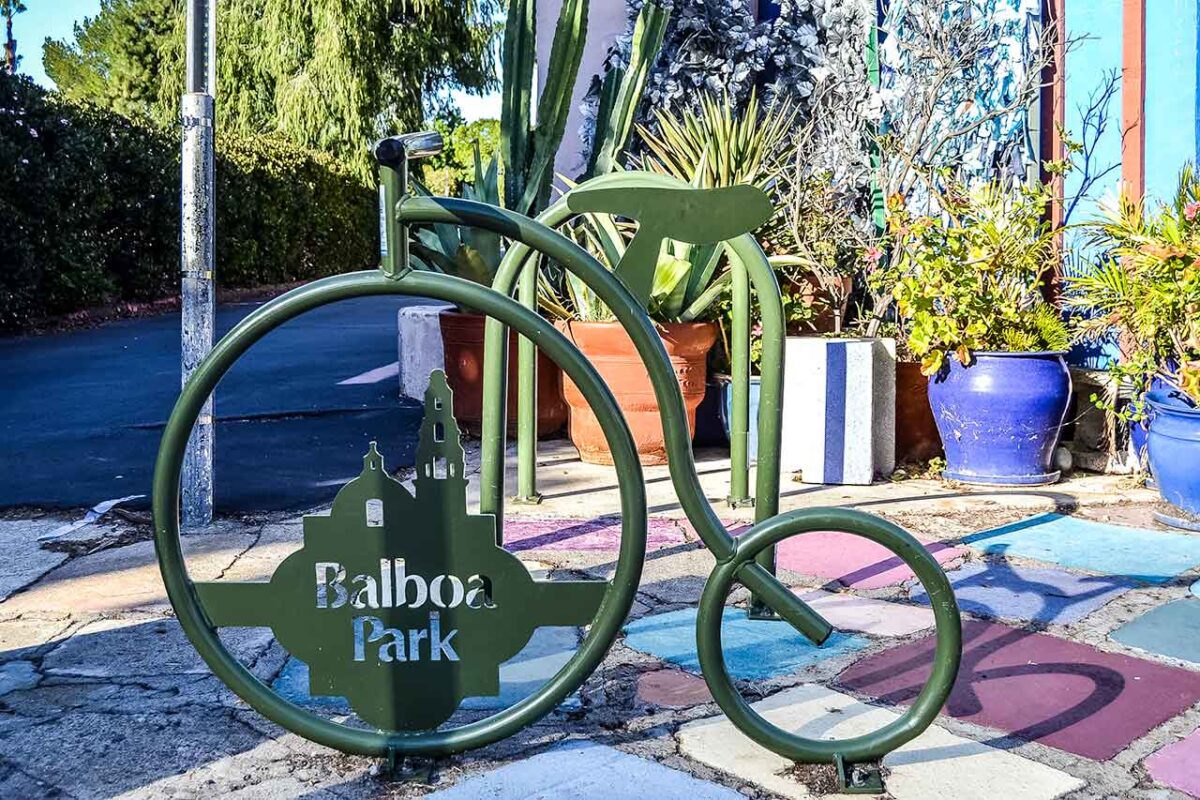
I visited Balboa Park in winter, but in California, that means something entirely different than in Europe. In San Diego, it was warm, the sun was shining, and people were walking in short sleeves. I went there during the holiday season, so the park was bustling – crowds of visitors, decorations, colors, and music created a unique atmosphere. I immediately understood why this place attracts so many people. Over 14 million tourists visit it every year, and Balboa Park has remained the green heart of San Diego for nearly 160 years. It’s the largest cultural park in the United States, where nature, culture, and entertainment interpenetrate at every step. On 1200 acres (about 485 hectares), you’ll find 17 museums, beautiful themed gardens, theaters, and one of the most famous zoos in the world.
The park’s history – from wild hills to the cultural center of San Diego
Beginnings of Balboa Park
Balboa Park didn’t always look as it does today. It all started in 1868, when the authorities of San Diego designated a vast, wild area – then still full of hills, canyons, and dense shrubs – for a future city park. Two years later, the state of California decided that this land was to remain public space ‘forever.’
For the following decades, ‘City Park‘, as it was then called, remained almost untouched. Changes only began in the early 20th century when the city started planning how to turn this green space into a center that would encourage residents and tourists to spend time there.
In 1910, the park was given a new name – Balboa Park – in honor of Vasco Núñez de Balboa, the Spanish explorer who was the first European to see the Pacific Ocean. The name aimed to add prestige to the place, as preparations were underway for something truly exceptional.
Panama – California Exposition
In 1915, the Panama – California Exposition began, a grand exhibition organized to celebrate the opening of the Panama Canal. It was then that the distinctive buildings in the Spanish Colonial Revival style were built – full of decorations, arches, and towers that remain a hallmark of the park today. The Botanical Building, the Spreckels Organ Pavilion, and the beautiful California Quadrangle were also constructed.
The second major exhibition took place in 1935-1936 – the California Pacific International Exposition. As part of this exhibition, new pavilions, theaters, and meeting spaces were established in the park, further strengthening its role as a center of cultural life in the city. And the exotic animals brought to the first exhibition in 1915 became the origins of today’s famous San Diego Zoo.
Today, walking through Balboa Park, you can still feel the atmosphere of those times – every building, bridge, or garden has its own story, and the whole area tells the tale of how a piece of wild land became the cultural heart of the entire city.
Main attractions of the park
World-class museums
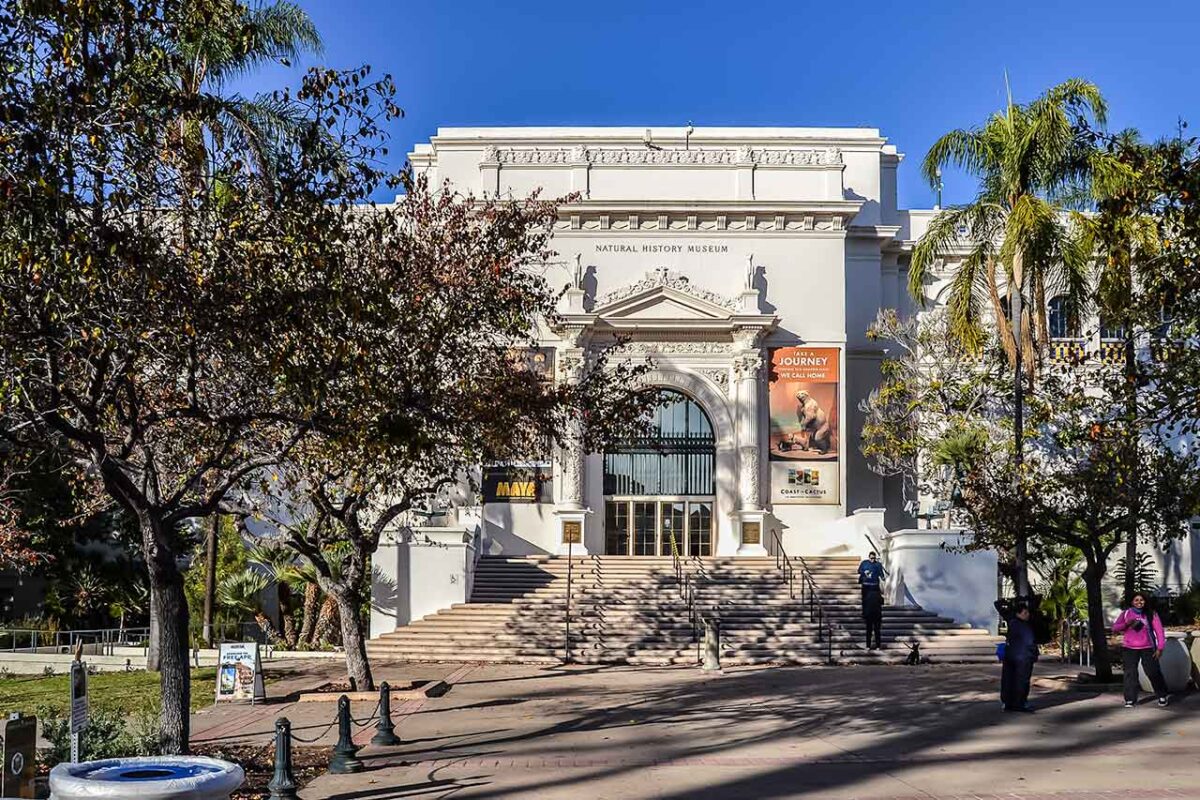
San Diego Natural History Museum
The San Diego Natural History Museum, also known as “The Nat”, is one of the icons of Balboa Park and an important point on the cultural map of Southern California. It has been operating continuously since 1874, when it was established as the San Diego Society of Natural History, making it the second-oldest institution of its kind west of the Mississippi and the oldest in the entire region. The current building at 1788 El Prado was opened in 1933, and underwent an extensive modernization in 2001. In 2025, the museum expanded with a new space – the Paleontology Center, dedicated to research and exhibitions related to the history of life on Earth.
San Diego Museum of Art
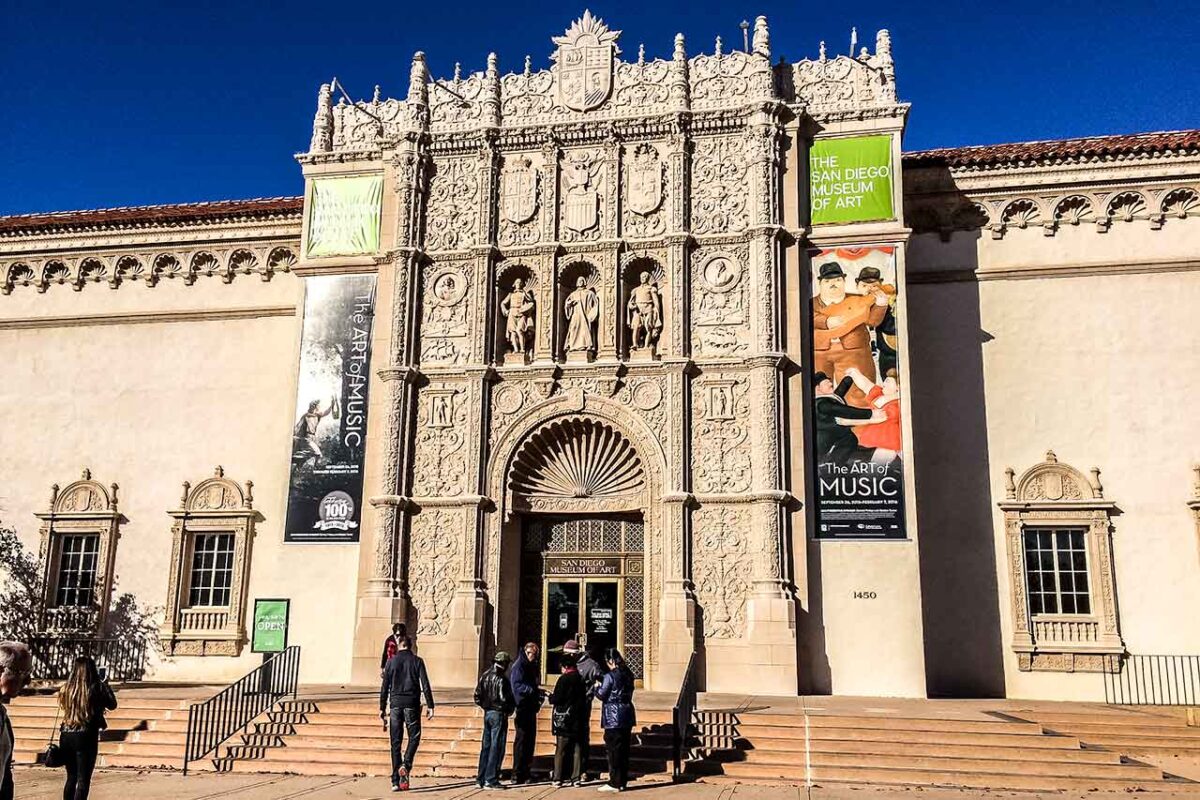
San Diego Museum of Art – San Diego Museum of Art (SDMA), the largest art museum in Balboa Park, showcasing collections from Spanish and Italian paintings to works by American artists and contemporary art. Here, you’ll find pieces by masters like El Greco, Goya, or Dalí. The building itself, opened in 1926, exemplifies the plateresque style, with a richly decorated façade inspired by Spanish Renaissance cathedrals.
Museum of Photographic Arts
Muzeum Sztuki Fotograficznej (Museum of Photographic Arts, MOPA) – one of the few museums in the United States dedicated exclusively to photography. It presents both classic works of master photographers and the latest trends in visual arts, including digital photography, multimedia, and installations.
San Diego Air and Space Museum
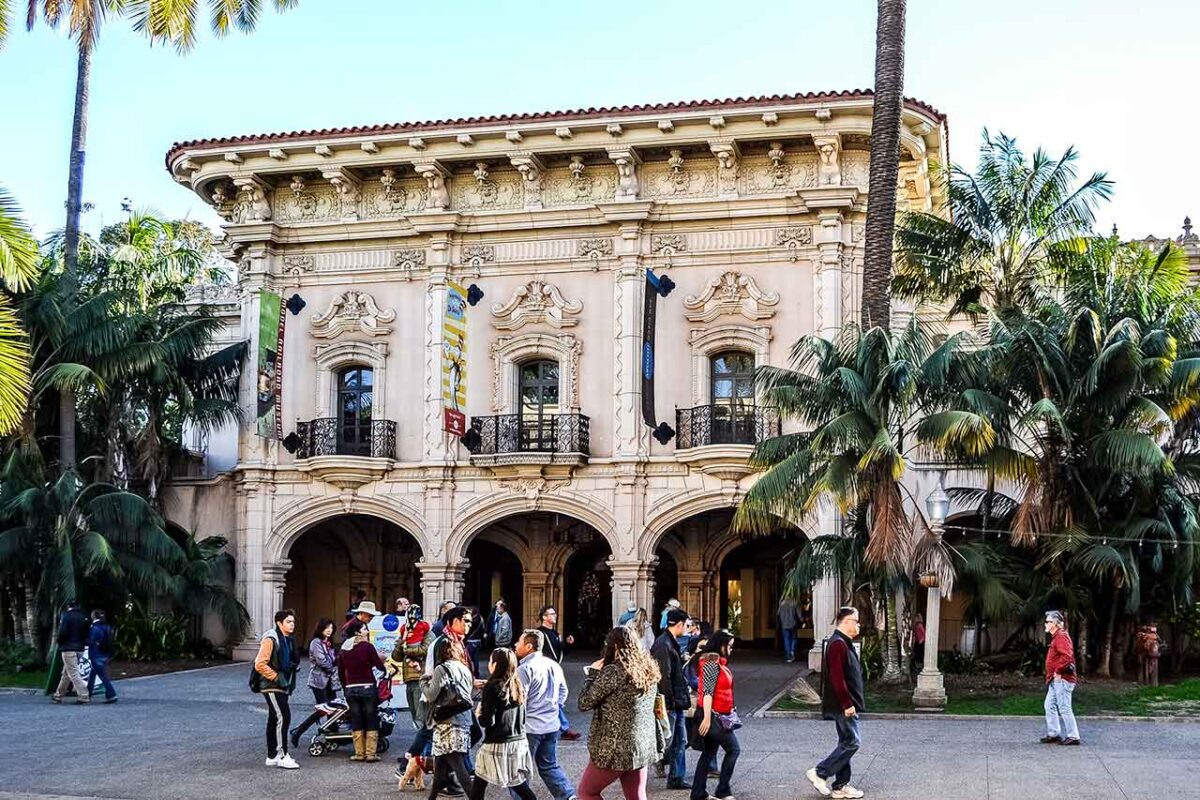
San Diego Air and Space Museum – a real treat for aviation and space travel enthusiasts. Its collections include historical airplanes, helicopters, and replicas of spacecraft. The NASA exhibition with interactive flight simulators is a particular attraction.
Museum of Us
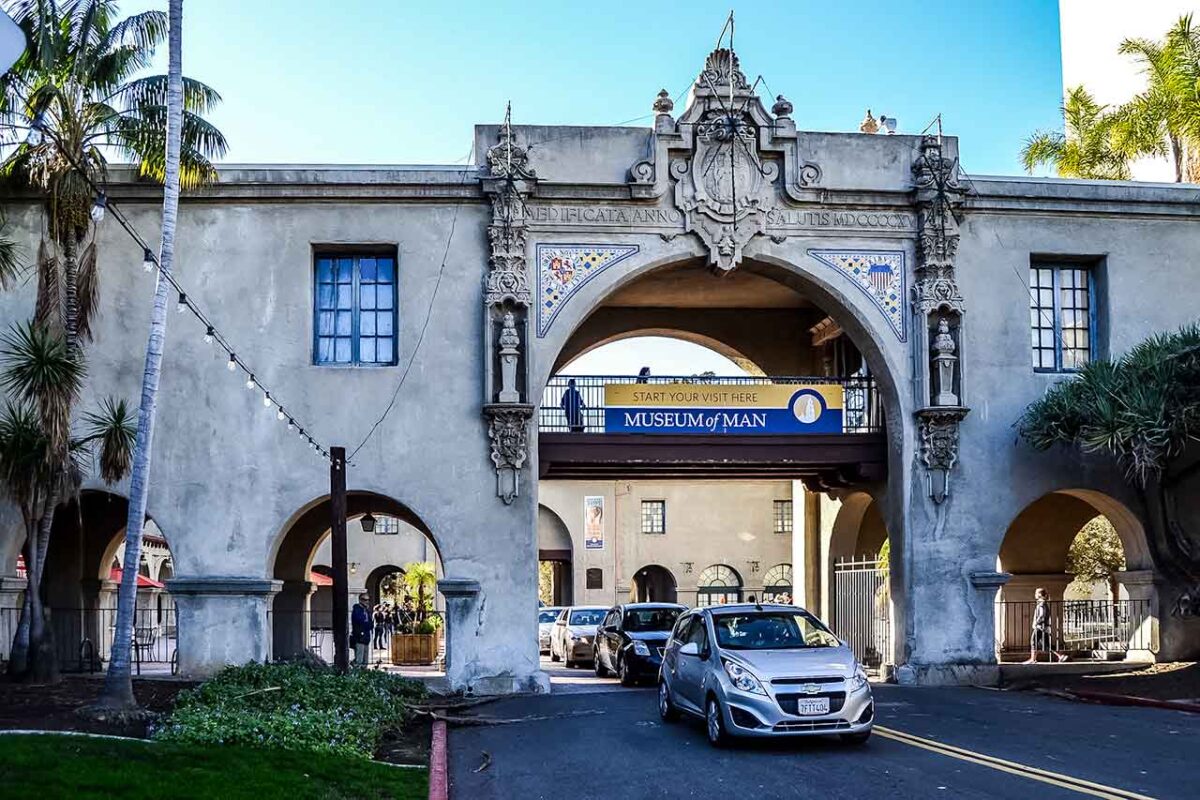
Museum of Us (formerly Museum of Man) – an anthropology museum located in one of the most beautiful buildings in Balboa Park, featuring the iconic California Tower. The exhibitions mainly focus on Pre-Columbian cultures of the Americas but also cover topics related to the history and diversity of world cultures. For an additional fee, visitors can climb to the top of the tower and enjoy a panoramic view of San Diego.
Reuben H. Fleet Science Center
Reuben H. Fleet Science Center – an interactive science center operating under the motto ‘Please touch.’ It offers over 100 exhibits that encourage independent exploration of the principles of physics, chemistry, or astronomy. It’s an ideal place for families with children, combining education with fun.
Themed Gardens – the green jewels of the park
Botanical Building and Lily Pond
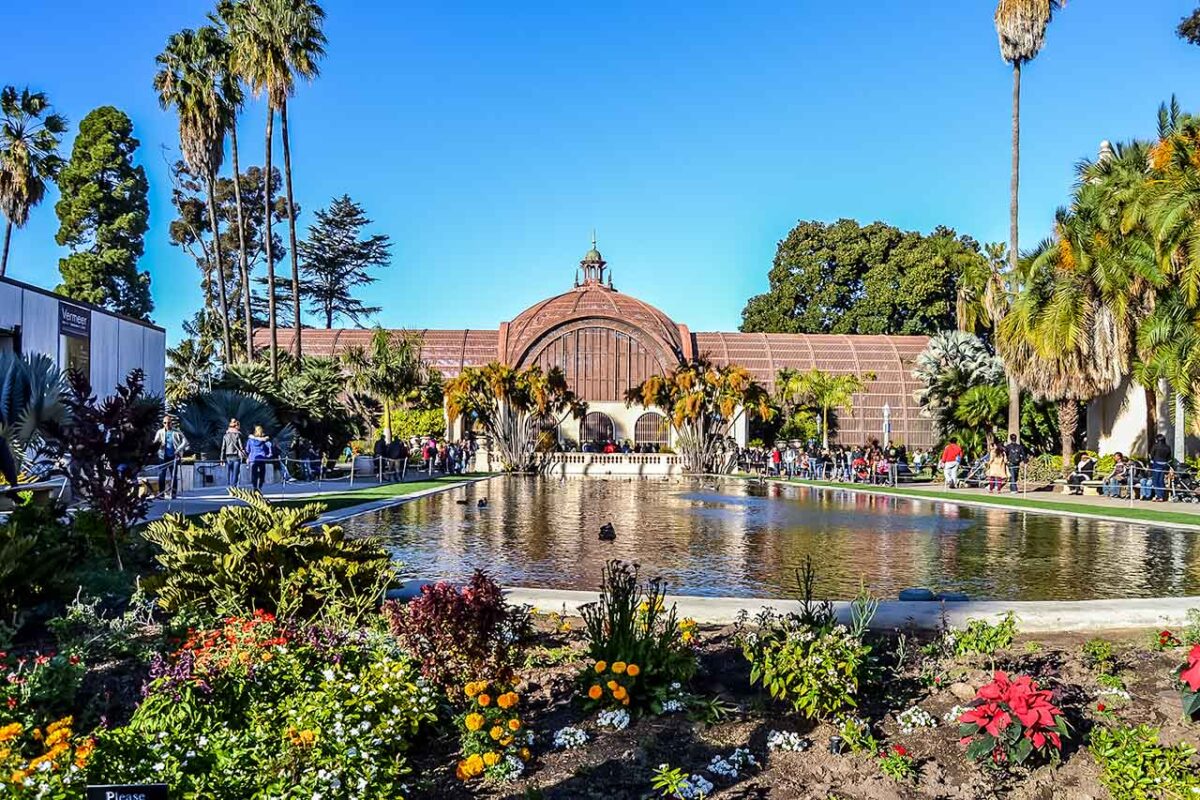
Botanical Building & Lily Pond is one of the most recognizable and photographed attractions in San Diego. The historic 1915 building is one of the world’s largest structures made of wooden slats and houses a rich collection of exotic plants from different corners of the globe. Right in front of it stretches a tranquil Lily Pond with benches, perfect for a moment of rest in the shade of greenery.
Japanese Friendship Garden
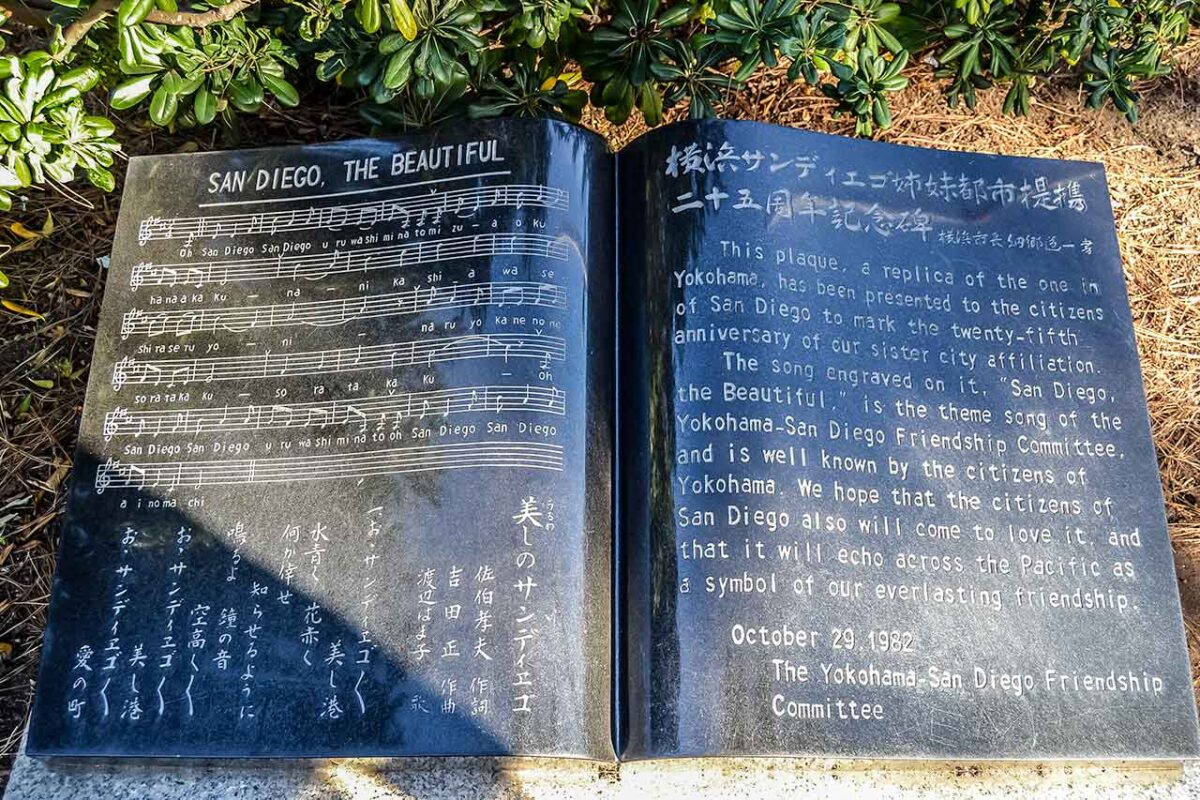
Japanese Friendship Garden, San-Kei-En, known as the ‘Garden of Three Sceneries’, is a great place to unwind amidst park attractions. It was created as a symbol of friendship between San Diego and Japan’s Yokohama and delights with a carefully designed landscape, harmonious layout of paths, ponds, and vegetation reminiscent of traditional Japanese gardens.
Desert Garden
Desert Garden is an impressive collection of cacti and succulents from all over the world. It is particularly beautiful in the late afternoon when the sun’s rays highlight the shapes and colors of the desert plants. The garden is open all year round and is best visited in spring when some cacti bloom, creating an extraordinary contrast with the stark landscape.
Rose Garden
Inez Grant Parker Memorial Rose Garden – a rose garden with over 2400 bushes representing 189 varieties. It is best to visit from April to November when the flowers are in full bloom, and the air is filled with their fragrance. In summer, it captivates with a wealth of colors – from subtle, pastel tones to deep, intense hues.
Alcatraz Garden
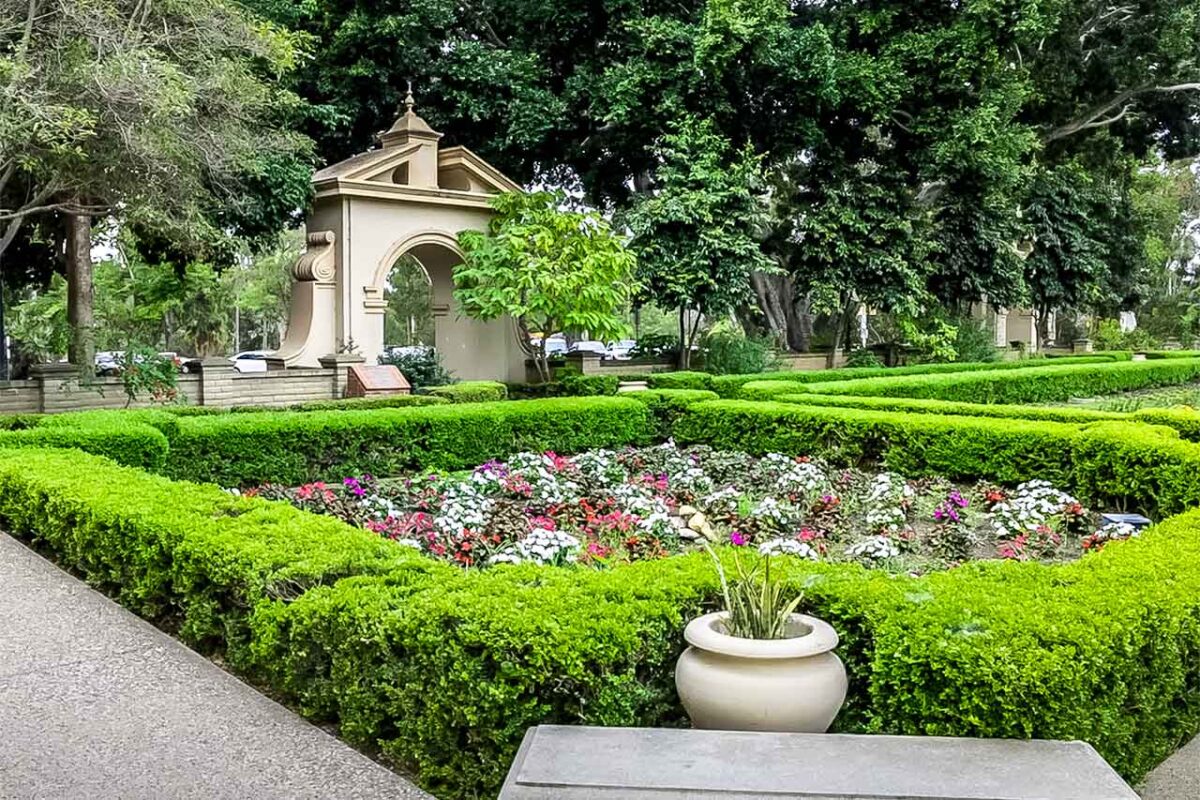
Alcazar Garden – a garden designed in a formal style with a geometric, symmetrical arrangement of paths and plants. Inspired by the famous Alcázar gardens in Seville, it features precisely trimmed hedges, a central fountain, and colorful mosaics that lend it elegance and evoke the atmosphere of Andalusian palaces.
Theaters and Culture
Balboa Park is not only museums and gardens – it is also an important center for artistic events, hosting performances, concerts, and festivals throughout the year. You will find:
Old Globe Theatre
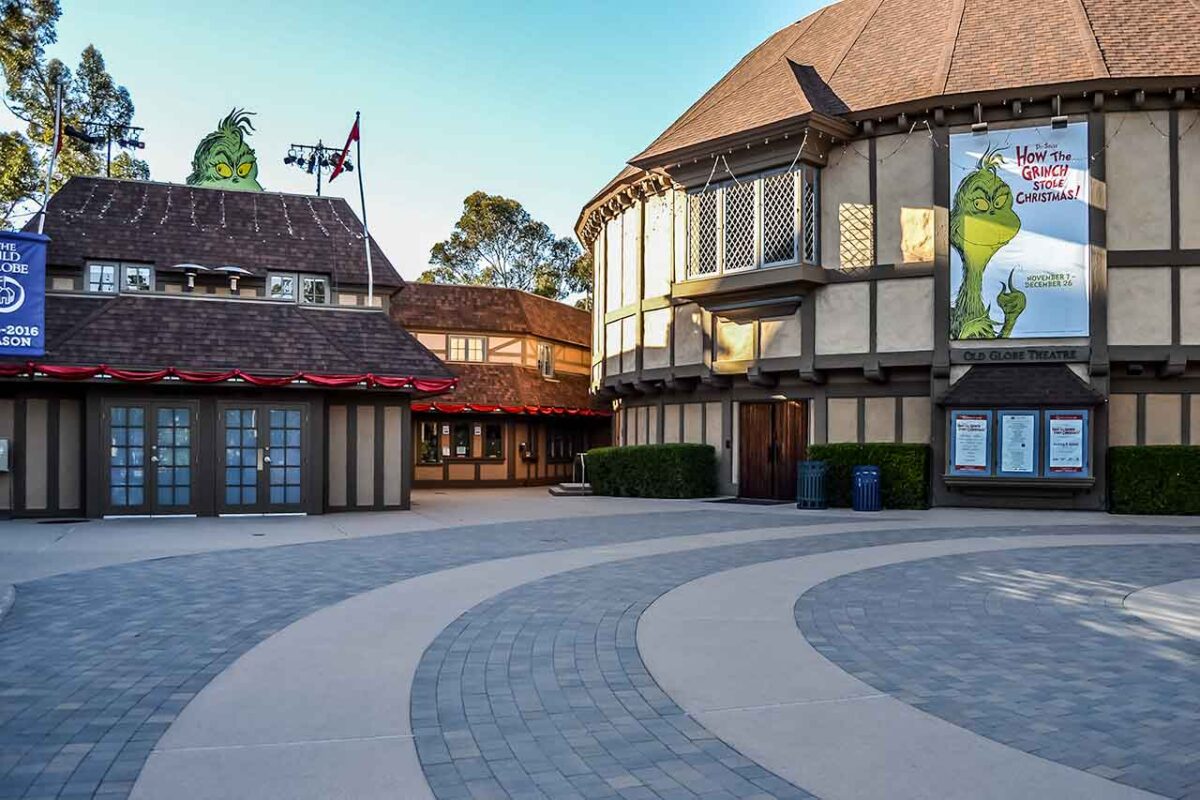
Old Globe Theatre – one of the most important regional theaters in the United States, modeled after London’s Globe Theatre, which staged Shakespearean plays. It has three stages, on which about 14 productions are presented each year, ranging from classic dramas to contemporary musicals.
Spreckels Organ Pavilion
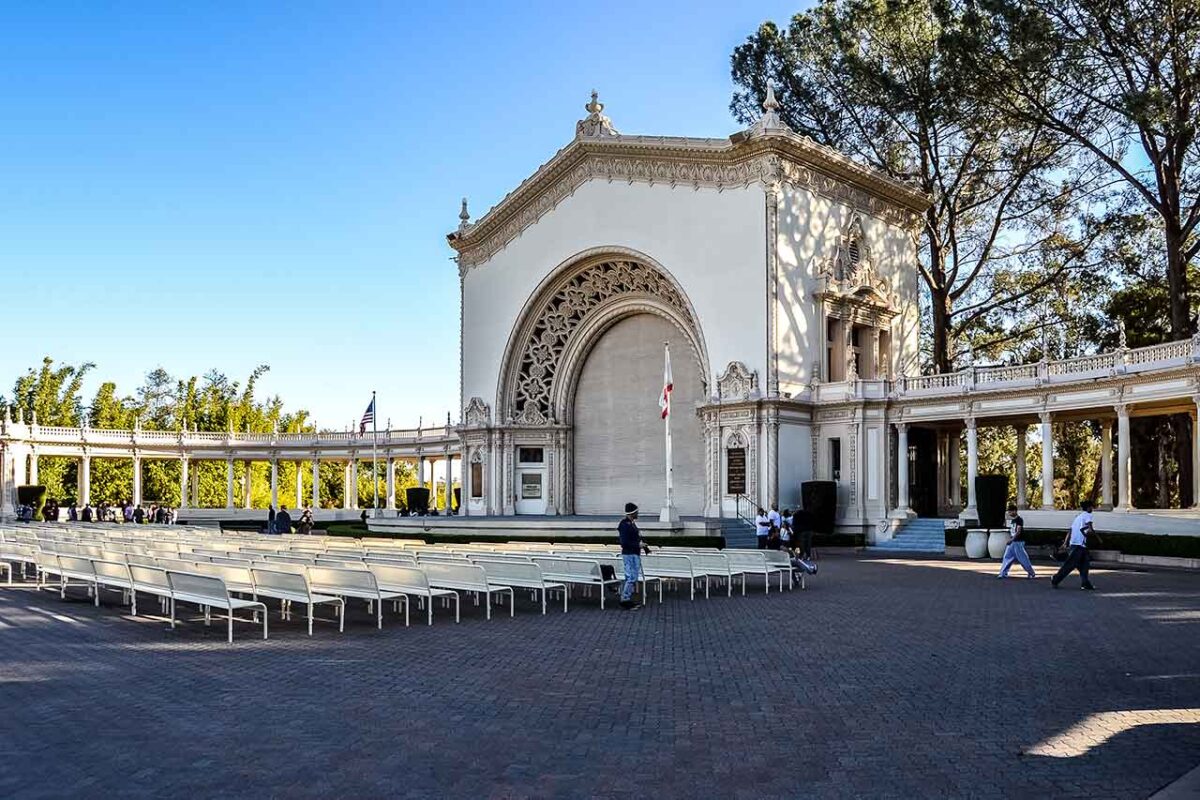
Spreckels Organ Pavilion – a location that features one of the world’s largest outdoor pipe organs. In summer and spring, it resounds with music during free concerts held every Sunday at 2:00 PM, from October to August.

San Diego Zoo – the star of Balboa Park
San Diego Zoo – a true gem of Balboa Park and one of the most famous zoos in the world. It is home to over 12,000 animals representing 650 species and subspecies, from majestic elephants to tiny, rare amphibians, across 100 acres (about 40 hectares). The zoo is renowned for open enclosures simulating natural environments and its innovative conservation programs.
Among the main attractions, Africa Rocks with impressive African elephants, Giant Panda Exhibit – one of the few places outside of China to have seen giant pandas, Gorilla Forest with a family of lowland gorillas, Reptile Walk with a rich collection of reptiles, and Skyfari – an aerial tram offering bird’s-eye views of the zoo, are worth mentioning.

Admission ticket to San Diego Zoo
A one-day ticket to the San Diego Zoo offers full access to all enclosures and attractions, including the Skyfari aerial tram and live shows. The price includes popular areas like Africa Rocks, Elephant Odyssey, and Polar Bear Plunge. You can enter without waiting in line, and the ticket is valid for the entire day.
Practical Information
💡 Tip: buy tickets online in advance – promotions often appear. On hot summer days, come in the morning when the animals are most active.
Walking routes and viewpoints
Walking trails and viewpoints
El Prado – the main avenue in Balboa Park
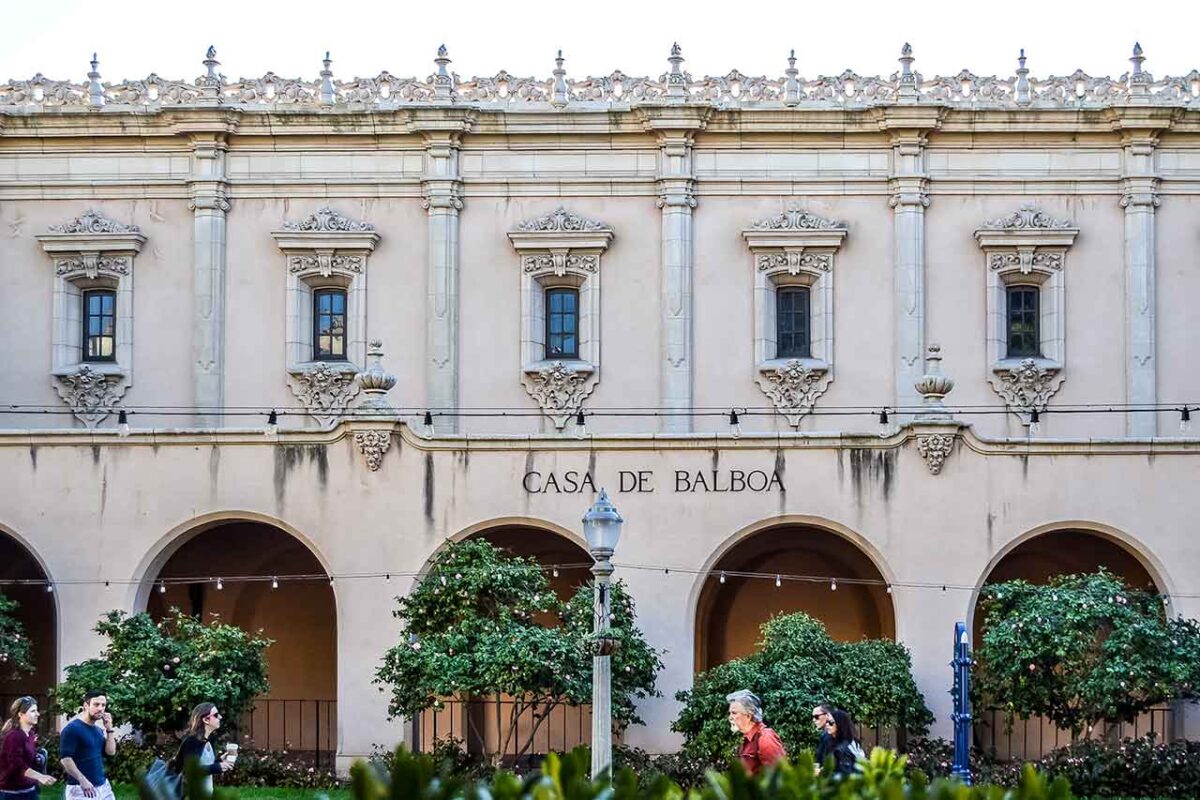
El Prado is the main avenue of Balboa Park, where the most important museums and historic buildings are located. As you walk along, you’ll see the grand facades from the Panama-California Exposition of 1915 and the California Pacific International Exposition from 1935-1936. All this is surrounded by greenery, fountains, and benches where you can sit and relax.
Worth seeing at El Prado:
Trails for walkers
Palm Canyon Trail – a short, easy trail about 0.8 km long that leads through a secluded canyon lined with Californian palms. Ideal for a quick walk in a quieter part of the park, away from the main tourist traffic.
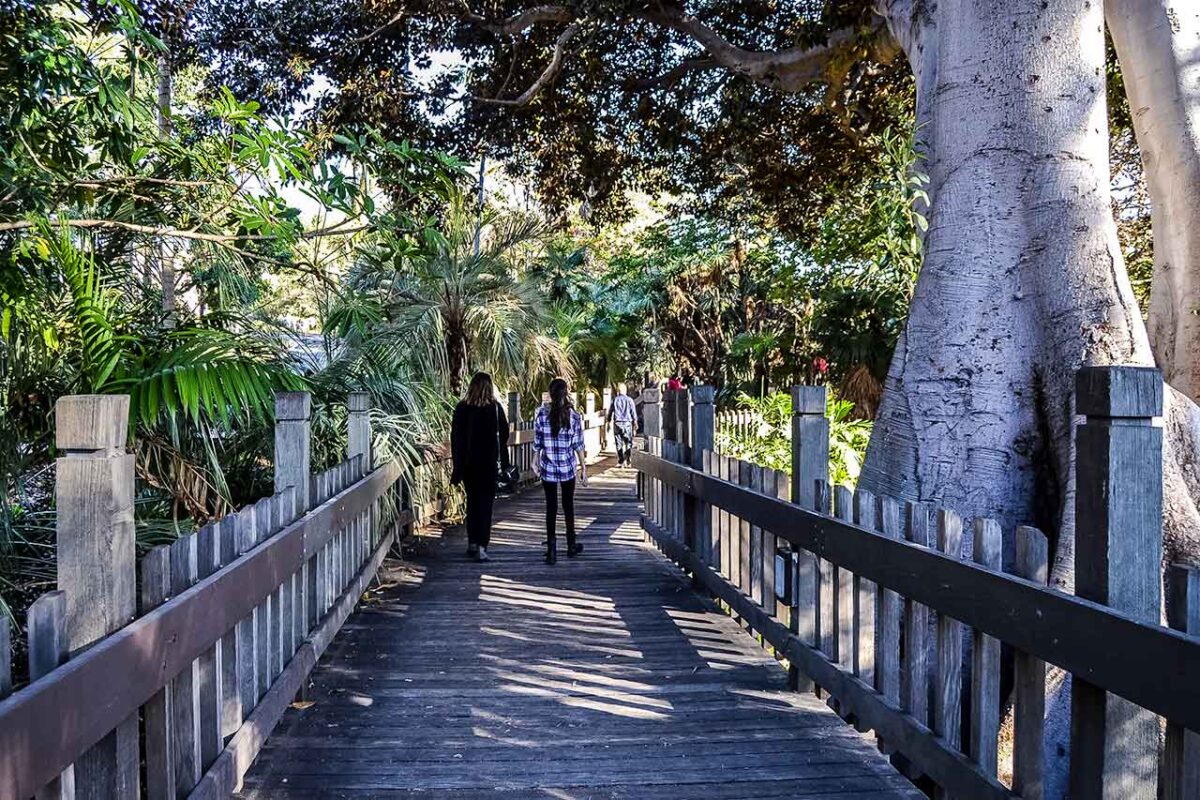
Florida Canyon – a longer trail, approximately 3.2 km, running through the natural chaparral, which consists of dense, low shrubs and hard-leaved plants typical of Southern California. It’s a good choice if you want to see the park from a more wild side.
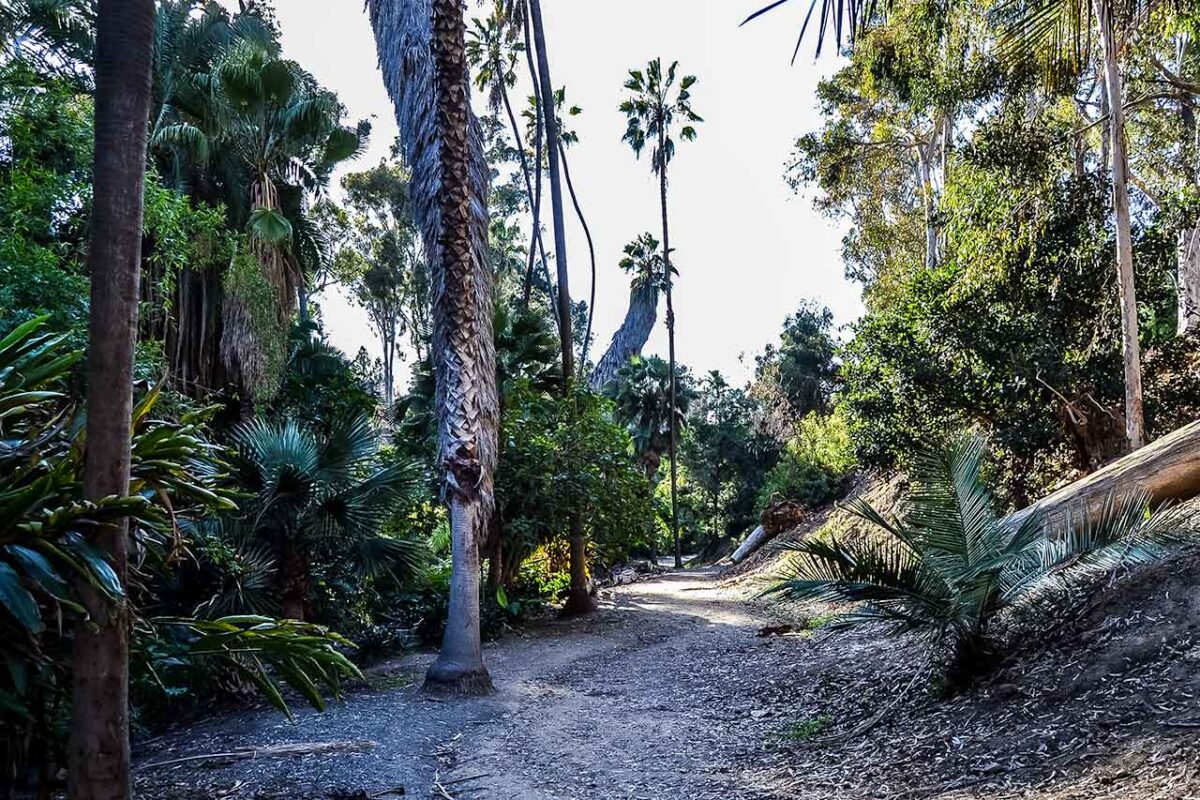
Photo spots
Events and festivals throughout the year
There’s always something happening in Balboa Park – regardless of the season, you can come across unique events, concerts, or themed celebrations.
Regular events
December Nights (first weekend of December) – the largest festival in the park, with free admission to all museums, concerts, food from around the world, and a festive atmosphere.
Seasonal events
Recently, Food Truck Friday – Friday evenings with food trucks, music, and extended museum hours have become popular. In autumn, Halloween events appear at various venues, and in winter the park is filled with holiday decorations, concerts, and special exhibitions.
Practical Information
How to get to Balboa Park
Balboa Park is located in the heart of San Diego, just a few minutes’ drive from downtown, between the neighborhoods of Hillcrest and North Park.
Getting to the park by car
Driving is straightforward – from downtown you just need to head north on Park Boulevard or 6th Avenue. If you want to make an impression upon arrival, choose the route through Cabrillo Bridge and California Quadrangle – it’s the most spectacular way to the park.
Getting there by public transport
Public transportation is a convenient alternative. The free Balboa Park Tram runs daily – from November to May from 9:00 AM to 6:00 PM, and from June to October until 8:00 PM. Departures are every 8-10 minutes, and the route connects Inspiration Point with the park’s major points. You can also use the Old Town Trolley with a hop-on hop-off option, which stops at Balboa Park during its tours around San Diego.
Hours, tickets, and availability
Opening hours
The park is open 24 hours a day, 7 days a week, and admission to its grounds is free. Most museums operate from 10:00 AM to 5:00 PM and are closed on Mondays. The Botanical Building can be visited daily from 10:00 AM to 4:00 PM – entry is free.
Prices and tickets

Available options:
|
Type of pass |
Adult price (12+) |
Child price (3-11) |
Validity |
|---|---|---|---|
|
Limited Pass |
$63 |
$41 |
1 day, max 4 museums |
|
Parkwide Pass |
$75 |
$50 |
7 days, all 16 museums |
|
Annual Pass |
From $99 |
– |
365 days |
Remember, the Explorer Pass does not include San Diego Zoo, Comic-Con Museum, or tickets for theatrical performances.
Availability
Balboa Park is accessible for people with disabilities. All major museums have ramps and elevators, the park has wheelchair-accessible restrooms, and the free tram is equipped with platforms. Designated parking spaces are located close to the main attractions.
Where to eat
In the park
Nearby
If you want to expand your culinary options, you can reach the districts of Hillcrest and North Park in 5-10 minutes, known for their diverse gastronomy – from casual bistros to fine dining restaurants.
Where to stay nearby?
If you want to be close to Balboa Park, it’s best to look for accommodation in the neighborhoods of Hillcrest, North Park, Bankers Hill, or Downtown San Diego, from where you can walk or reach in a few minutes. In the area, you will find both boutique hotels with park views, like Inn at the Park, as well as larger establishments in the center, such as Hilton San Diego Bayfront or The Sofia Hotel.
If you care about savings and proximity to the park, it is worth considering Days Inn – an economical option close to Balboa Park. Another interesting, affordable option is Balboa Park Hotel, offering a kitchen and free parking. You should also check out Mission Valley, Hillcrest, and North Park – these are great locations for those looking for something more original, with good transport access and a rich dining offer.
Tips
If you want to avoid crowds, it’s best to arrive early in the morning, before 10:00, or only late in the afternoon. It’s better to avoid weekends, especially during the tourist season, because the park tends to be most crowded then. Residents also suggest that Wednesday evenings are much calmer than Saturdays or Sundays.
The most pleasant time to visit is in the morning, between 8:00 and 10:00, when it’s empty and the light is great for taking pictures. If you like warmer colors, take a walk during the golden hour – an hour before sunset – when the buildings and gardens look exceptional. On Wednesday evenings, a special attraction is live jazz at Panama 66, and there are significantly fewer people.
It’s worth remembering that the Timken Museum of Art is always free, so you can pop in for a short walk between other attractions.
If you’re planning dinner at The Prado, you can take advantage of valet parking available on Tuesdays-Thursdays from 5:00 PM to 10:00 PM, on Fridays from 5:00 PM to midnight, on Saturdays from 10:00 AM to midnight, and on Sundays from 10:00 AM to 10:00 PM.
A helpful feature is also downloading the official Balboa Park app, which offers offline maps and up-to-date event information.
How to plan a full day in Balboa Park
You can plan a day in Balboa Park depending on what you like the most.
Families with children
For families with children, a good choice would be to start at San Diego Zoo – it’s best to be there by 9:00 AM to avoid queues and see the animals when they are most active. At noon, it is worth having lunch at the zoo, and in the afternoon, finish the tour and stop by the Fleet Science Center, where children can enjoy interactive exhibits. Ending the day with a visit to the Botanical Building, a walk through El Prado, and relaxation by the playground or in Palm Canyon would be excellent.
Culture enthusiasts
For culture enthusiasts, the day could start with a walk across the Cabrillo Bridge, which offers great views. Then it’s worth visiting the San Diego Museum of Art and the Japanese Friendship Garden, followed by lunch at The Prado. In the afternoon, I recommend the Museum of Us with entry to the California Tower, followed by a stroll through the gardens and a visit to the Timken Museum (free admission). In the evening, you can choose to have dinner and attend a show at the Old Globe Theatre.
Wallet-friendly version
For those looking for budget options, Balboa Park offers many free attractions: Botanical Building, Spanish Village Art Center, all the gardens, Timken Museum, and Sunday concerts at the Spreckels Organ Pavilion. You can spend the whole day here without spending money on tickets and still see a lot.
A park for every budget
Balboa Park is a place with something for everyone, whether you’re looking for free attractions or planning to spend a larger budget on exploration.
Free options
For free, you can visit all the gardens and outdoor spaces, the historic Botanical Building, the free Timken Museum of Art, the colorful Spanish Village Art Center with artist studios, listen to concerts at the Spreckels Organ Pavilion every Sunday, or use the playgrounds and recreational areas.
Affordable options
For a small fee (usually 10-20 USD), you can access individual museums, Japanese Friendship Garden, or climb the California Tower.
Premium options
If you are planning an intensive exploration, consider premium options (50 USD and above) – such as the Explorer Pass covering multiple museums, a visit to the famous San Diego Zoo, or combined tickets with other city attractions.
When to visit Balboa Park?
The best time to visit Balboa Park depends on what you’re looking for. Spring (March-May) is when the park is in bloom – you can admire roses and cherry blossoms, and the temperatures are pleasant with fewer tourists than in summer. Summer (June-August) offers the most events, but you should expect crowds and higher temperatures. Fall (September-November) provides mild weather, less traffic, and beautiful light, perfect for photos. Winter (December-February) is the coolest, yet still pleasant – temperatures usually range from 15-20°C, and the December December Nights add a special holiday atmosphere to the park.

Why Balboa Park is a must-see in San Diego
Balboa Park is one of those places in San Diego that’s truly worth visiting. You can drop by for a short walk or spend the whole day, yet you’ll still have something left for another visit. Museums, gardens, historic buildings, cultural events – all in one place surrounded by greenery.
Whether you want to view an exhibition, take photos in iconic spots, or simply sit on a bench in the shade of trees, you’ll find something for yourself here. Drop by Balboa Park! It’s worth planning at least half a day, and it’s best to return several times to explore the park at your own pace.
This place is a part of San Diego’s identity, and you can see it everywhere.
Go City San Diego
The package lets you choose from 2 to 7 attractions out of more than 40 options in San Diego, such as the San Diego Zoo, USS Midway, the Air & Space Museum, or the Japanese Friendship Garden. Your digital ticket is activated on your first visit, and then you have 60 days to use the remaining attractions. This way, you can save up to 50% compared to buying individual tickets.

Sources – Official websites of individual institutions in the park: