Italiano
 Polski

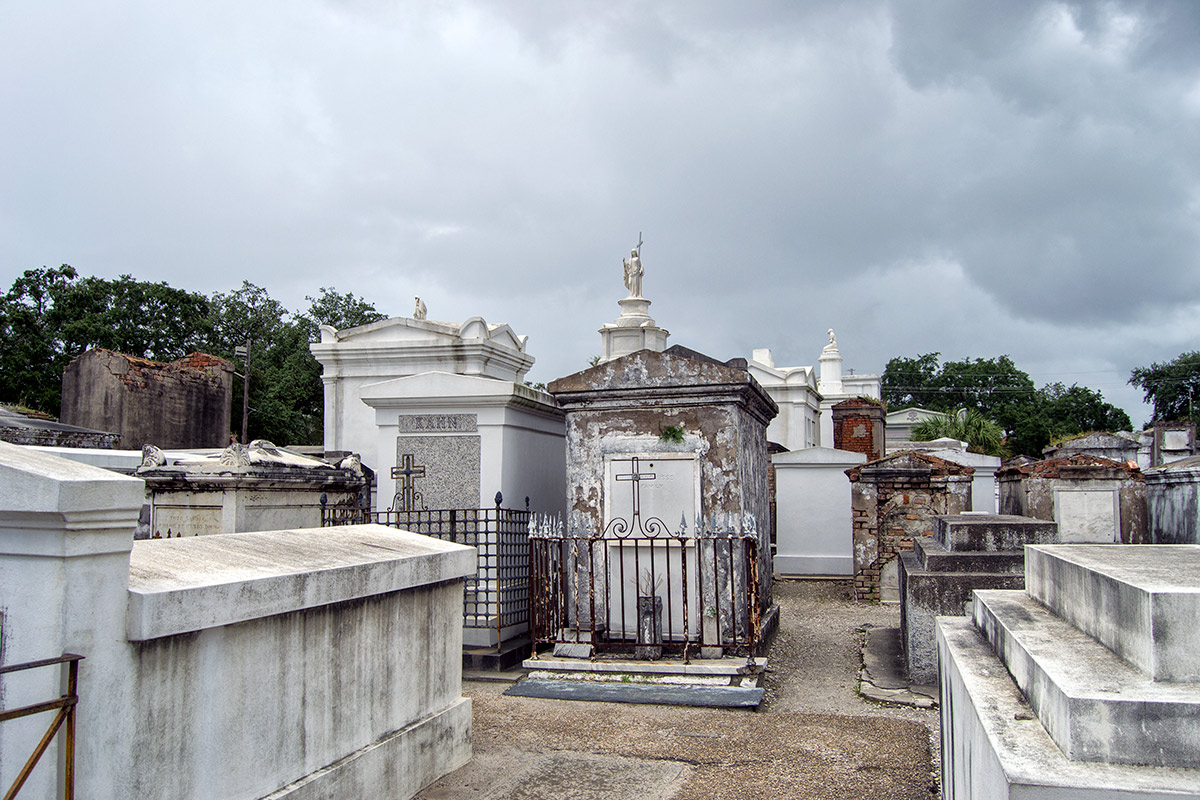
New Orleans has long been regarded as one of the most haunted cities in the United States. When you think about it, images of cemeteries with rows of whitewashed tombs, legends of voodoo dolls, and memories of Hurricane Katrina come to mind. But this city is also a piece of history – founded in 1718 by the French, shaped over the centuries by Spanish, African, and Creole influences. This mix of cultures has created a place like no other, where death and the memory of ancestors are as present as jazz music or the scent of gumbo wafting through the air.
It’s no wonder Mark Twain called the local necropolises ‘cities of the dead‘. The tall, above-ground tombs resemble entire blocks of houses, among which groups of tourists with guides stroll daily. Visiting the cemeteries in New Orleans is not a macabre trip but part of the local culture – a tale of the city’s history, its heroes and legends, as well as the unique tradition of burying the dead above ground. Here, the graves are as important a part of the landscape as the French Quarter or the boulevards on the Mississippi.
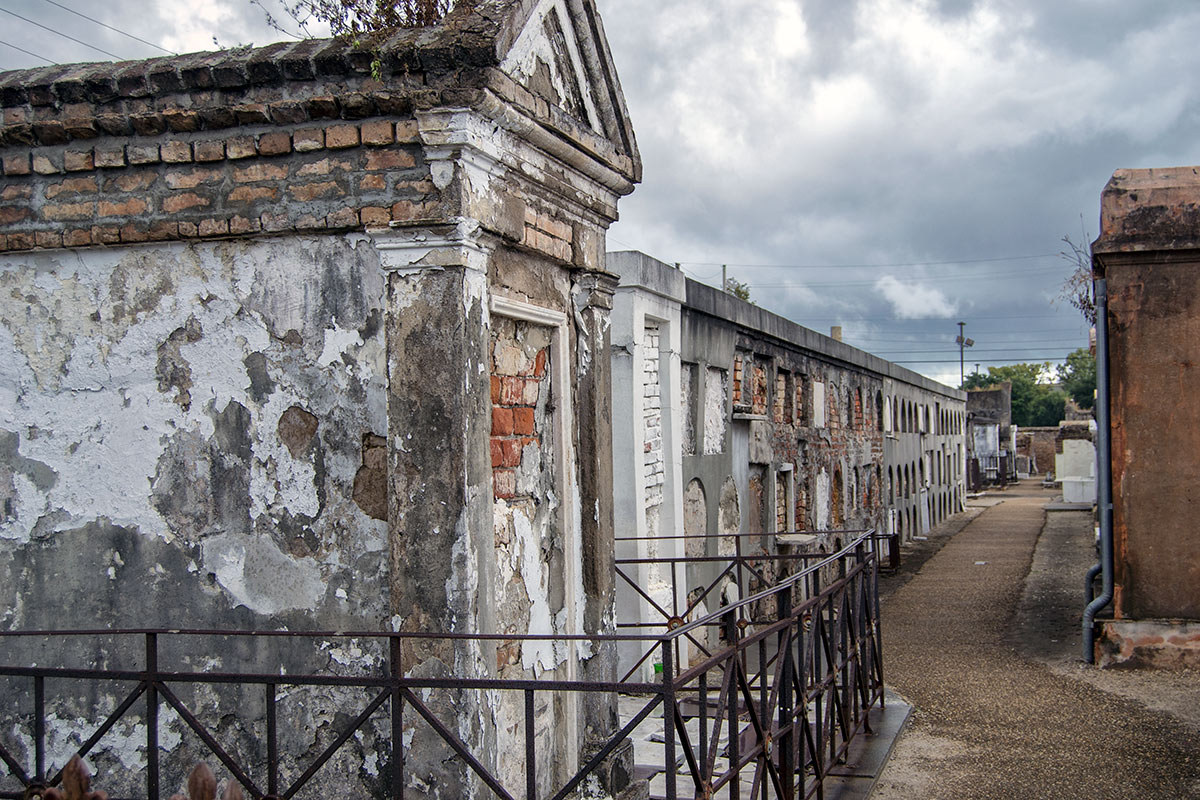
Cemeteries in New Orleans are among the most unique necropolises in the world. The characteristic above-ground tombs were born out of necessity – the city is below sea level, and the high water table makes traditional in-ground burials impossible. In the past, it happened that during heavy rains and floods, coffins would float to the surface and drift along the flooded streets. This was a real problem in the 18th and 19th centuries when burials were still in the ground. Therefore, already then, residents began to build tombs above the ground, creating a labyrinth of marble palaces, modest family vaults, and monumental mausoleums that still distinguish these necropolises across the United States.
Why are cemeteries in New Orleans unique?
Style and appearance of the tombs
Cemeteries in New Orleans resemble open-air architecture museums. Walking among the tombs, you can see a full range of styles – from simple colonial vaults, through ornate 19th-century mausoleums, to Art Deco-style headstones from the 1920s.
French and Spanish influences are visible almost everywhere: iron grilles resemble balconies from the French Quarter, alongside marble sculptures of angels typical for Europe, and the local character is emphasized by motifs of palms and voodoo symbols.
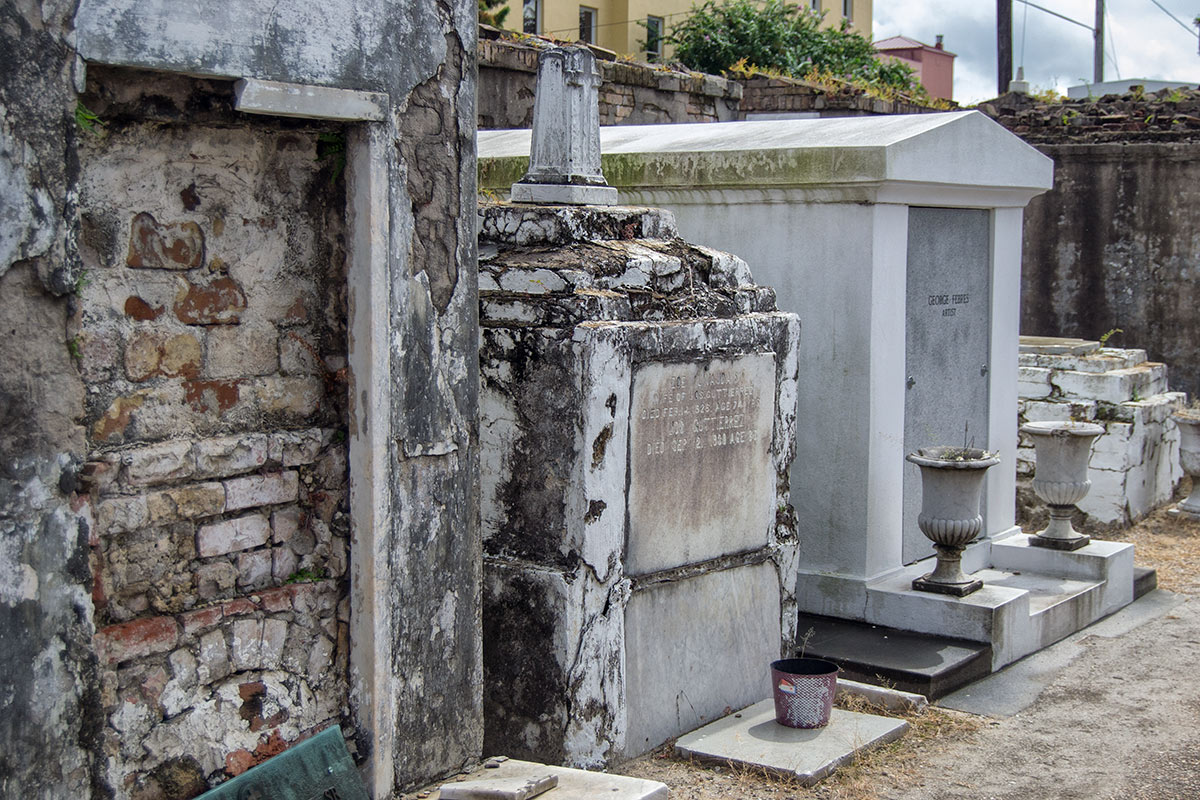
Some tombs take the form of miniature Gothic chapels, others refer to Greek temples with Corinthian columns. In Metairie Cemetery, you can also find tombs shaped like Egyptian pyramids or Roman sarcophagi. This reflects the history of the city as a place where various communities converged, each leaving its mark in stone.
Climate and symbolism
Louisiana’s climate gives the cemeteries of New Orleans a unique character. Between the tombs grow oaks covered with Spanish moss, magnolias bloom in the spring, and in the cracks of old walls, ferns and palmettos sprout. Thanks to this, even on hot days, these places maintain a soothing atmosphere.
In cemeteries in New Orleans, you’ll often find symbols that carry specific meanings. It’s a unique language of stone, allowing us to read more than just life and death dates.
The role of cemeteries in the city’s culture
Cemeteries in New Orleans are an important part of the city’s identity. It’s here that traditional jazz funerals take place, funerals with music that start with a mournful march and end with a joyful parade, which sometimes also appear in movies.
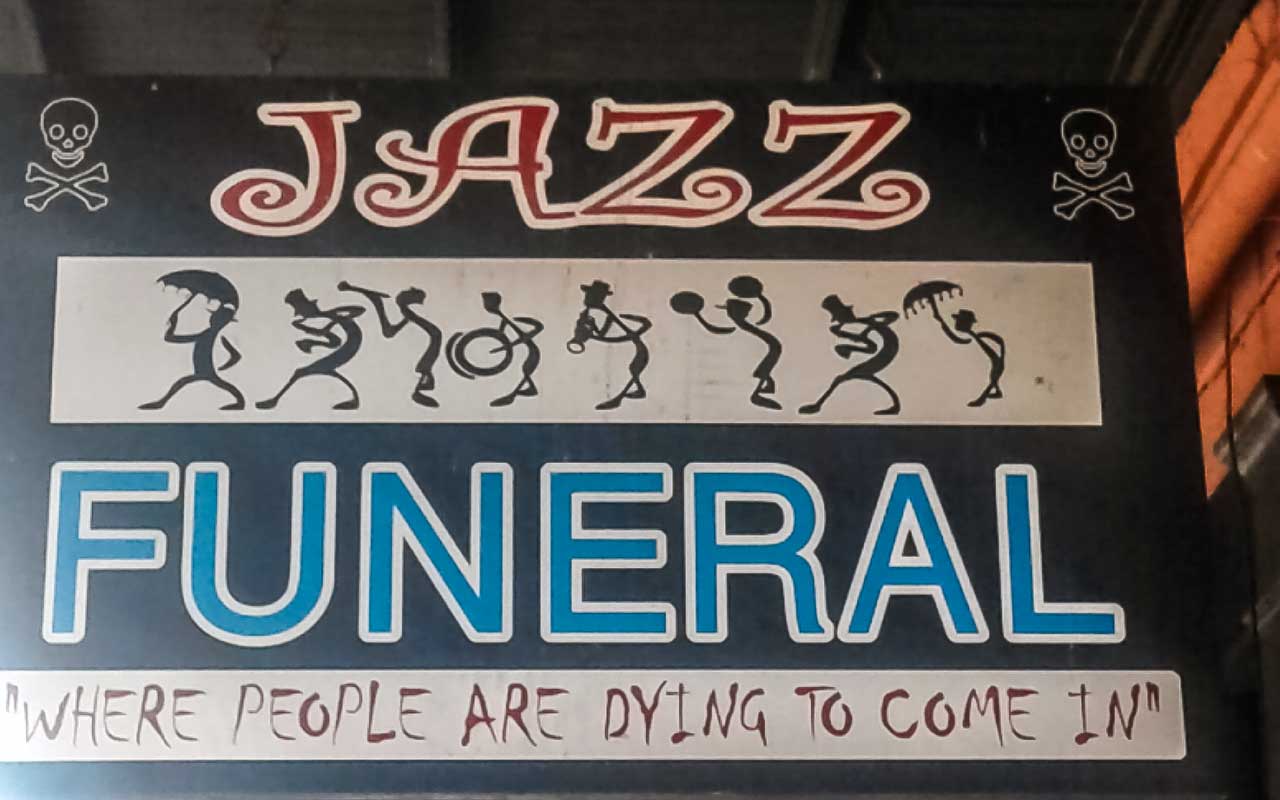
During All Saints’ Day, families gather at graves, decorate them with flowers, and spend time together. Such customs show that New Orleans’ necropolises are not isolated from the life of the city but are an integral part of it.
For tourists, cemeteries are one of the main attractions. They are included in themed tours – related to history, ghosts, and, of course, Voodoo. Visiting these places is at once interesting and a bit unsettling, but this is what creates their atmosphere and makes New Orleans memorable as a city with a unique character.
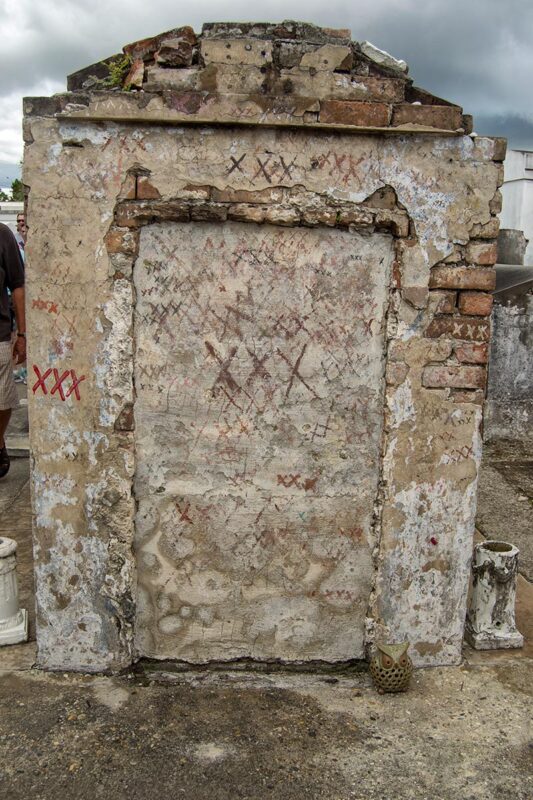
Cemeteries are also strongly connected to Voodoo culture. The best example is the grave of Marie Laveau at St. Louis Cemetery No. 1. She was known as the Voodoo Queen, and her resting place still attracts hundreds of people weekly. On her grave, there are crosses drawn in chalk, coins, flowers, and notes with requests for help in matters of the heart, health, or luck. During tours, guides often emphasize that Laveau’s practices had more to do with peace and harmony than with ‘black magic.’ To delve deeper into the topic, one can also visit the Voodoo Historical Museum, which explains the meaning of this tradition and its impact on New Orleans culture.
The most important cemeteries to visit
St. Louis Cemetery No. 1 – the oldest and most famous
St. Louis Cemetery No. 1 was established in 1789 and remains the oldest necropolis in New Orleans. This place looks like a small town – narrow paths, rows of whitewashed tombs, and the feeling that each one holds its own story. It’s no wonder that this cemetery has become a must-visit point for most visits to the city.
Most people stop at the tomb of Marie Laveau, known as the Voodoo Queen. She lived in the 19th century and became famous as a healer and fortune teller, but also as a hairdresser who knew the secrets of the richest families in New Orleans. To this day, there is no certainty whether she truly rests in the marked place, but hundreds of tourists visit this grave weekly. On the wall, you can see distinctive crosses drawn with chalk, and around lie coins, flowers, and notes with requests for love, health, or prosperity.
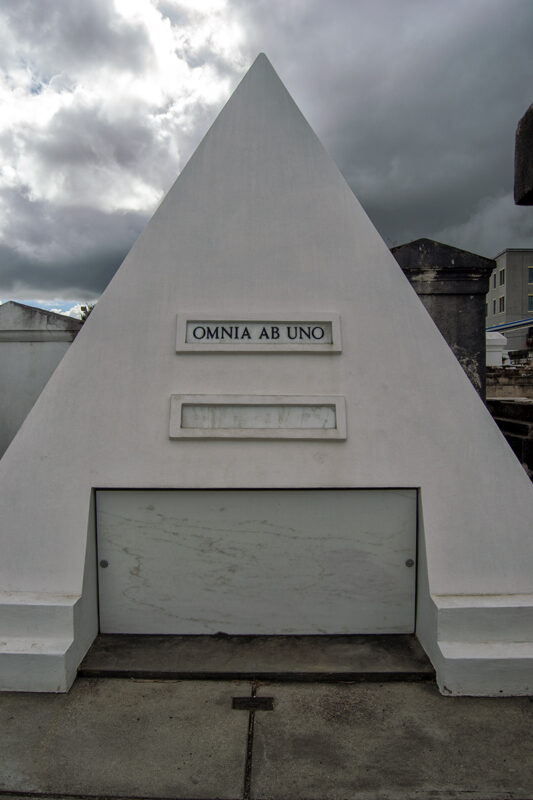
A few steps away stands something completely different—the pyramid of Nicolas Cage. The actor bought this unusual tomb for himself in 2010, reportedly paying about seventy thousand dollars. The white, 2.7-meter construction with the inscription “Omnia Ab Uno” (“Everything from One”) caused quite a stir among residents. Some saw it as oddity, others as another proof of the actor’s eccentricity. Today, the pyramid is one of the most photographed places in the cemetery.
At St. Louis Cemetery No. 1, many people important to the history of the city and the entire United States are also buried. Among them lies Homer Plessy, whose case Plessy v. Ferguson became a symbol of the civil rights movement, and General P.G.T. Beauregard, a commander of the Confederate army. There are also mayors, judges, and entrepreneurs who shaped New Orleans as we know it today.
Visiting rules:
SkyJump from the Stratosphere Tower
It is a safe, controlled ‘open-air’ jump from the 108th floor (approx. 855 feet) of the Stratosphere Tower in Las Vegas, where thanks to the braking system you will feel acceleration up to approx. 40 mph before a gentle landing

Lafayette Cemetery No. 1 – temporarily closed
In the elegant Garden District lies Lafayette Cemetery No. 1. Established in 1833, it was the first fully planned cemetery in New Orleans. Over the years, it has become not only a place of memory but also a popular film setting. It is here that scenes for “Interview with the Vampire”, the series “American Horror Story: Coven”, and the thriller “Double Jeopardy” (1999) were shot. In one scene, Ashley Judd is locked in a family mausoleum – a shot that perfectly showcases the atmosphere of this place.
The cemetery was also made famous by Anne Rice, who set her fictional family of witches Mayfair (The Witching Hour) in her novels here. The author liked to surprise – in 1995, during the book launch of Memnoch the Devil, she organized her own jazz funeral, driving through the main avenue in a glass coffin. This event quickly became part of local legends.
Before closing in September 2019, Lafayette drew attention with numbers and details. There are over a thousand family tombs, there are buried close to 7,000 people, as well as so-called wall vaults – almost 500 niches in the walls, used as additional burial spaces. On many graves, you will see broken flowers – a symbol of a life cut too short.
Today, entries are only possible for family members and staff. The city announces a reopening at the end of 2025 or beginning of 2026, but until then, the only thing you can do is look from afar or take a walk through the beautiful Garden District neighborhood.
Metairie Cemetery – a park cemetery for the elite
Metairie Cemetery was established in 1872 on the site of a former horse racing track. To this day, its oval layout of alleys reflects the shape of the former track, making it one of the most unusual cemeteries in the entire United States.
The history of its founding is tied to the personal ambition of Charles T. Howard. He made his fortune in the Louisiana State Lottery and wanted to join the prestigious Metairie Jockey Club. However, he was refused because his money was considered “inappropriate.” Howard then vowed that the racetrack would one day become a cemetery—and indeed, it did. After the Civil War, the track went bankrupt, and Howard bought the land and established a necropolis. He himself was buried at Central Avenue, at the site of the former finish line of races.
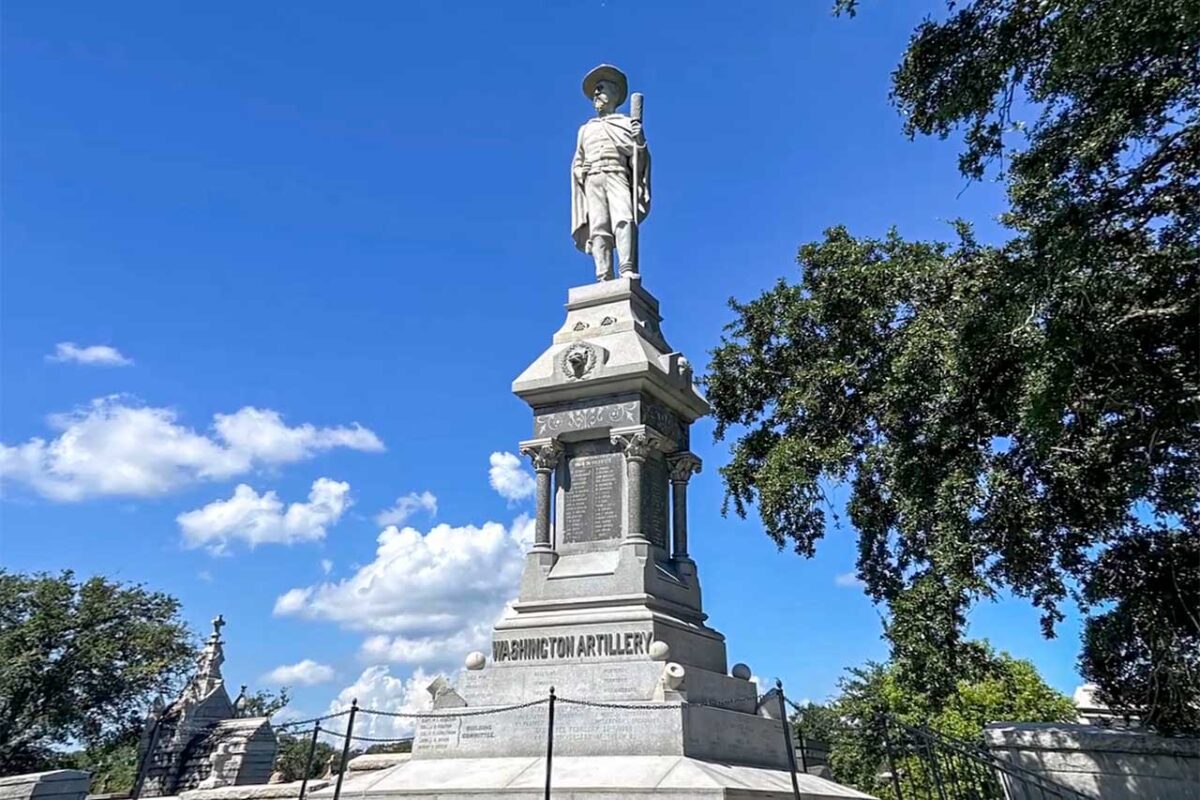
Metairie quickly became a burial place for the New Orleans elite. Nine governors of Louisiana and twelve mayors of the city rest here, as well as notable figures such as jazz musician Louis Prima, businessman Tom Benson, owner of the New Orleans Saints team, and P.B.S. Pinchback, Louisiana’s only black governor in the 19th century. Also buried here were mafia boss Carlos Marcello and Jefferson Davis, the Confederate president, whose remains were later moved elsewhere.
The cemetery is also famous for its unusual monuments. The most recognizable is the Moriarty Monument – a 24-meter marble tower erected by a husband who wanted his wife to literally ‘look down’ on those who disdained them. Another notable site is the Josie Arlington Tomb, the tomb of a well-known madame from the Storyville district, once called the “Flaming Tomb”. In the evenings, it was illuminated by red light, sparking local rumors and legends.
Practical Information:
The cemetery is open daily, entry is free, and cars are permitted on the grounds. The main entrance is located at 5100 Pontchartrain Boulevard. It’s a great spot for a 2-3 hour walk or drive if you want to see the largest mausoleums and the richness of New Orleans’ funeral architecture.
New Orleans: Millionaire’s Tombs of Metairie Cemetery Tour
During a 2-hour tour with a local guide, you’ll discover ornately decorated tombs of Metairie Cemetery worth millions of dollars. You’ll learn about the stories of New Orleans’ influential figures – from governors to carnival kings.

St. Roch Cemetery No. 1 – chapel with votive offerings
St. Roch Cemetery No. 1 was established in 1874 by German priest Peter Leonard Thevis. According to accounts, he vowed that if his parish was spared from the yellow fever epidemic in 1867, he would build a chapel in honor of St. Roch, the patron saint protecting against plagues. He fulfilled this promise, and a cemetery was established around the chapel.
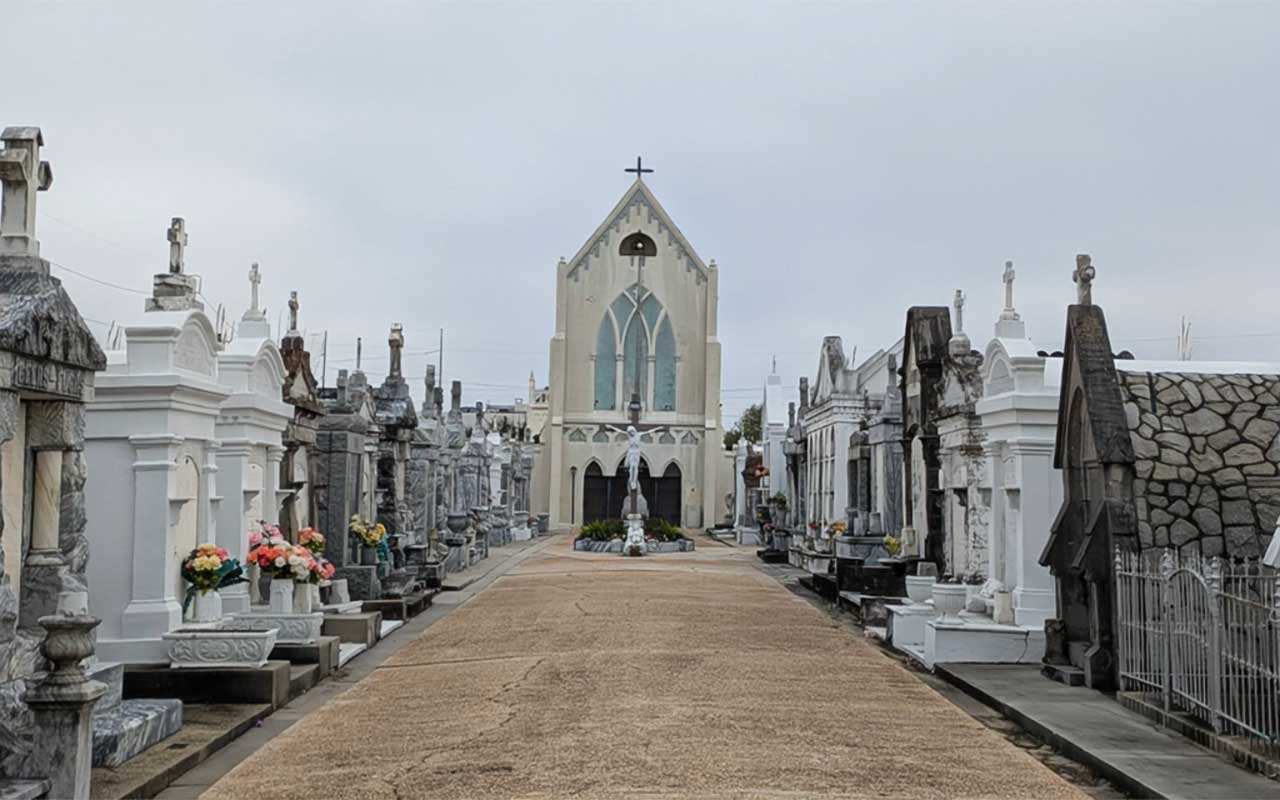
The most unusual place in the cemetery is the St. Roch Chapel. Inside are hundreds of thanksgiving offerings – wax and plaster casts of hands, legs, or entire faces, left by the faithful in gratitude for healing or to request help. The sight is atypical and can be moving for many visitors.
Although St. Roch is not as well-known as St. Louis No. 1 or Lafayette, for those interested in the religious side of New Orleans and its local traditions, it is one of the more intriguing places to visit. The atmosphere is calmer, and there is less tourist traffic than at the more popular cemeteries.
Practical information:
The cemetery is open and accessible to visitors. It is best to combine the visit with a tour of the surrounding districts, less touristy than the French Quarter, but full of local character.
St. Louis Cemetery No. 2 and No. 3 – other alternatives
St. Louis Cemetery No. 2, opened in 1823, and St. Louis Cemetery No. 3, established in 1854, are good places for those who want to experience the atmosphere of New Orleans’ necropolises without crowds and mandatory guided tours.
Cemetery No. 2 consists of three parts and is the resting place of many local figures, including the daughter of Marie Laveau, also named Marie, and numerous Creole families. You can enter from both Claiborne Avenue and Bienville Street.
St. Louis No. 3 on Esplanade Avenue is the largest of the three and the most accessible for visitors. Here lies buried photographer E.J. Bellocq, known for photographs from the Storyville district, as well as musicians and artists associated with New Orleans.
Both cemeteries can be visited independently. Additionally, the organization Save Our Cemeteries offers free tours of St. Louis No. 3 on Mondays, Wednesdays, and Saturdays at 10:00 AM. An app with an audio guide is also available, making it easier to learn about the history of this place.
Tours and ways to visit the cemeteries
Mandatory guided tours
St. Louis Cemetery No. 1 can only be visited as part of an official tour with a licensed guide. This rule has been in place since 2015 when the Archdiocese of New Orleans implemented restrictions in response to acts of vandalism and tomb destruction. Currently, the only authorized company managing this site is Cemetery Tours New Orleans.
The tour costs 25 dollars per person, lasts about 45 minutes and takes place daily, every quarter-hour, between 9:00 and 15:45. The meeting point is at Basin Street Station at 501 Basin Street. Reservation is required – it can be made online or on-site.
For those who want to see the cemetery in a unique setting, evening tours are also available on Fridays and Saturdays. There’s a special atmosphere then, which emphasizes the character of the ‘City of the Dead’.
Themed Tours
New Orleans cemeteries can be explored in various ways – some tours focus on historical knowledge, others on legends or photography.

Haunted tours of New Orleans
Self-guided tour
Not all cemeteries require a guide – you can visit some of them on your own:
Audioguides also help with exploration – for example, the Gypsy Guide or izi.TRAVEL apps lead you step by step and tell stories about the most interesting graves. In Metairie Cemetery, you will also find marked trails as part of the Louisiana Heritage Trail, which make it easier to find the most important sites.
Practical tips
St. Louis Cemetery No. 1
Lafayette Cemetery No. 1
Metairie Cemetery
St. Roch Cemetery
Safety
Cemeteries in New Orleans are generally safe during the day, but it’s good to stay sensible:
What is worth bringing with you
For a visit to New Orleans cemeteries, it’s good to prepare somewhat like for a long city walk. The most important are comfortable shoes, as paths can be uneven, and marble can be slippery. Be sure to bring water – in the summer, temperatures often exceed 30 degrees, and it’s easy to get dehydrated. A hat or small umbrella will also be useful. Don’t forget sunscreen, as white stone reflects the sun even more than it seems. A camera is a must-have – photos are allowed, except inside chapels.
In winter, a light jacket will come in handy, as even in Louisiana, cooler days occur. It’s good to have some cash in your pocket for tips for a guide and a power bank if you plan to take many photos. If you like to take notes, bring a small notebook – inscriptions on tombstones can be so interesting that it’s a shame not to write them down.
How to combine sightseeing with other attractions
Visiting cemeteries in New Orleans can easily be combined with other city attractions for a full day of experiences. St. Louis Cemetery No. 1 is just a fifteen-minute walk from the French Quarter, so you can take a cemetery tour in the morning and spend the afternoon in the heart of the city, visiting bars, shops, and cafes in the district.
When Lafayette Cemetery No. 1 reopens, it complements a visit to the Garden District beautifully. Right across the street, the iconic Commander’s Palace restaurant awaits, and just a few steps further, you’ll find elegant residences and boutiques on Magazine Street. Taking the historic St. Charles streetcar only adds to the charm of the excursion.
If you visit St. Louis Cemetery No. 3, you can immediately check out the nearby New Orleans Museum of Art and the Besthoff Sculpture Garden. It’s also worth strolling under the sprawling oaks in City Park and having a coffee at Cafe du Monde on Esplanade Avenue.
Meanwhile, St. Roch Cemetery is best combined with exploring Mid-City. Next to it is St. Roch Market – a popular food hall. Nearby awaits Frenchmen Street with live music, and you can also kayak on Bayou St. John or check out horse races at the Fair Grounds (in season).
As for transport, New Orleans offers several convenient options. The Canal Street tram (red line) gets you to the area of Metairie Cemetery, and the St. Charles line (green) leads straight to the Garden District. Walking is perfect between St. Louis No. 1 and the French Quarter, and where trams don’t reach, you can easily use Uber or Lyft. Many hop-on hop-off tours also stop at the major cemeteries.
FAQ – Frequently Asked Questions about Cemeteries in New Orleans
Why are the tombs above ground?
The high water table in New Orleans often caused coffins to rise to the surface. Building brick crypts above ground became a practical and lasting solution.
Do you need a ticket or a guide?
Access to St. Louis Cemetery No. 1 is only possible with a licensed guide – the ticket includes a 45-60 minute tour. Lafayette No. 1 is currently closed, but other cemeteries like St. Louis No. 3 or Metairie can be explored independently.
Which cemetery is the oldest and most famous?
That would be St. Louis Cemetery No. 1, founded in 1789. It is the resting place of voodoo queen Marie Laveau and Homer Plessy, known from a landmark court case.
Are the cemeteries safe?
Generally yes during the day, but it’s not recommended to walk alone, especially off the main paths. After dark, they should be avoided completely.
How long does a typical tour last?
Guided tours usually take 45 to 90 minutes. Along the way you’ll hear about the city’s history, the symbolism of the tombs, and voodoo legends.
Can you leave “XXX” marks on Marie Laveau’s tomb?
No, that is considered vandalism. Visitors are encouraged to leave flowers or coins instead.
Summary
Cemeteries in New Orleans are an important part of the city’s history and culture. Each has a different character – from the historic St. Louis No. 1, through the elegant Metairie, to the unique St. Roch and gothic Lafayette.
These are places that help better understand New Orleans and its multicultural heritage. It’s worth visiting them not only for the architecture or famous figures but also for the atmosphere you won’t find anywhere else in the USA.