Italiano
 Polski

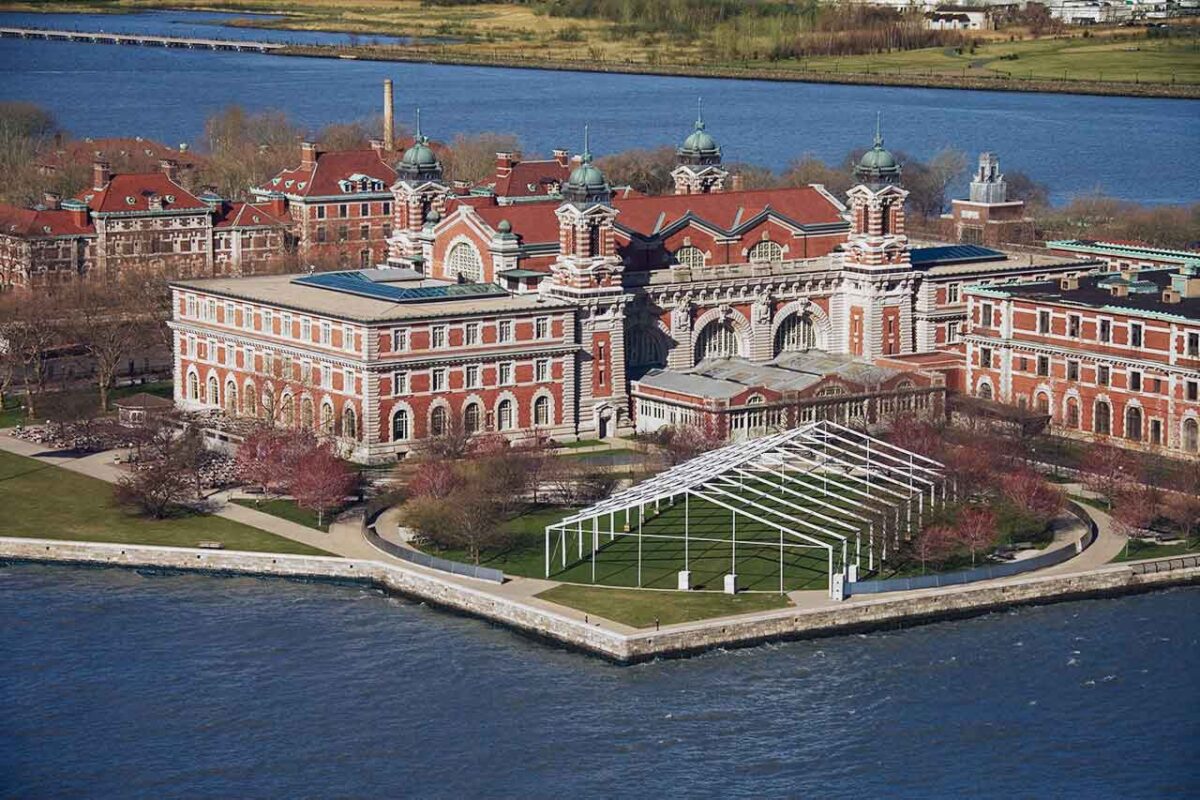
Did you know that almost half of today’s Americans have ancestors who took their first steps in the New World right on Ellis Island? Between 1892 and 1954, over 12 million people arrived here – some with hope, others with fear, all with a dream of a new beginning. Today, this small island located right next to Manhattan is more than just a museum. It’s a place that holds the emotions of millions – from courage and belief in a better tomorrow, to tears of separation and fear of what is to come…
Often Ellis Island is treated merely as an addition to a visit to the Statue of Liberty. And yet it is here that America, as we know it today, was born – in the footsteps, breaths, and hopes of people who stepped onto this land for the first time.
For me, this story holds special significance. I myself spent many years of my life abroad and know how challenging and beautiful it is to start anew on foreign soil. Perhaps that’s why Ellis Island resonates so deeply – because it’s not just the history of America but also a universal story of all of us who once set out on a journey for a new life.
Ellis Island in a nutshell
History of Ellis Island – gateway to the American dream
The beginnings – from oysters to fort
Today’s Ellis Island was not always a place full of human stories. Before Welshman Samuel Ellis bought it in 1774, it was part of an archipelago called the „Oyster Islands”. The Lenape Indians had been collecting shellfish there for centuries, which were a staple of their daily diet. In the 19th century, the island changed its face – it first became Fort Gibson, then a naval ammunition depot.
The turning point came in 1890, when the federal government took control of immigration from individual states. Castle Garden in Manhattan, where newcomers had been processed for 35 years, was no longer sufficient. The wave of migrants from Europe was so great that no one could foresee its scale.
💡 Castle Garden – the forgotten immigrants’ stop
Before Ellis Island became the main immigration station, this role was served by Castle Garden in Manhattan. A former fort, later an entertainment hall, from 1855 to 1890 it was the place where newcomers to America underwent initial inspections. However, as the number of immigrants rapidly increased, Castle Garden became insufficient. A new, larger, and better-prepared place was needed – and thus Ellis Island was born.
Today the building still exists – you can see it in Battery Park. It’s now called Castle Clinton National Monument and it reminds us of this earlier, somewhat forgotten history of immigration to the USA.
January 1, 1892 – the day that changed New York and America
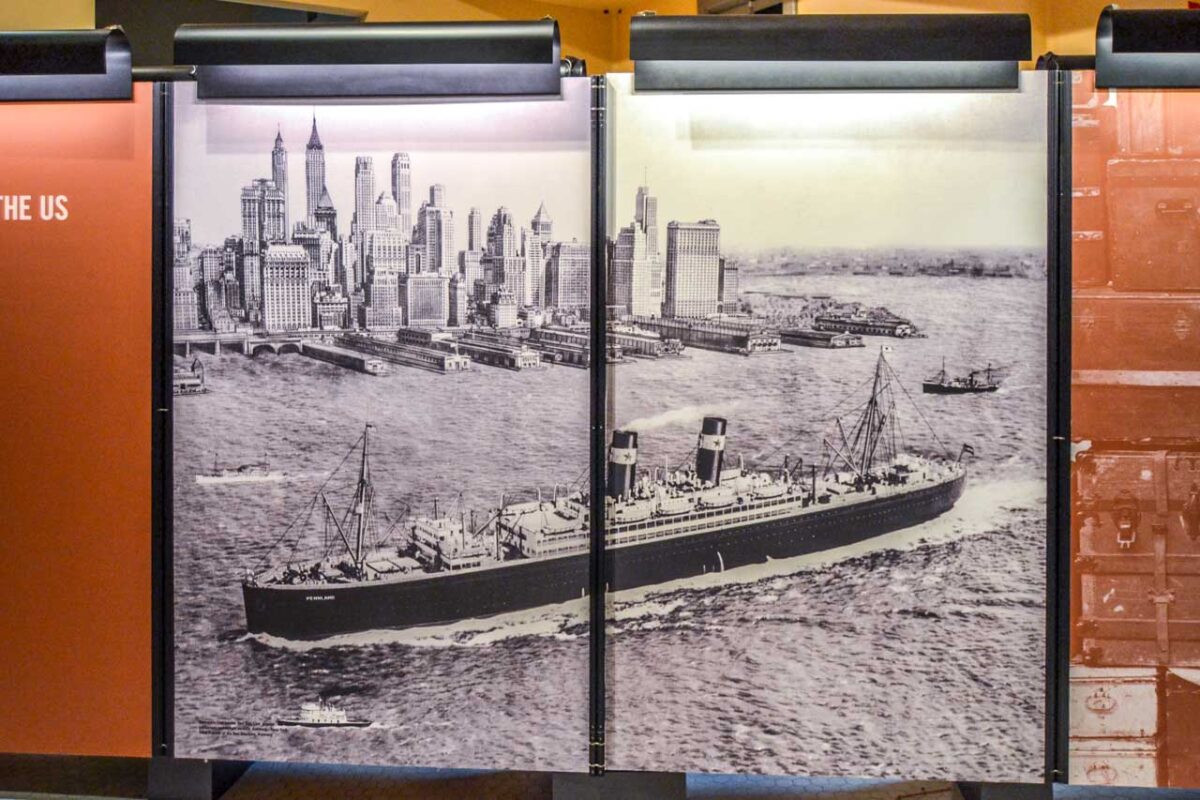
It was 10:30 in the morning when Annie Moore, a 15-year-old girl from Ireland, landed with her two younger brothers. It was she who became the first person registered on Ellis Island. As a gift, she received a 10-dollar gold coin from an official – a modest yet symbolic gesture of welcome to the New World. Annie could not know then that this gesture was opening the history of a place that would forever change the face of America.
Her own life went on ordinarily. She never left New York. She married Joseph Augustus Schayer, a German immigrant trading fish at the city market. She gave birth to 11 children, though only five reached adulthood. She died in 1924, at only 50 years old, of heart failure. Did she fulfill her American dream? Hard to say. But it was her step on Ellis Island that began an era that shaped modern America.
Years of glory and dramas (1900-1924)
After Anna, further waves of immigrants followed. The island that welcomed her as the first soon became witness to indescribable crowds. A record was set on April 17, 1907 – on that day, 11,747 people arrived at Ellis Island. It’s hard to imagine the hustle: hundreds of suitcases and bundles, the cries of children, calls in dozens of languages. In 1907 alone, over a million people passed through this place.
The majority came from Southern and Eastern Europe. Italians fled poverty, Jews from Tsarist Russia sought refuge from pogroms, Poles dreamed of their own land and freedom. There were also Greeks, Hungarians, Czechs – each with little luggage and great hope for a new life.
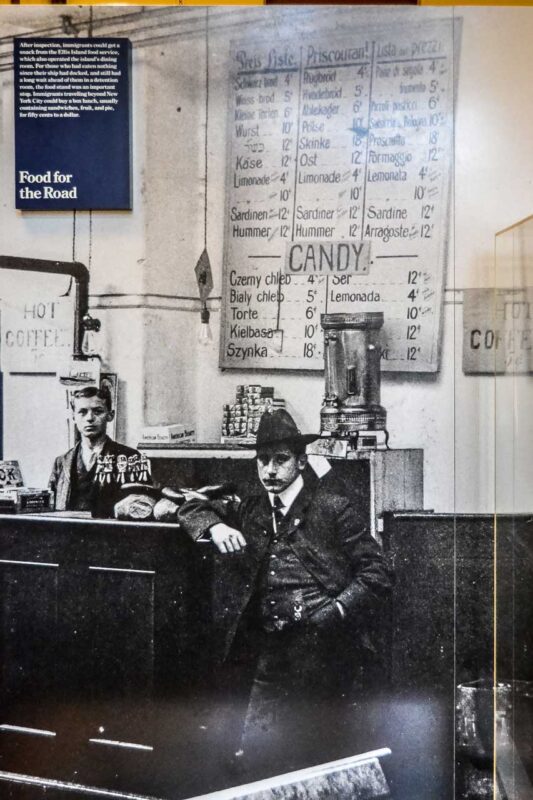
Poles quickly became one of the largest groups. In 1899, they were in fourth place, and just a year later, they moved up to third, surpassing the Irish. Between 1870 and 1914, over two million Poles traveled to the United States, and many of them took their first steps at Ellis Island.
Immigrant inspections
The inspection process – six seconds that could change everything
The wave of immigrants that arrived after Anna had to face the next stage – inspection. It was this inspection that decided whether the dreams of America would become a reality.
First and second-class passengers had it easier – they were processed on the ships. The government assumed that if they could afford an expensive ticket, they would likely not be a problem. However, the real tests awaited the poorest, traveling in stuffy, overcrowded holds. They, upon landing, were transported by barges to Ellis Island.
Doctors had an average of six seconds to make a decision. They observed people already as they climbed the stairs to the main hall. They looked for signs of disease, lameness, shortness of breath. They checked the eyes for trachoma – a dangerous disease that could lead to blindness. For this, they used characteristic hooks to lift the eyelids, called buttonhooks. These tools can now be seen in the museum, but then they were symbols of fear.
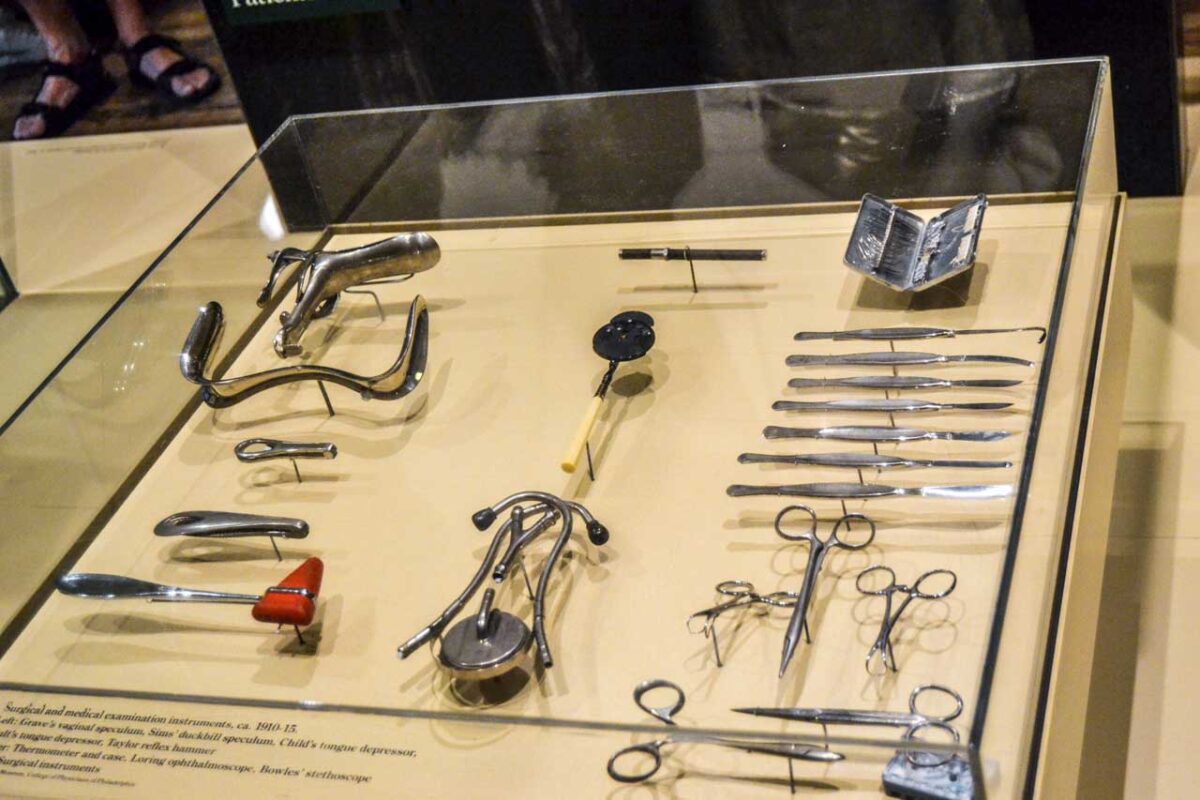
Suspects were marked with chalk on their backs. Simple letters decided their fate:
Registry Room – in this room human fates were decided
After the medical examination, it was time for the Registration Hall, called the Registry Room. It was there that officials asked questions that could open or close the path to a new life:
The government required that an immigrant carry between 18 to 25 dollars (equivalent to several hundred today). This was supposed to be proof that they could manage in the new country and would not become a ‘public burden’.
Separation Stairs – moment of truth
At the end of the hall were the famous Separation Stairs. Three directions – three destinies. To the left were those who could board the ferry to New York. To the right were those who were setting off on a further train journey. The middle stairs led to uncertainty: there, people were directed for additional inspections.
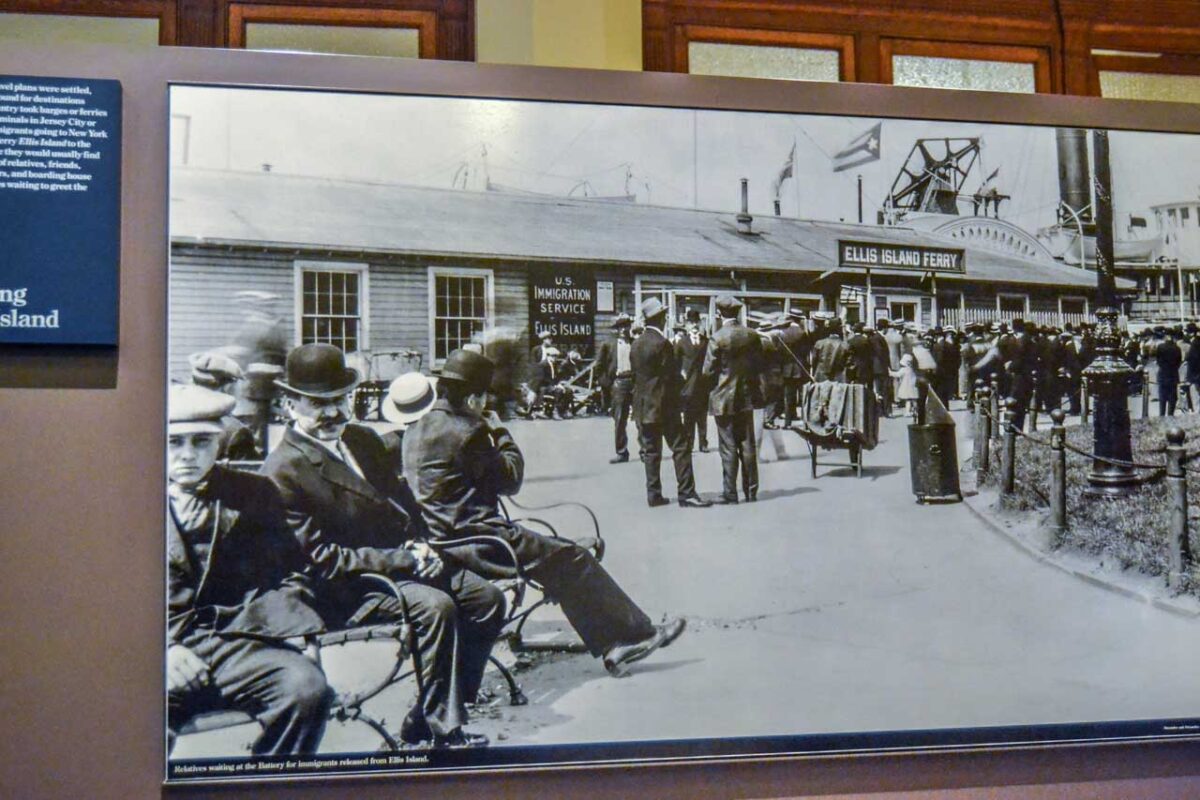
Often, families waited at the foot of the stairs. Tears of joy when, after years of separation, they could embrace. But also tears of despair when someone was detained or sent back.
Dramas and exceptions
About 2% of immigrants never crossed America’s gates – they were turned back due to illnesses, mental problems, or a criminal past. About 3,000 people died on Ellis Island, mainly in the hospital located in the southern part of the island.
But there were also extraordinary stories. The youngest registered immigrant was only seven months old – Johann Weissmuller, who later as Johnny Weissmuller won Olympic gold medals and became famous as Tarzan. The oldest was an 80-year-old woman from Ireland, who came to spend her last years with her children.
The transformations of Ellis Island – from an immigration station to a museum and tourist attraction
Decline and oblivion
Everything changed after 1924 when the Immigration Act came into effect. The new regulations significantly limited the number of arrivals and moved most procedures to American consulates in Europe. Ellis Island lost its former role. Over the following decades, it mainly served as a detention place for people with irregular documents, war refugees, or prisoners during both world wars.
On November 29, 1954, the island officially ceased operations as an immigration station. The last detainee was Norwegian sailor Arne Petterssen, whose wrongdoing was… extending his shore leave. Then followed years of silence and neglect. The buildings deteriorated, roofs collapsed, and walls became overgrown with ivy. Trees grew through the ceilings, and the entire place looked like a scene from a film about an abandoned civilization.
Revival by the People
In the seventies, Americans began to realize they were losing something important – not just historical walls, but a part of their own identity. In 1976, the island was partially opened to visitors, but true renewal did not start until the next decade.
The Statue of Liberty-Ellis Island Foundation launched a major social campaign. Over 350 million dollars were raised, making it the largest private fundraising effort in U.S. history for a public project. People sent in single dollars, hundreds or thousands – everyone wanted to contribute to saving a place where their family’s story often began.
September 10, 1990 marked a new chapter for Ellis Island. The Ellis Island National Museum of Immigration was established – today, it is one of the most important historical museums in America, where millions of visitors can connect with the stories of the people from whom modern America began.
Visiting Ellis Island
How to reach Ellis Island?
Access only by ferry
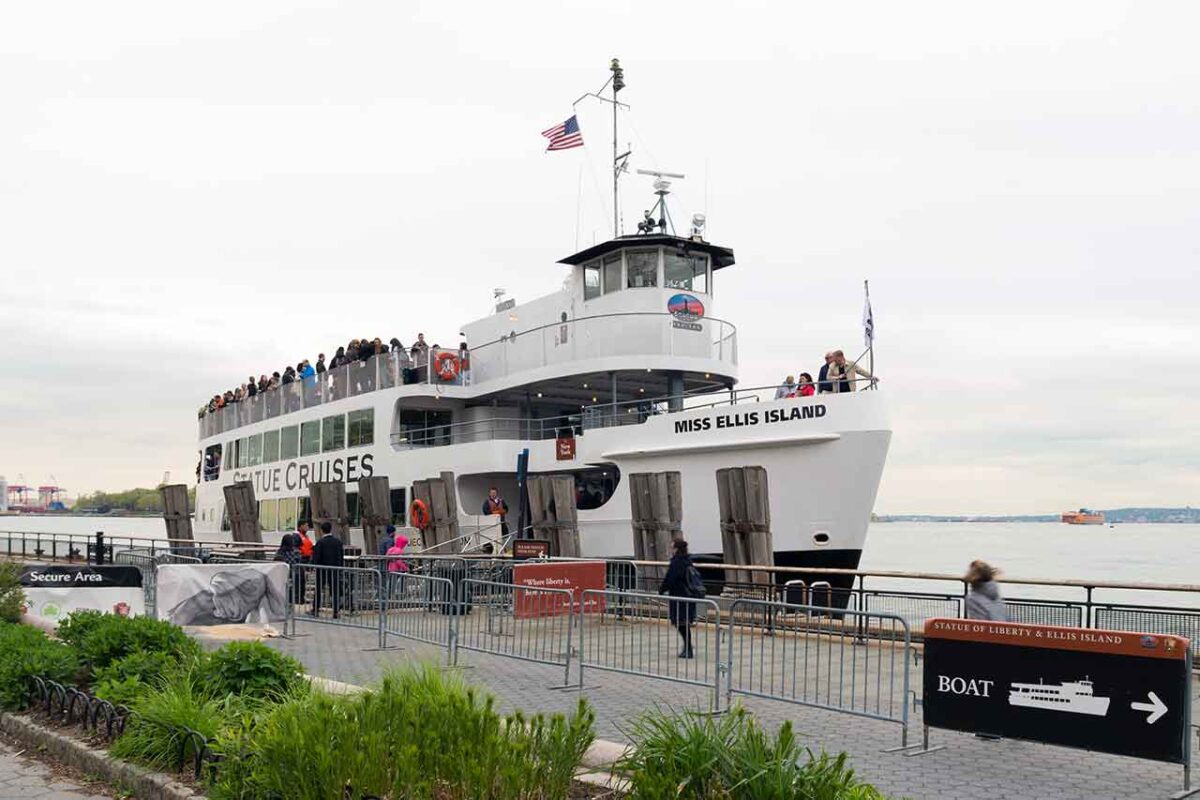
Ellis Island can only be visited by ferry, and the only authorized operator is Statue City Cruises, authorized by the National Park Service. No other company is allowed to transport passengers to the islands.
Ferries depart from two locations:
Ticket Prices (2025)
| Option | Price | What is included / notes |
| General Admission Ticket | Adults (13+) – $25.50 | Ferry to/from the island, entry to the Statue of Liberty and Ellis Island (including the museum) |
| Pedestal Reserve | Same price as General Admission ticket | Access to the Statue of Liberty pedestal (limited spots, reservation required in advance) |
| Crown Reserve | Same price as General Admission ticket | Access to the Statue of Liberty crown (very limited tickets, reservation months in advance recommended) |
| Hard Hat Tour (hospital tour) | + $50 to the General Admission ticket | Special tour of the former immigration hospital on Ellis Island, protective hard hats mandatory |
Important information

New York: Statue of Liberty and Ellis Island by ferry
You can explore the Statue of Liberty and Ellis Island along with their museums at your own pace using an audio guide. During the ferry ride from New Jersey both ways, you’ll also see the famous New York City skyline.
The ferry ride is not just a way to get to the islands, but part of the whole experience. The boat always stops first at Liberty Island with the Statue of Liberty and then continues to Ellis Island. On each island, you can disembark and spend as much time as you wish – ferries run every 20-30 minutes.
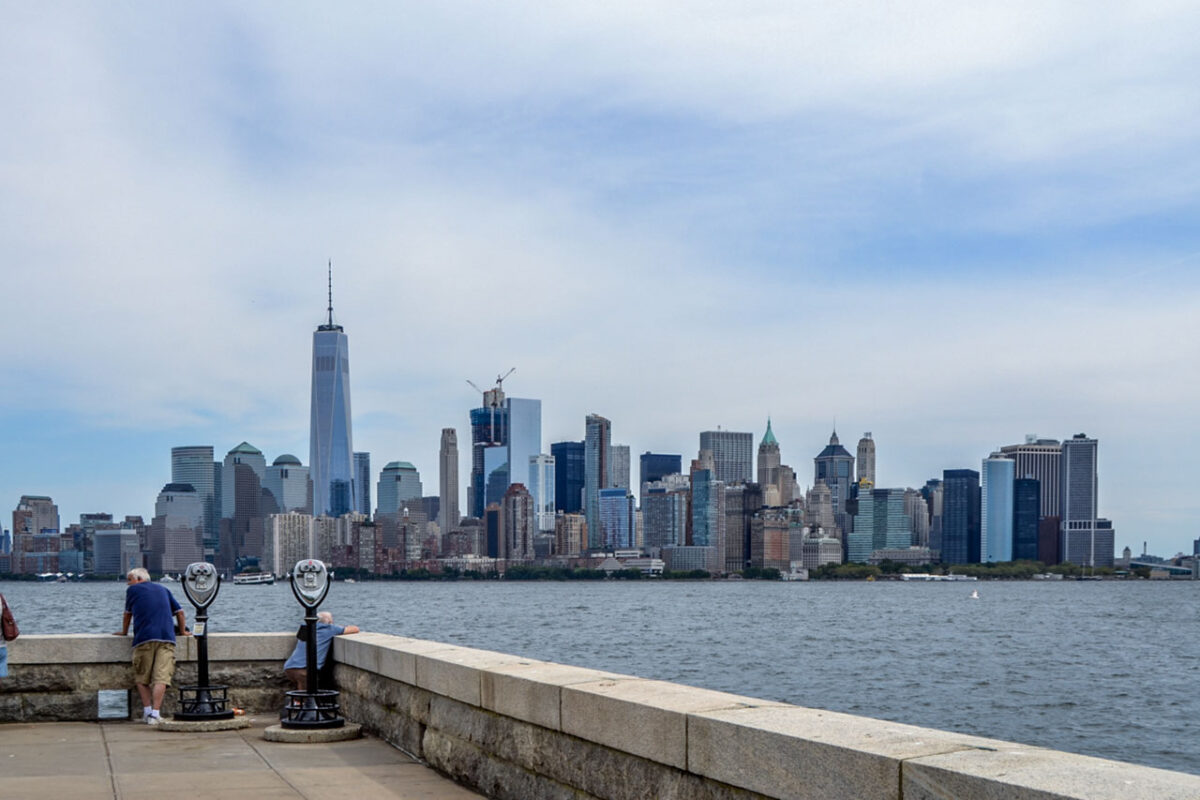
Just the sight from the deck is impressive. On one side stretches the panorama of Lower Manhattan with the towering One World Trade Center, on the other you can see Brooklyn. Behind you is the Statue of Liberty, and ahead of you emerges Ellis Island. This is the very view that millions of immigrants saw over a hundred years ago as they approached America for the first time.
Ellis Island National Museum of Immigration
When you disembark from the ferry, you immediately find yourself in front of the former immigration station building. The brick walls, greenish copper domes, and the elegant French Renaissance Revival façade are impressive at first glance. This is where, since 1900, millions of people underwent their first checks in the new country.
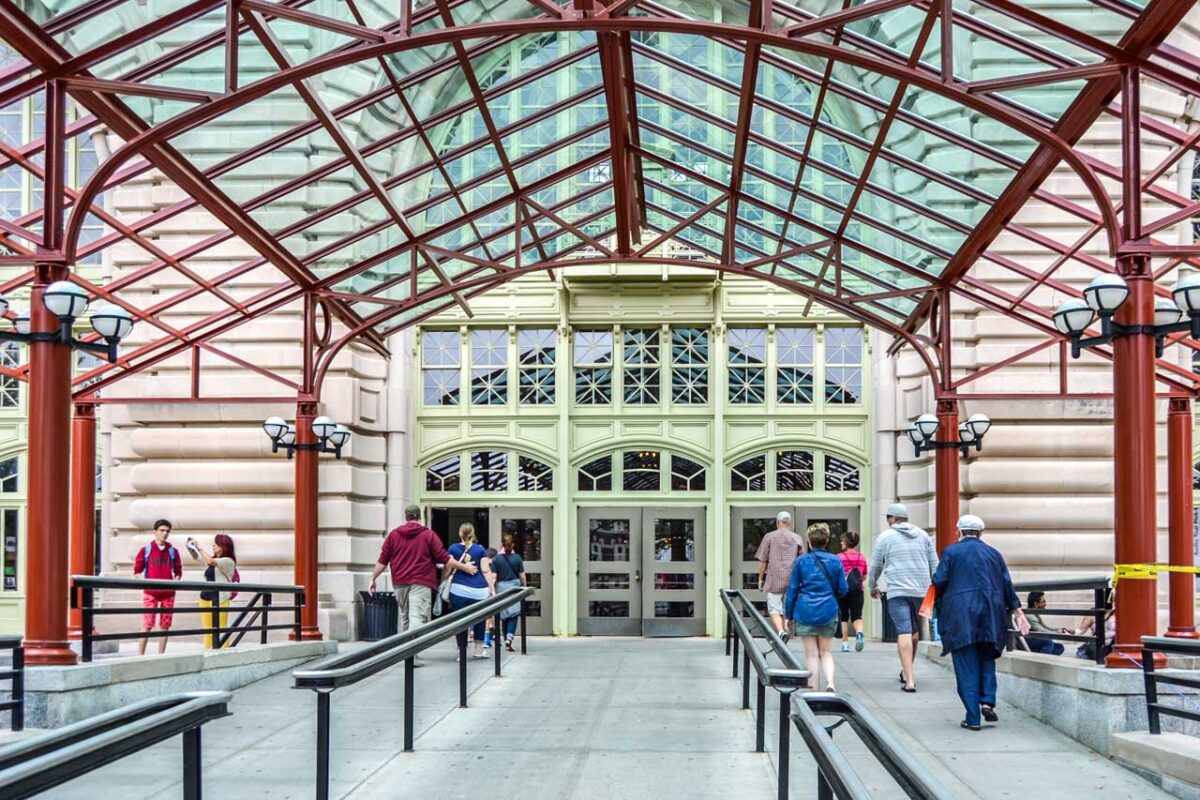
Entrance to the museum is free – you only pay for the ferry ticket. The price also includes an audio guide, available in 12 languages, including Polish. There is also a special family version, allowing children to discover the history of immigrants in an accessible and interesting way.
Registry Room – the most important place on Ellis Island
On the first floor, there is a hall that makes the most impression – the Registry Room, also known as the Great Hall. It’s an impressively large space, about 60 by 30 meters, with a vaulted ceiling made of distinctive Guastavino tiles. During the peak influx, it could accommodate up to 5,000 people at once.
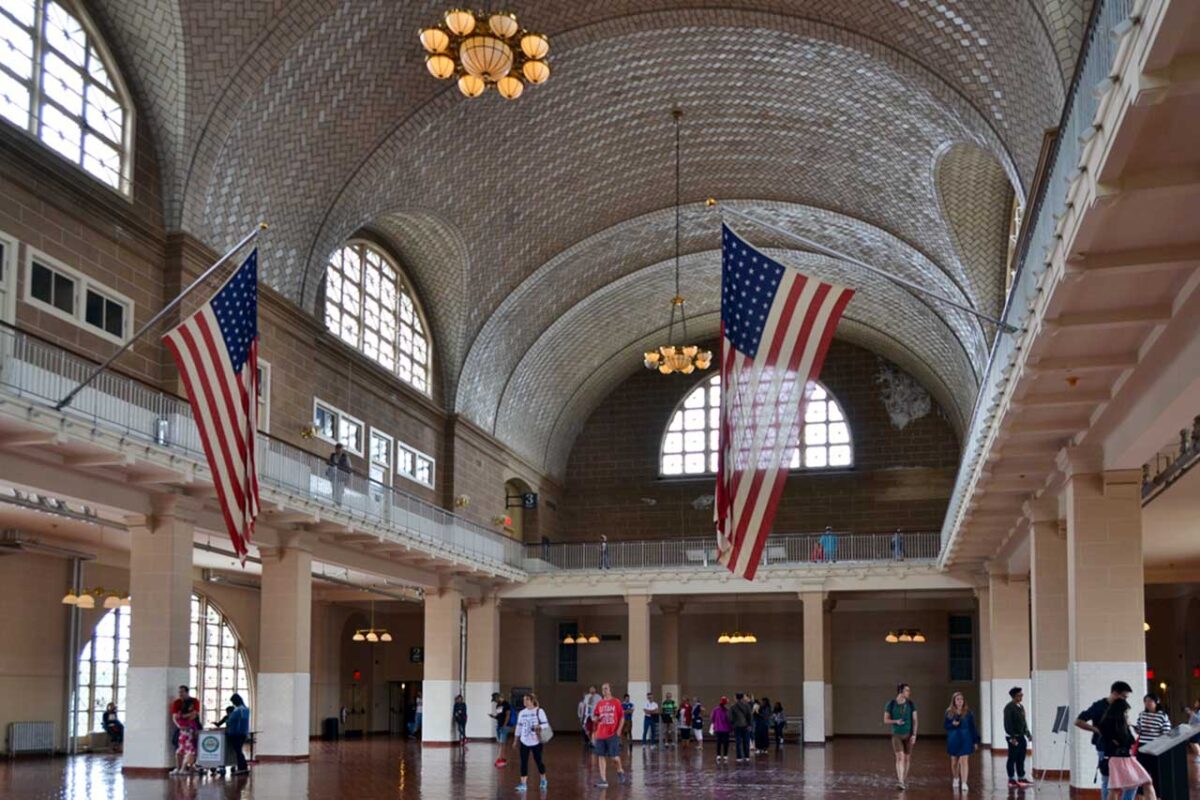
Just stop for a moment and imagine what an ordinary day looked like over a century ago: long queues, conversations in dozens of languages, children crying, tension in the air. Flags of the countries from which immigrants came still hang on the walls – symbols of their hope and identity.
Stairs of Separation still lead in the same three directions as they used to. Walking through them today, you can feel how important this moment was for millions of people – a moment that determined their future.
American Family Immigration History Center
After leaving the Registry Room, it’s worth visiting the ground floor, where the Family Immigration History Center is located. Here you can search collections containing information about 65 million passengers who arrived at the port of New York between 1820-1957.
For comparison – about 12 million people passed through Ellis Island alone. Hence, the database includes not only immigrants processed here but also earlier and later records from the entire New York port.
Just enter your grandmother’s or great-grandfather’s last name to see the original ship manifest: age, occupation, last residence in Europe, amount of money in pocket, and even the destination address in America. Suddenly, great history becomes something very personal.
You can also order a certificate with a copy of the document – it costs 25 dollars and is more than just a souvenir. It is a tangible piece of family history that you can take with you (if you have American immigrant ancestors).
American Immigrant Wall of Honor

On the waterfront, right next to the museum, stretches a long stainless steel structure – this is the American Immigrant Wall of Honor. The wall consists of hundreds of panels with densely engraved surnames. In the sun, the steel shimmers like a sheet, and the letters form an endless immigration record.
This is one of the most photographed places on the island – on one side you have a view of Lower Manhattan, on the other the Statue of Liberty. Walking along the wall is more about contemplation of space than an emotional museum experience: on one side the panorama of New York, on the other thousands of names.
For American families, it is important to have the opportunity to add the name of an ancestor here (cost 150 USD). For tourists, it’s primarily an interesting vantage point and a symbolic monument to those who once sailed here.
Interactive exhibits and displays
It’s best to plan your museum visit floor by floor. Each one leads through a different part of this great story of immigration.
Ground floor offers a broad perspective – the history of migration from the 16th century to the present. Interactive maps show where people came from, why they left their homes, and where they headed in America.
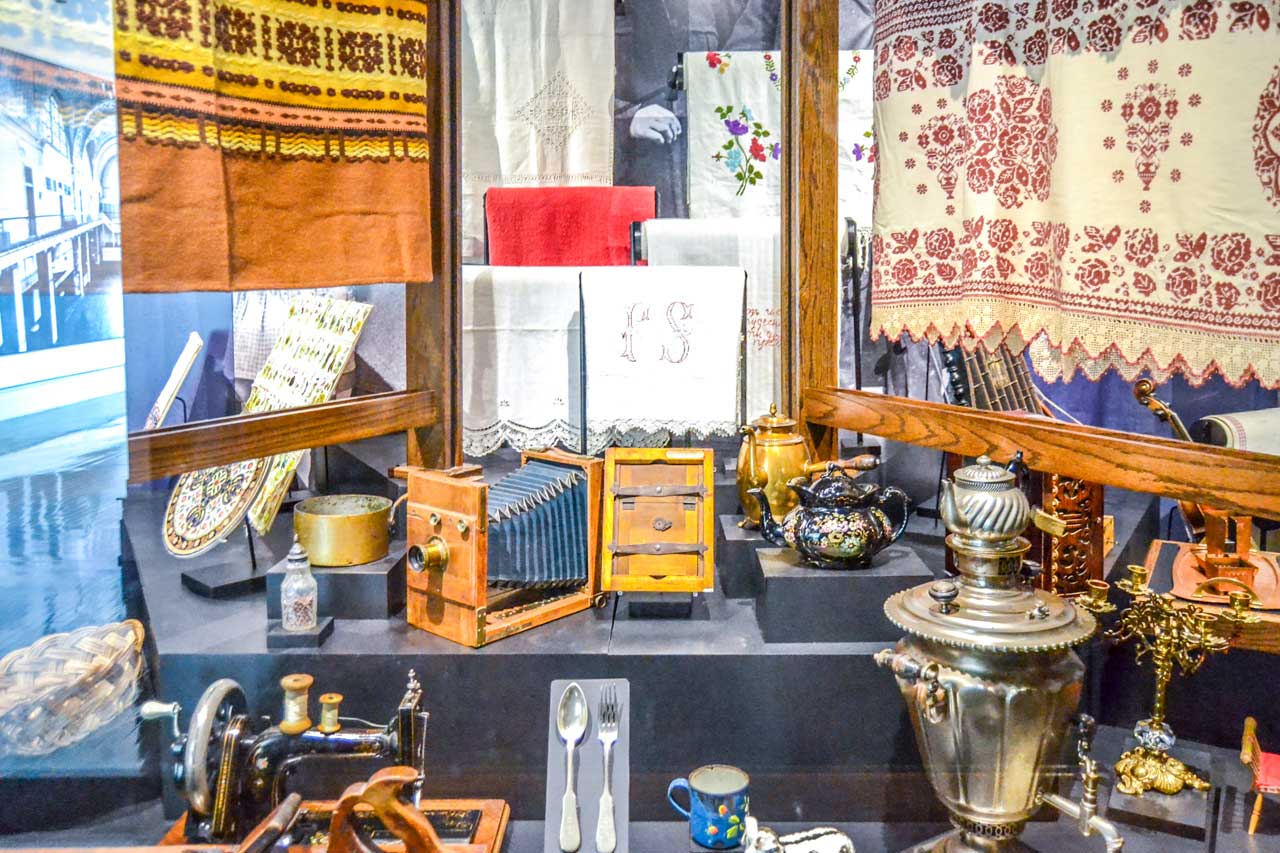
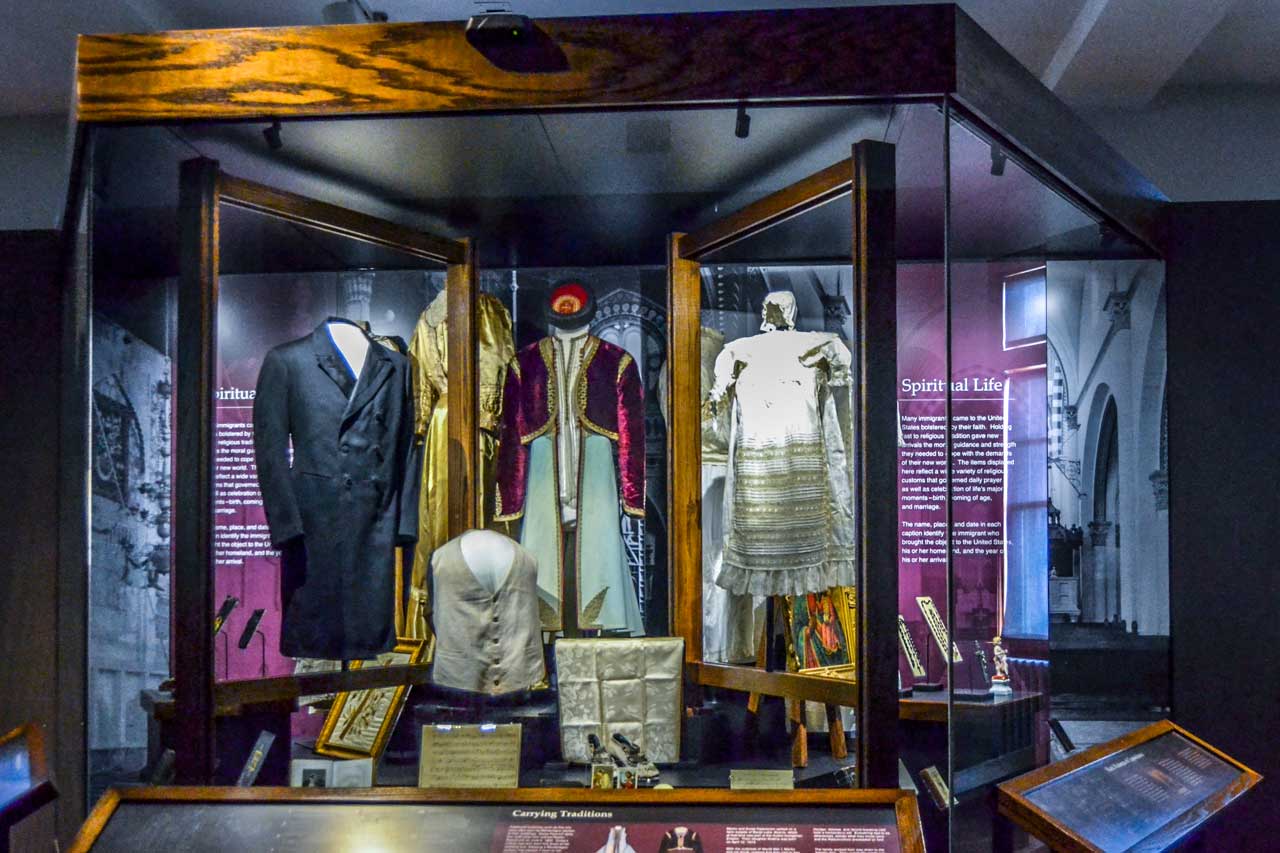
First floor focuses on the everyday life of Ellis Island. Here is the Registry Room and exhibits related to the inspection process. You can see original buttonhooks used for eye examinations, scales for weighing luggage, or stamps and documents that determined the fate of thousands of people.
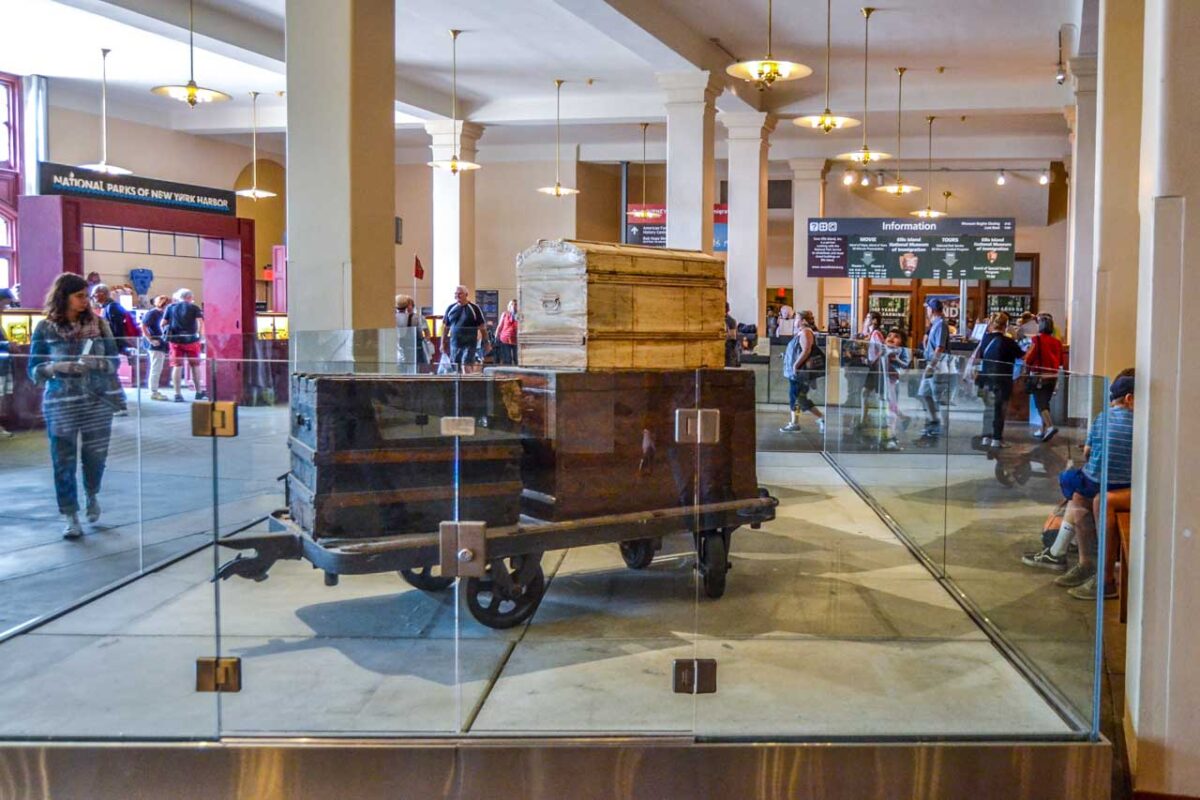
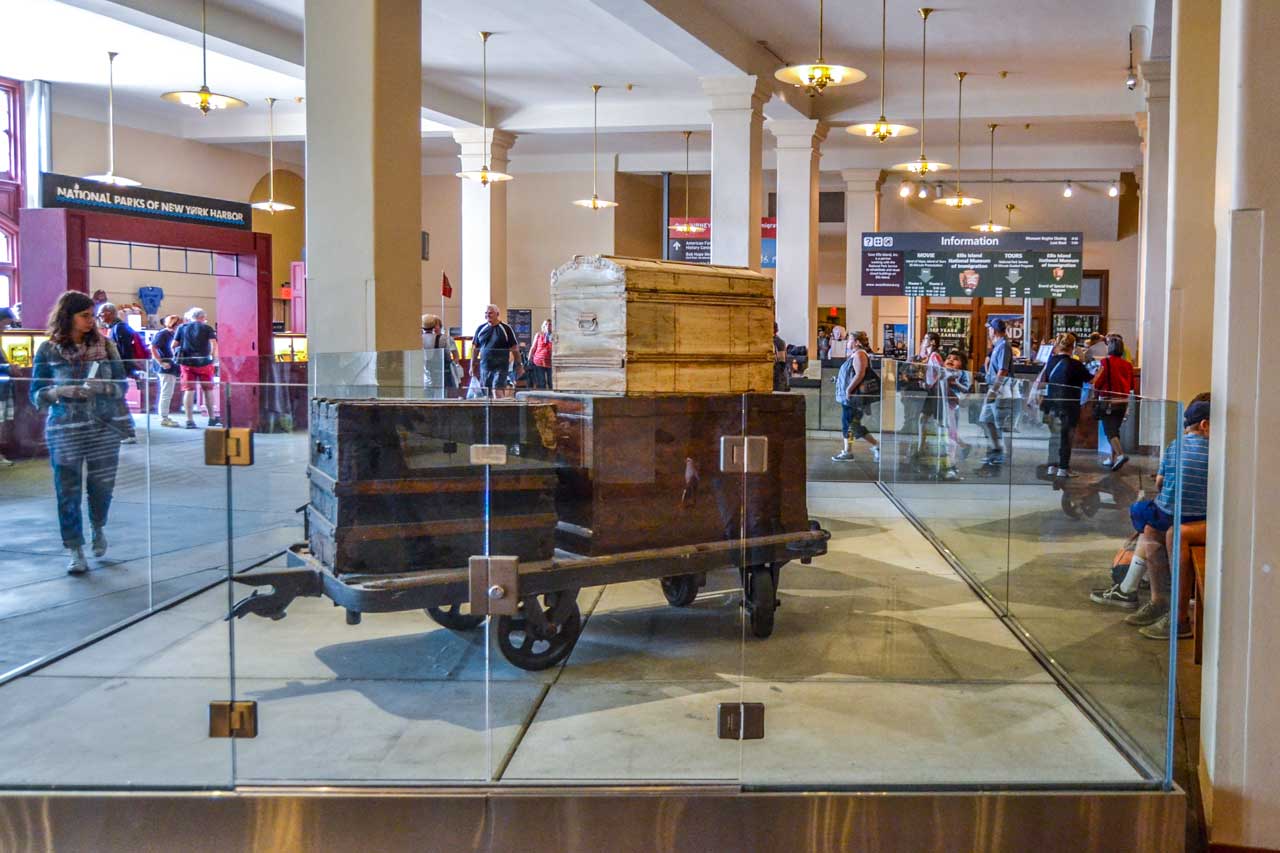
Second floor is the most moving part of the museum – “Peak Immigration Years 1880-1924”. In the display cases, there are items that immigrants brought with them across the ocean: suitcases, photographs, letters, small mementos. Each exhibit tells its own, personal story.
💡 Don’t miss the exhibition on Polish immigrants – you’ll find the story of the Kowalski family from Galicia, photos of Polish children on Ellis Island, letters written to families in Poland.
Hard Hat Tour – the hidden part of Ellis Island
For an additional 50 dollars, you can take part in the Hard Hat Tour – a 90-minute tour of the southern part of the island, where the former immigration hospital operated. The tour is available only for individuals over 13 years of age.
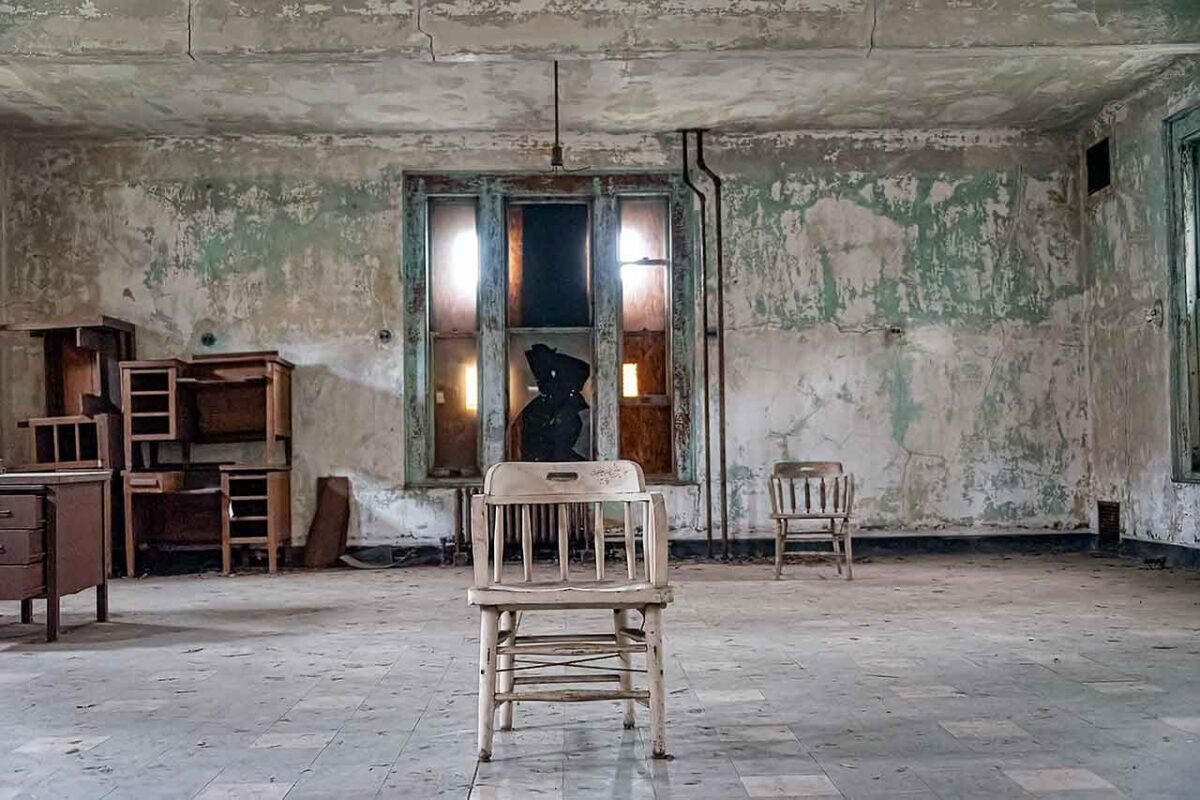
The route leads through unrenovated buildings: operating rooms, infectious wards, patient rooms, or rooms with old sterilization equipment. Many of the rooms look exactly as they did in 1954 when the hospital was closed.
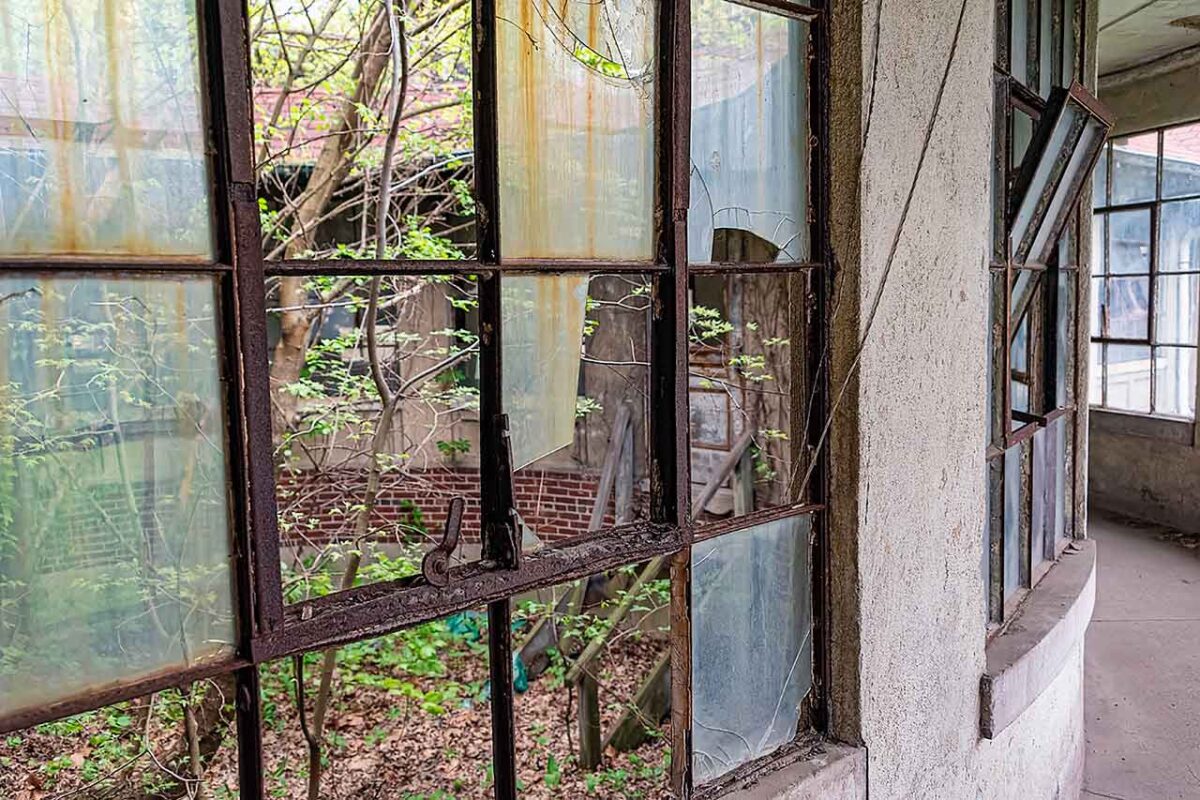
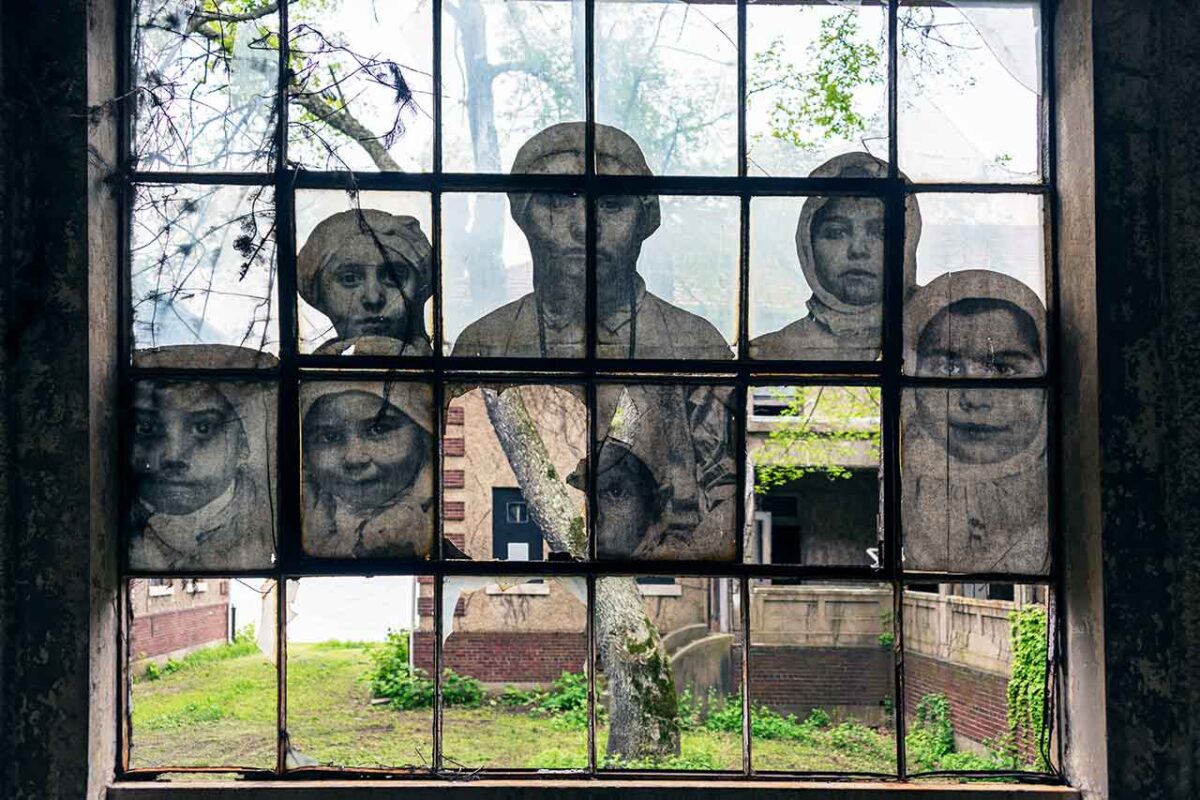
One of the main highlights of this tour is the installation “Unframed – Ellis Island” by French artist JR. These are large, black-and-white photographs of immigrants glued to the walls of empty rooms, allowing a better imagination of the people for whom Ellis Island was the first stop in America.
Visiting with family and children
Ellis Island can also intrigue the youngest visitors. Instead of just ‘watching the museum,’ children can really do something there. There is a special version of the audio guide prepared in simpler language, with questions and tasks along the way. In the Junior Ranger program, they receive a booklet to collect stamps, and at the end, a park ranger badge – a souvenir they will remember longer than an ordinary ticket. The interactive exhibition ‘Changing Face of America’ is also a lot of fun, where you can use the screen to see how you would look in clothes from different eras.
It’s only worth remembering a few things. There are only basic toilets on the island, so it’s better to plan related matters in advance. It’s also good to bring water and snacks – food available on-site is expensive and not very tasty. Allow at least two to three hours for both Ellis and Liberty Island, and on summer weekends it’s best to catch the first ferry at 9:30. This way, you’ll avoid the longest lines and the children will have more energy for exploring.
Accessibility for people with disabilities
Ellis Island is well prepared for visits from people with various needs. The museum building has elevators leading to all floors, wide paths and ramps that facilitate wheelchair movement.
Special audio guides are also available for the hearing and visually impaired, as well as a version in American Sign Language (ASL). Each floor has restrooms adapted to the needs of people with disabilities.
Touching stories of immigrants
Behind names and numbers are specific faces and biographies. Annie Moore, the first registered immigrant, was only 15 years old when she reunited with her parents after four years of separation. Among the arrivals was the weeks-old Augusta Confino from Turkey, five-year-old Irving Berlin – later the author of ‘God Bless America’, or four-year-old Bob Hope, who became an icon of American show business.
The island also received teenage Ettore Boiardi, later known as Chef Boyardee, as well as Albert Einstein, forced to flee from Nazi Germany. The archives also contain Polish threads – such as Aniela Kowalski from Galicia, who, after a difficult start in America, founded a family and bakery in Chicago.
These stories show how varied the paths through Ellis Island were – from ordinary people seeking a better life to those who made a permanent mark on world history.
What to see around – Liberty Island and Lower Manhattan
Statue of Liberty – a natural partner of Ellis Island
The Statue of Liberty and Ellis Island are the story of one journey. The Statue was the first thing immigrants saw as they sailed into New York Harbor. Ellis Island was the first place they set foot on American soil.
Ferry tickets cover both islands. If you go on this trip, you’ll start at the Statue of Liberty (the ferry goes there first), and then you’ll sail to Ellis Island. Leave more time for Ellis Island – the Statue is mainly photos and views, Ellis Island is real history lessons.
How to connect the sightseeing:
Why is it worth visiting Ellis Island?
You don’t need to have ancestors from Ellis Island to feel the significance of this place. It’s a universal story of dreams and courage. For those whose families actually came here, the visit becomes almost a pilgrimage – the awareness that you are standing exactly where your great-grandfather once stood is very impressive. But even without personal connections, Ellis Island reminds us that everyone carries something of the immigrant within them – a dream of a better life and the readiness to start anew.
This is a place you can’t just ‘check off’ in half an hour. It must be experienced. The strongest impression comes from moments when you stand in the vast hall and imagine the crowds of people from a century ago, when you read a simple letter: ‘America is hard, but there is hope,’ or when you look at photos of children traveling alone, with an address tag around their neck. And if you find the name of your ancestor in the database, the whole great history suddenly becomes your personal one.
Tips
When to sail to Ellis Island?
It is best to visit Ellis Island in the spring when the weather is conducive to walks, and there are still relatively few tourists. Summer provides the most opportunities because all attractions are open, but you have to expect crowds and longer lines. Autumn is a good compromise – it’s quieter than in summer, and the weather is still good. Winter is the time of least traffic, although the ferry can be cold and windy then.
It’s also worth noting the time of the visit. In the morning, on the first ferry at 9:30, the island is significantly less crowded, and it’s easier to explore without rushing. The afternoon offers different advantages – fewer school groups and good light for photos.
How to plan a visit
It’s best to start the day with the first ferry from Battery Park at 9:30. A short visit to the Statue of Liberty takes about an hour and a half, and afterward, it’s worth dedicating at least two to three hours to Ellis Island. After returning, you can end the day with a walk on Stone Street and dinner in one of the atmospheric restaurants, and if you have the energy – visit the 9/11 Memorial.
What to pay attention to
A must-see spot is the Registry Room, but there are more interesting places – on the ground floor, interactive migration maps, outside the Wall of Honor, and in the Family History Center you can browse immigrant archives. The audioguide definitely makes the tour easier, so it’s not worth skipping it.
What might surprise you
Ellis Island is much larger than it appears – it’s 27 acres with several buildings and a park. It’s also surprising that as many as 98% of immigrants were admitted to the USA, and the museum also tells about migrations after 1924. Many tourists emphasize that the Hard Hat Tour is one of the most interesting experiences on the island.
Practical tips
On the ferry it is always windy, so a jacket will be useful, and on site, comfortable shoes – there’s quite a bit of walking. In summer, be sure to bring water and sunscreen, in winter, warm clothing. There’s security screening at the entrance like at the airport, so large backpacks, food, and sharp objects must be left in storage at Battery Park.
Budget
For basic sightseeing, about 40 USD is enough (ferry and transport). If you add food, souvenirs, and additional attractions, the day will close at 90-230 USD – depending on the chosen variant.
Where to eat and what to buy
On the island, food is expensive and average, so it’s better to eat before the cruise or after returning to the city. Good choices are the restaurants at Stone Street or the historic Fraunces Tavern. As a souvenir, it’s worth buying the book ‘Key Island‘ or a ancestor certificate – they have more value than standard tourist gadgets.
FAQ – frequently asked questions about Ellis Island
Yes, visitor access is only available via Statue City Cruises ferry, and each passenger requires a valid ticket.
Ferries depart from Battery Park in Manhattan or Liberty State Park in New Jersey; the trip to Ellis Island takes approximately 15-20 minutes.
The National Park Service recommends a minimum of 1.5–2 hours to see the exhibits in the main building and use the audio guide.
Yes, but only as part of the paid “Hard Hat Tour,” which must be booked in advance through Statue City Cruises; individual entry is prohibited.
There is a cafeteria with a basic menu in the main building; you can also eat your own food in designated areas.
Animals (except certified assistance dogs) are not allowed on the ferry or on the island.
No, there are no lockers on Ellis Island; it is recommended that you travel with only small carry-on bags.
Free computer terminals are available at the Immigration Museum; once logged in, you can search digital ship manifests and order a copy of the document online.
Summary
It’s worth spending at least two or three hours on Ellis Island. The main points are the Registry Room, exhibitions with immigrant memorabilia, and the Family History Center, where you can look into the archives. The audioguide organizes the tour well and adds many details that would otherwise be easy to miss. If you have more time, an interesting addition is the Hard Hat Tour of the abandoned hospital section of the island.
When planning a stay in New York, be sure to set aside time for Ellis Island – it’s an experience that offers more than many a guide on American history!