Italiano
 Polski

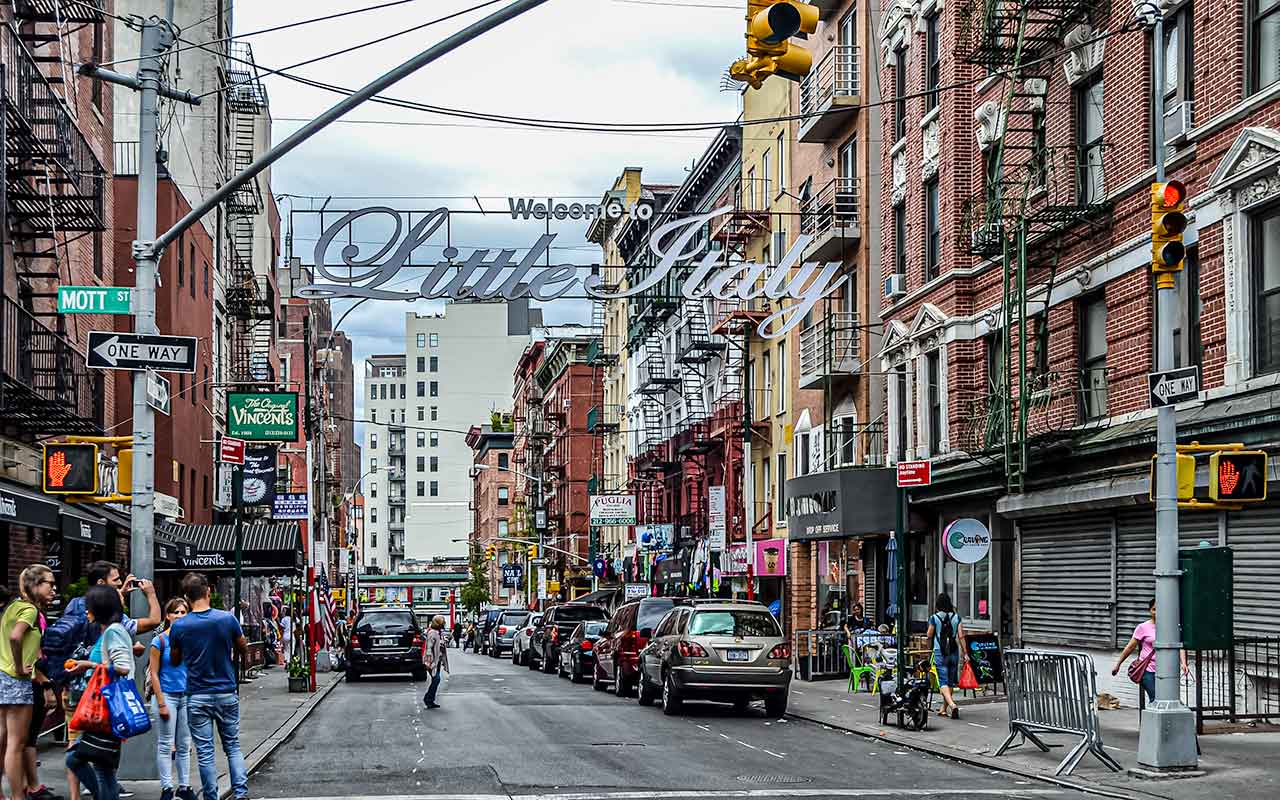
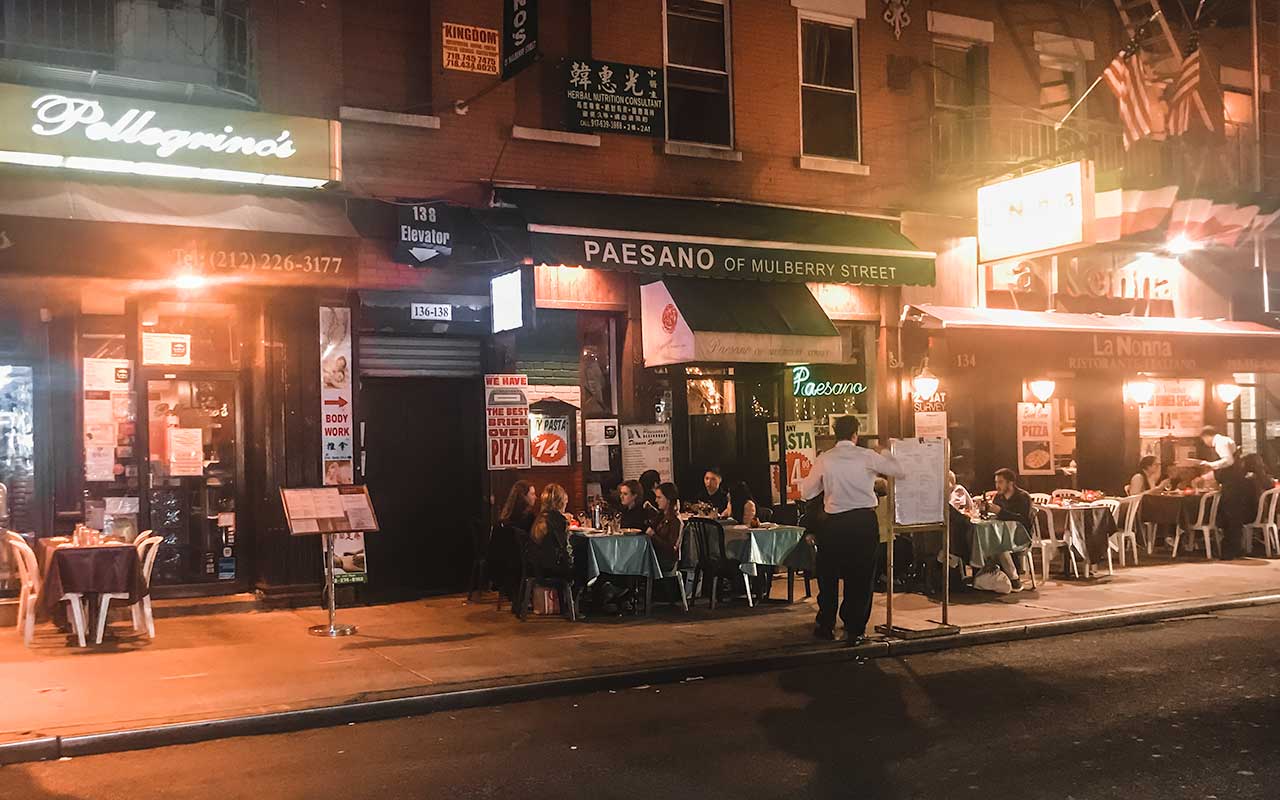
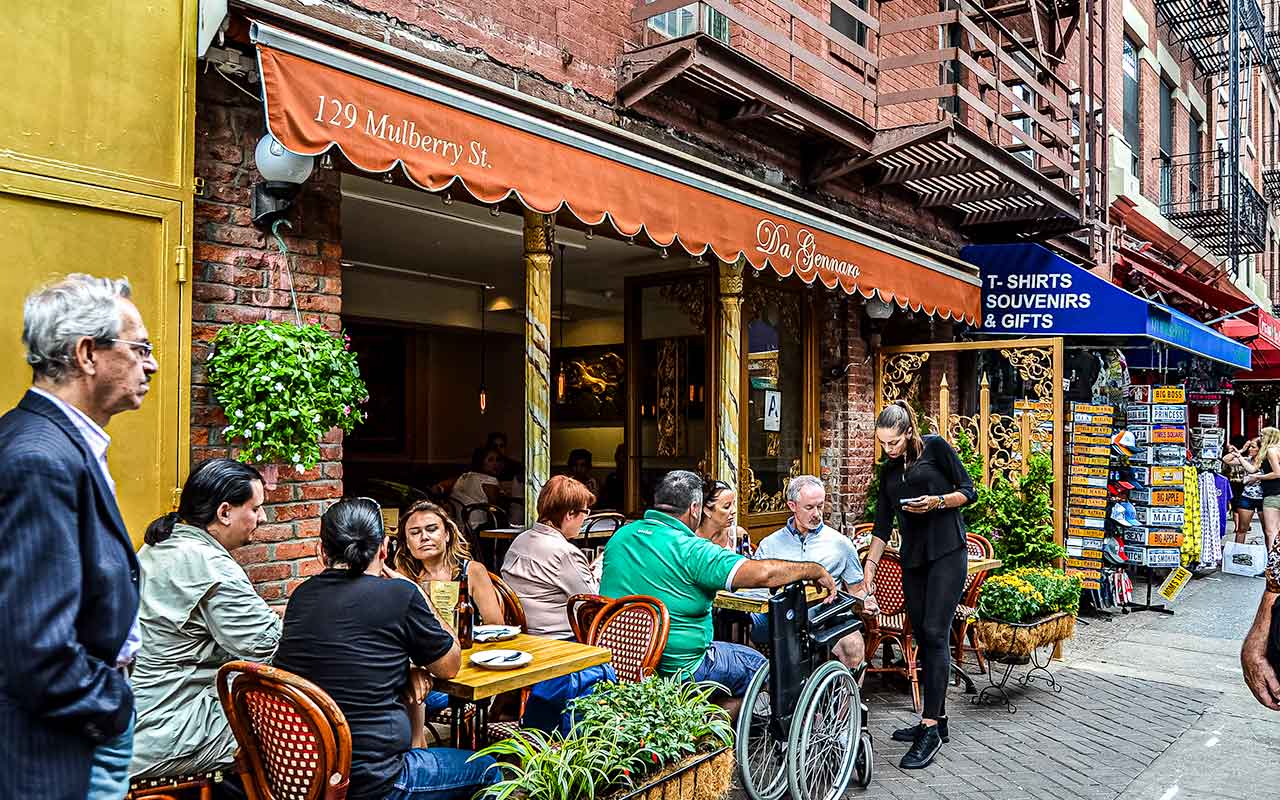
When I think of Little Italy, I always recall one of my evening walks through this area. During one of my trips to New York, I stayed near the Manhattan Bridge, in Chinatown, and on the first evening, I decided to take a walk further to the famous Mulberry Street. It was already late October, but the weather still allowed for an outdoor dinner.
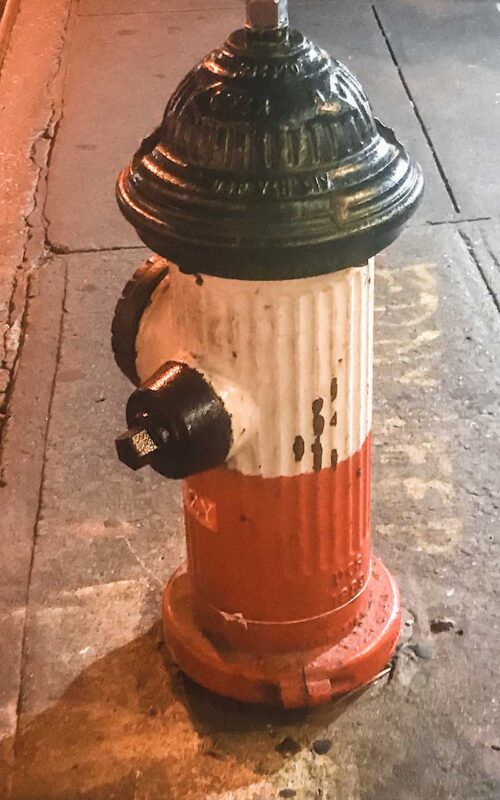
The streets were filled with restaurant tables, and outside the establishments, waiters or owners were inviting passersby with that characteristic Italian enthusiasm. Even the fire hydrants painted in the colors of the Italian flag added charm to the whole – for a moment I felt like I was in a small Italian town, not strolling through Manhattan.
Though the district shrinks year by year under the pressure of the expanding Chinatown, it still manages to charm with its atmosphere. Every year in September, during the San Gennaro festival, Mulberry Street is filled with the sounds of Italian music and the scent of bread, and the street shines in white-red-green colors. In those moments, Little Italy truly allows you to feel a piece of real Italy in Manhattan.
The history of Little Italy – from Italian enclave to tourist spot
Beginnings of Italian Immigration
Little Italy was established in the second half of the 19th century when massive waves of Italian immigrants poured into New York. The first Italians arrived in the 1830s and 1840s, fleeing a failed revolution in northern Italy. The real boom, however, occurred in the 1870s, when poverty in southern Italy brought thousands of families here in search of a better life.
At its peak, around 1910, Little Italy was home to nearly 10,000 Italians. The district stretched from Lafayette Street on the west to Bowery on the east, and from Kenmare Street on the north to Worth Street on the south. This was much more than the present five blocks along Mulberry Street north of Canal Street.
Community Organization by Region
Italian immigrants, especially those from southern Italy and Sicily, settled in New York according to the regions they came from. Neapolitans concentrated around Mulberry Street, Sicilians chose Elizabeth Street, and residents of Calabria and Apulia formed their small enclaves around Mott Street. Life in this part of the city was not easy – families were crowded into tight and unsanitary apartments known as ‘dumbbell apartments.’ Despite difficult conditions, they managed to preserve their traditions and create a true little Italy here.
Impact on American Politics
The influence of the Italian community from Little Italy extended much further beyond cuisine or local traditions – it was also marked in American politics. This neighborhood was home to people who later played key roles in public life. The most famous are the mayors of New York: Fiorello La Guardia and Rudy Giuliani.
La Guardia, the son of an Italian musician, before he made a political career, worked as a translator on Ellis Island, helping newly arrived immigrants find their way in the new reality. It is his name that one of New York’s airports bears today – LaGuardia Airport – because it was he who advocated for its construction in the 1930s. For many Italian families, he was a kind of symbol, proof that from a crowded, poor neighborhood, one could reach the pinnacle of power.
Giuliani, on the other hand, is associated with the 1990s, when he gained fame as a mayor fighting crime, and then with the dramatic events of September 11, 2001, when he led the city through the hardest times in its history.
Both showed that the Italian community in New York was able not only to cherish its roots but also actively shape the future of the city, and even the entire country.
Contemporary Little Italy – what remains of the Italian neighborhood
Shrinking of the neighborhood
Since the 1980s, Chinatown has been rapidly expanding, gradually taking over the area of the former Little Italy, pushing it essentially to a narrow section of Mulberry Street. Over time, fewer Italian families remained in Manhattan, and according to the 2000 census, only 1,211 residents of this area declared Italian ancestry, which constituted just 8.25% of the neighborhood’s entire population. Most moved to the outskirts of New York: to Brooklyn, Queens, or the Bronx. It is there, in the Bronx, along Arthur Avenue, that a community has formed, which many consider today to be a more authentic ‘Little Italy’ than the one in Manhattan.
NoLIta – the new face of the district
NoLIta, or North of Little Italy, is a small but very distinctive part of Manhattan that has emerged on the northern outskirts of the former Little Italy. In the 1990s, it was a quiet, somewhat forgotten area, but it was quickly discovered by artists, fashion designers, and young New Yorkers seeking something fresh outside the crowded SoHo. Today in NoLIta, you will find small boutiques, concept stores, and cafes, which give it a completely different vibe than the classic Italian restaurants just a few steps away on Mulberry Street.
There are fashionable eateries with fusion cuisine, bars with craft cocktails, and small art galleries here. The streets are more intimate, and the buildings are lower compared to the rest of Manhattan, which makes walking around NoLita feel more like a small European city district than part of a big metropolis. Additionally, the place still carries an Italian trace, visible in the old churches and tenements that remember the times when the whole area lived by the Italian rhythm.
What to see in Little Italy – main attractions
Festa di San Gennaro – king of all festivals
Festa di San Gennaro is undoubtedly the loudest and most colorful event in Little Italy. Every year in September, Mulberry Street transforms for eleven days into a huge pedestrian zone filled with music, smells, and crowds of visitors. In 2025, the festival will take place from September 11 to 21 and, as always, will be dedicated to the patron of Naples – St. Januarius (San Gennaro).
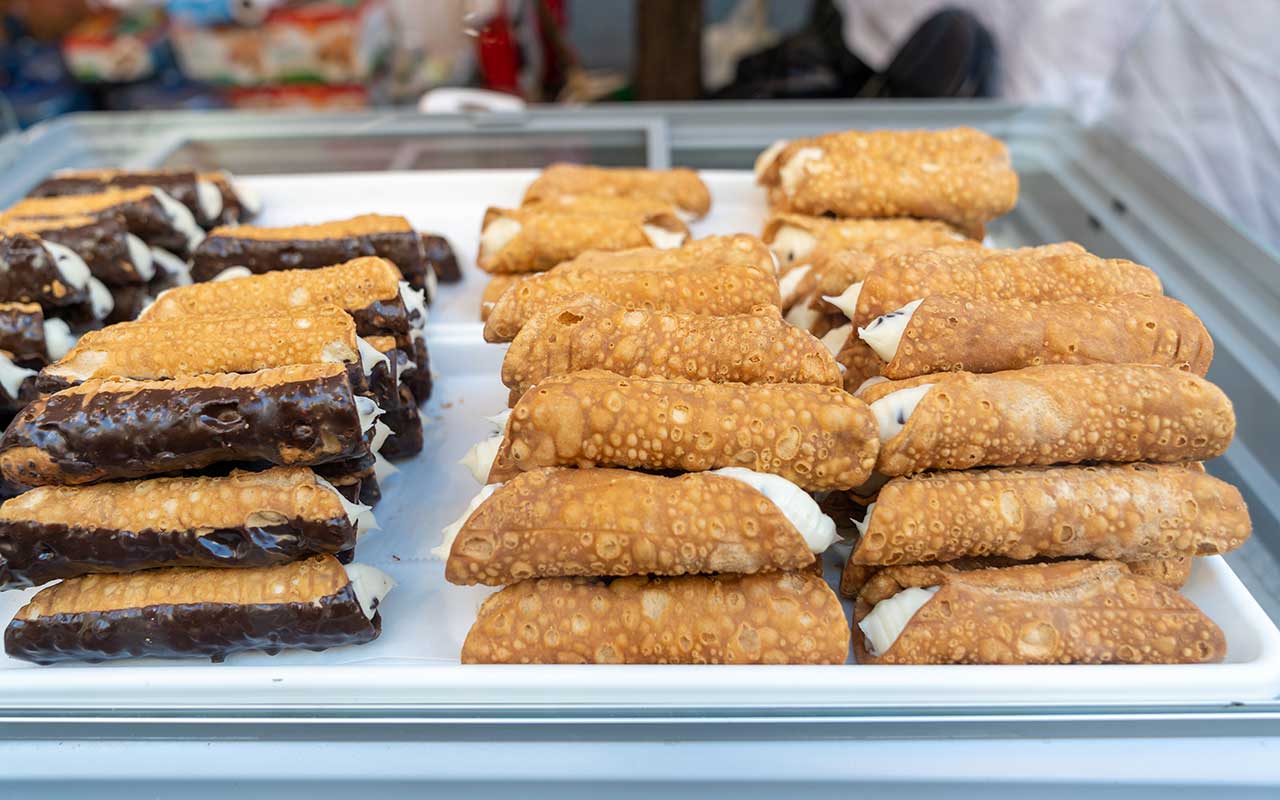
During the holiday, you’ll find almost everything associated with Italian tradition and… New York scale. There is a grand procession with the statue of San Gennaro led from St. Patrick’s Old Cathedral, free concerts and dance performances on the streets, as well as many culinary contests, from the famous cannoli eating (in 2025 it will be the 27th edition!), to meatballs and zeppole, which are Italian donuts. Plus, hundreds of food stalls where you can try classic Italian dishes and New York variations of them.
Welcome to Little Italy – iconic signs
In Little Italy, you can’t pass by the distinctive neon signs welcoming guests to the neighborhood. The most famous one hangs above the intersection of Mulberry Street and Broome Street and it is often featured on postcards or Instagram photos. The second, smaller one can be found a little further on, between Hester Street and Mott Street. Both look impressive, but they truly shine in the evening when they light up in the colors of the Italian flag: red, white, and green. It’s the perfect moment for a photo with the inscription ‘Welcome to Little Italy‘.
St. Patrick’s Old Cathedral
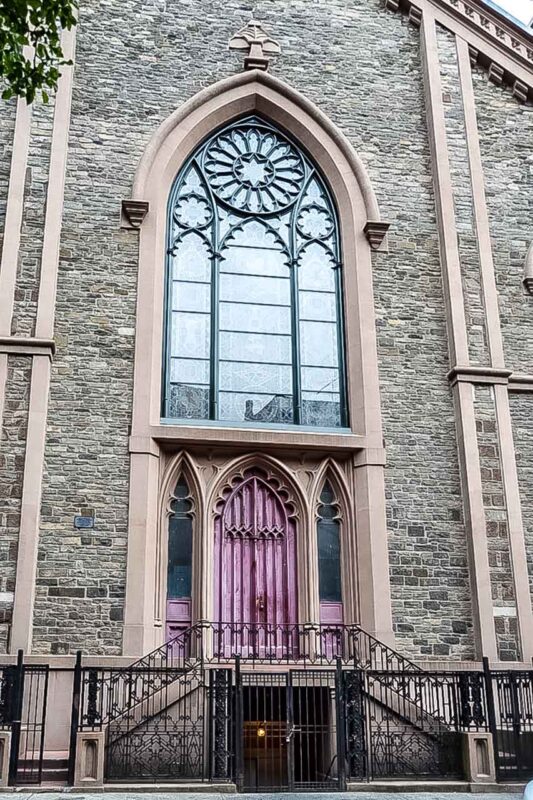
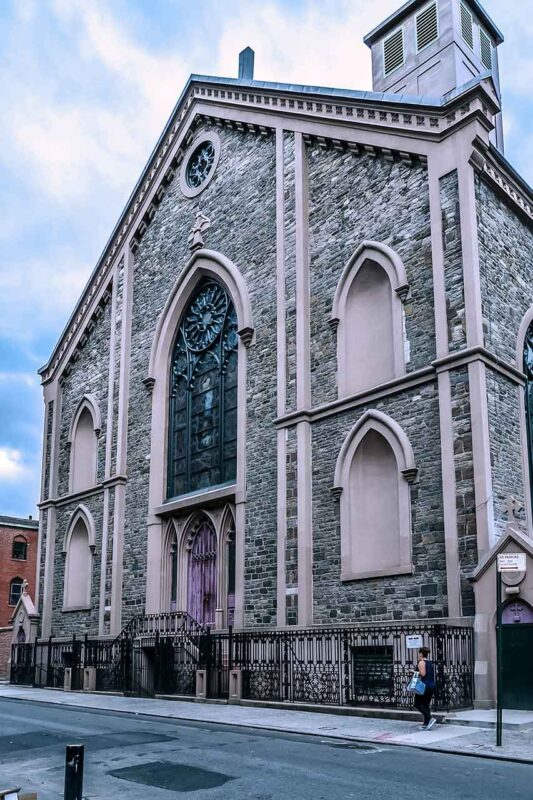
St. Patrick’s Old Cathedral at 263 Mulberry Street is one of the most important places in all of Little Italy. Built in 1815 in the Gothic style, it was the first main cathedral of the New York Archdiocese. This was where the Italian immigrant community used to gather, for whom the church was not only a place of prayer but also a center of social life. In 1966, the building was listed as a historical monument of New York, and its walls still remind us of the times when Little Italy was the center of the Italian community in Manhattan.
Italian American Museum
Italian-American Museum at 155 Mulberry Street is a good place to better understand what life was like for the first Italian immigrants in New York. It is housed in the former Banca Stabile building from 1885, an institution that helped newcomers from Italy with financial matters and daily formalities for decades. Today, the museum collects memories, documents, and oral history recordings that show the journey of the Italian community from poor beginnings to full integration into New York life. The facility is currently undergoing renovation.
Audrey Hepburn Mural
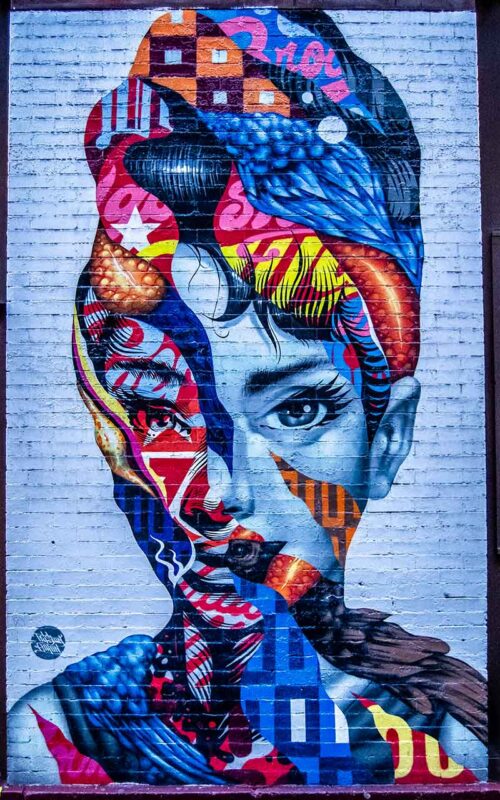
One of the most beautiful murals in Little Italy depicts Audrey Hepburn and is located at Caffe Roma on Broome Street. It’s a favorite spot for photos, where you can sit by the café and admire the colorful street art by artist Tristan Eaton.
Where to Eat in Little Italy – Best Restaurants and Shops
Pizzerias
Lombardi’s (32 Spring Street)
It was here, in 1905, that the first pizzeria in the United States was established. To this day, pizza is baked in a coal oven, preserving the traditional methods from over a century ago. The atmosphere is old-school, and prices start from about 20-25 dollars for a small pizza.
Rubirosa (235 Mulberry Street)
An iconic place a few steps from Mulberry Street. Its greatest fame came from the ‘Tie Dye Pizza‘. On a thin, crispy crust, three sauces are spread: tomato, vodka, and basil pesto, creating a colorful tie-dye spiral. It’s not just a striking pattern on the plate, but also a great combination of flavors that has attracted guests and their cameras for years…
On weekends, they also serve breakfast pizza with bacon and eggs. The place is so popular that it’s hard to get a table without a reservation. Prices range from 15 to 30 dollars for a pizza.
Iconic bakeries and cafes
Ferrara Bakery & Café (195 Grand Street)
A true institution in the neighborhood. Ferrara has been operating since 1892 and remains in the same family’s hands to this day! It is the oldest café in Little Italy, offering over 200 Italian specialties – from homemade gelato, through traditional cakes, to their most famous cannoli. Along with it, a mandatory espresso. Prices: around 5-7 dollars for a cannoli.
Caffé Roma (385 Broome Street)
A café that has gained additional popularity thanks to the Audrey Hepburn mural on its wall. Inside, there is a classic Italian atmosphere: the aroma of freshly brewed espresso, a display full of cakes and cookies, and tables to sit and enjoy the ambiance. Here, coffee and dessert cost around 3-6 dollars.
Italian delicacies
A walk through Little Italy wouldn’t be complete without a visit to the delicatessens that have been selling cheeses, meats, and fresh pasta for generations. Some noteworthy ones include:
Di Palo’s Fine Foods (200 Grand Street)
A family-run store operating since 1925. Known for its cheeses, from fresh ricotta and mozzarella to aged parmesan. Plus Italian meats, oils, wines, and homemade pasta. Often you can taste things before you buy. Cheese and meat prices range from $10 to $30.
Piemonte Ravioli Company (Grand Street)
A paradise for pasta lovers. The shop has specialized in fresh ravioli and other pastas made according to traditional recipes for years. You can even glimpse the production process, and a pack of fresh ravioli costs from $12 to $18.
Alleva Dairy
Alleva Dairy was once here too. For over 130 years, the shop was an icon of Little Italy and the oldest Italian cheese store in America, opened in 1892 at 188 Grand Street, where generations of New Yorkers came for fresh mozzarella, considered by many to be the best in the city. Unfortunately, in March 2023, the Manhattan store closed and now operates solely from its new location in Lyndhurst (9 Polito Avenue, New Jersey).
Classic Restaurants
In Little Italy, you’ll also find restaurants that have been welcoming both tourists and New Yorkers for years. One of the most elegant is Il Cortile on Mulberry Street, which has been operating since 1975 and is known for its extensive menu and atmospheric garden room. Prices there range from 27 to 45 dollars. Just a few steps away is Da Nico Ristorante, opened in 1993, known for its family atmosphere and backyard garden; here prices are 22-39 dollars.
Zia Maria has a more modern character with a rich selection of wines and homemade pasta ranging from 15-42 dollars. If you’re looking for something simpler and more rustic, it’s worth checking out Paesano, where classic pastas and meat dishes cost from 18 to 26 dollars. For a romantic evening, Buona Notte is great, with homemade pasta, fresh fish, and Italian comfort food (15-35 dollars).
An interesting option is Gelso & Grand at the corner of Grand and Mulberry – modern interior, homemade pastas, and a good wine list priced at 21-30 dollars. And if you want to feel the atmosphere of the old Little Italy, visit Benito One, a trattoria operating since 1968, where traditional dishes are served in a homely atmosphere, and prices are 15-35 dollars.
Little Italy and the mafia – true stories and cinematic legends
The True Story of the Mafia in Little Italy
Little Italy has its romantic side with cafes, pizza, and colorful festivals, but there is also a darker side to this neighborhood. During Prohibition, it was one of the centers of activity for the Italian-American mafia. It was here that Giuseppe “Joe the Boss” Masseria operated, controlling illegal alcohol trade, Lucky Luciano – creator of the modern structure of the American mafia, and later John Gotti, the legendary boss of the Gambino family in the 80s and 90s.
Iconic Mafia Spots
To this day, in Little Italy, you can find addresses that are marked boldly in mafia history. The most famous is Ravenite Social Club at 247 Mulberry Street – once the main headquarters of the Gambino family and the place where the FBI installed wiretaps that led to Gotti’s arrest. Today, this location houses an exclusive shoe boutique, but the building’s facade still evokes memories of bygone times. Another place is Umberto’s Clam House, a seafood restaurant where in 1972, gangster Joe Gallo was shot. The establishment was later moved to Mulberry Street, where it still operates, enticing tourists with its history.

True Crime NYPD-Guided Mafia Walking Tour with Food
Approximately a 3-hour tour led by retired NYPD detectives. The route goes from East Village to Little Italy; you’ll hear first-hand police stories about mafia shootings, scandals, and ‘Mafia Cops.’ Along the way, there are three culinary stops: warm pasta in a classic joint, a snack, and final cannoli in an iconic bakery.

Mafia and Gangster Tour in the Little Italy district
2-hour walking tour with a historian through the streets of Little Italy. You’ll see iconic addresses: the former Ravenite Social Club, ‘Crazy’ Joey Gallo’s assassination site, and tenements where Masseria and Lucky Luciano lived. The guide talks about the ‘Black Hand,’ prohibition, and the rise of the Five Families. Small group (up to 20 people).
Movie Locations
It’s no surprise Little Italy has appeared in so many gangster films and series. This is where scenes of family and restaurants were shot for ‘The Godfather’, and where Martin Scorsese set his film ‘Mean Streets’ (he himself grew up a few streets away in the neighboring Lower East Side). In the 1990s, Al Pacino and Johnny Depp portrayed mafia characters in the film ‘Donnie Brasco’. Even ‘The Sopranos’ touched upon the district – the series features Mulberry Street Bar (176 Mulberry Street), which for decades has been a meeting place for both residents and film crews.
Practical tips for visitors
How to get to Little Italy
Subway
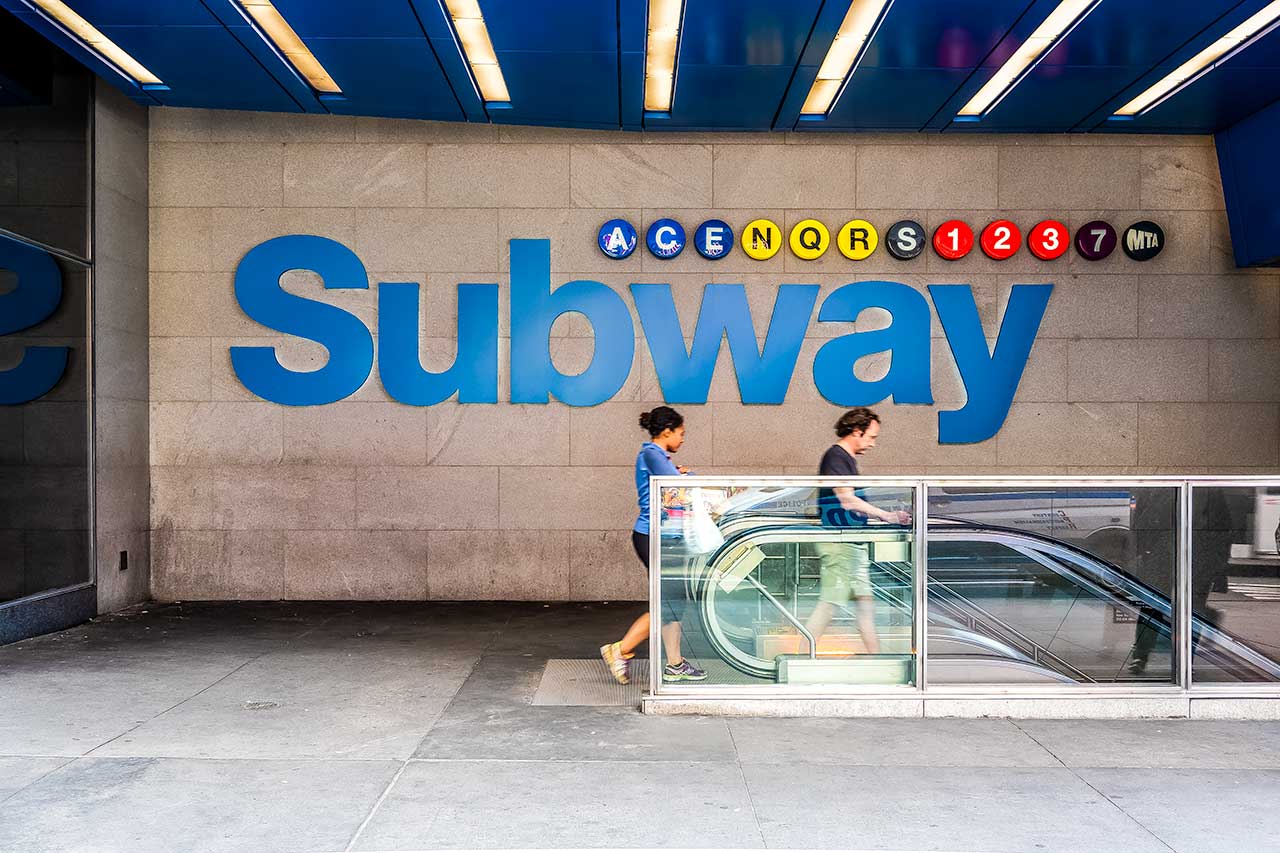
The easiest way to get to Little Italy is by subway – get off at Canal Street station, whose exits are right next to Mulberry Street. It serves all major lines: J and Z (Nassau St), N, Q, R, and W (Broadway) and 6 (Lexington Av). The standard fare is currently USD 2.90 and is valid for both the subway and MTA buses.
Hop-on hop-off buses
If you prefer a tour bus, both Big Bus and Gray Line/TopView City Sightseeing stop around Little Italy and Chinatown as part of the Downtown loop. However, be aware of the stop numbering – it varies between companies (usually stop #9 for Big Bus, stop #11 for Gray Line), so it’s better to check the current map before traveling.
Best time to visit the Italian district
The most atmospheric time to visit Little Italy is September, when the Festa di San Gennaro takes place. May to October are also good months – restaurants set tables outside, and in the evenings you can sit outside without a jacket. Just remember that in July and August, the heat and humidity can be oppressive. December, in turn, is the time for holiday decorations: garlands and Christmas trees give the streets a unique charm, though outside of weekend evenings, there is less activity than in summer.
The best time of day to take a walk around Little Italy is evening – approximately from 6:00 PM to 9:00 PM. That’s when the neon lights and the signs ‘Welcome to Little Italy‘ light up, restaurant terraces fill with guests, and the whole street takes on a truly cinematic atmosphere. On weekends, you have to expect a louder atmosphere and queues for tables, whereas during the week it is definitely quieter.
Time needed for sightseeing
You can pop into Little Italy just for a moment or spend half a day here – it all depends on your plan. A short walk with a stop for pizza or cannoli will take about an hour or two. If you want to sit more leisurely in a restaurant, visit a museum, and walk through the side streets, you’ll need three to four hours. And if you combine your visit with neighboring Chinatown, SoHo, or NoLIta, you have a ready plan for a full day of sightseeing in Lower Manhattan.
Where to stay
If you’re looking for accommodation in the very heart of Little Italy, the best choice would be NobleDEN Hotel – modern, boutique, and very clean. It’s a great base for exploring SoHo, Nolita, and Chinatown, with a roof view of One World Trade Center and Ferrara cafe just around the corner.
Right next door, at the intersection of districts, there is also the Solita SoHo Hotel, a cozy three-star establishment with simple, comfortable rooms and excellent subway access. It’s a well-located option if you mainly care about a clean room and good Wi-Fi.
As an alternative, consider the Leon Hotel LES, located more in Chinatown and the Lower East Side. From the higher floors, there’s a view of the Manhattan Bridge – this is the greatest asset of the place. The rooms are surprisingly spacious for Manhattan, and you’ll find dozens of Chinese and Italian eateries around.
Summary – Is it still worth visiting Little Italy?
Little Italy is a small part of Manhattan today, but it still has its unique charm. It’s a place where you can still eat coal oven pizza, taste classic cannoli, and enjoy espresso served with Italian enthusiasm.
The district is best experienced in the evening when Mulberry Street is lit up by neon lights, and the tables in front of restaurants fill up with guests. September additionally attracts with the Festa di San Gennaro – a big festival full of music, processions, and Italian food.
Although Little Italy has become more touristy than before, it’s still worth visiting to get a piece of old New York and an atmosphere that can’t be replicated anywhere else.