Italiano
 Polski

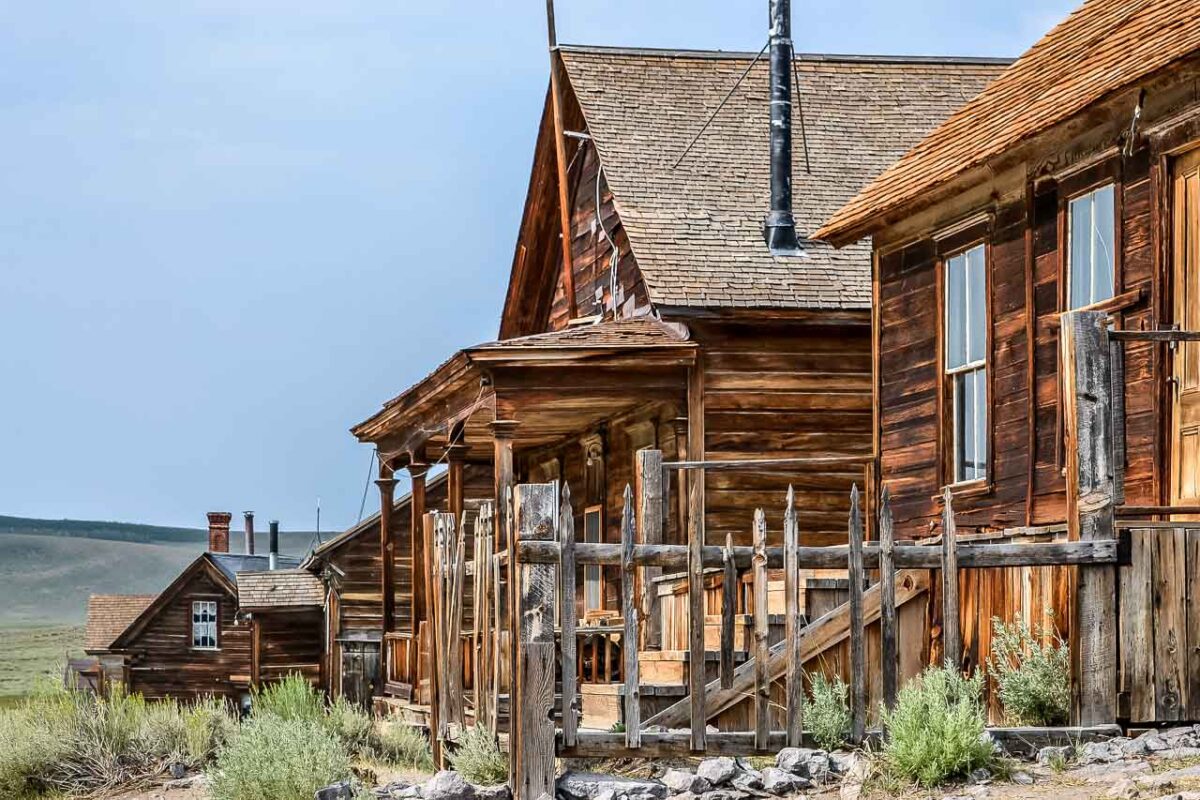
The sun blazed mercilessly over the Sierra Nevada hills, and dust swirled at our feet like the ghosts of gold seekers long past. I remember it as if it were today: we arrived in Bodie early in the afternoon, just after the park opened, and the access road was anything but smooth – the last few kilometers on a gravel, bumpy path shook our car like an old stagecoach, raising clouds of dust that seeped inside and settled on everything. Despite that, a line of cars was already waiting at the site, full of enthusiasts like us, ready to meet the past.
Bodie stands here, at an altitude of over 2500 meters, like a frozen frame from a western – wooden shacks leaning under the weight of years, empty windows staring into the void, and in the background, the echo of the wind carrying whispers of wealth and downfall. You might think it’s just an open-air museum, but don’t be fooled; it’s almost like a portal to the Wild West, where you can taste the gold rush, smell the gunpowder from revolvers, and feel the chill of a deserted world.
If you dream of stepping into cowboy boots, discovering the secrets of a forgotten town, and planning a journey that will leave a mark on your soul, read on. I will take you through Bodie’s turbulent history, show you what lies in its ruins today, tell you about sightseeing step by step, share legends about ghosts and curses, and finally add practical advice.
From the gold rush to an abandoned phantom town – Bodie’s turbulent history
The beginnings of the gold rush: How one man’s winter misfortune gave rise to a legend
Bodie was born from a dream of fortune, like many towns of the Wild West. It all began in 1859 when W.S. Body (or Bodey, as his name was sometimes spelled), a modest adventurer, stumbled upon modest amounts of gold in the hills north of Mono Lake. It wasn’t a great treasure, but enough to spark a glimmer of hope in him.
The irony of fate (so typical of the history of gold seekers!) was that Body did not live to see the boom – he perished in a snowstorm that same winter, trying to bring supplies. He died not knowing that his name would forever be associated with one of the most famous towns of the Wild West. The town was named in his honor, although popular legend holds that a local painter simply misspelled the sign, and thus ‘Bodey’ became ‘Bodie’. Well, even back then, typos could change history!
The growth of the town: How a collapsed mine became the beginning of a fortune
The true frenzy struck in 1875 when the collapse of one of the mines – an event seemingly tragic – revealed a rich vein of gold. The Standard Company acquired the mining rights in 1877, and suddenly Bodie exploded like champagne on New Year’s Day.
From a handful of makeshift huts grew a town with nearly 2,000 buildings and a population reaching 8,000, and at its peak, 10,000 souls. It was the gold rush era in full swing – mines like Standard Mine and Bodie Mine churned out tons of precious ore, and the streets filled with miners, gamblers, prostitutes, and shopkeepers. It was like the Manhattan of the Wild West – bustling, dirty, dangerous, but full of life and opportunities.
Daily life in Bodie: between gold, daily hardship, and sin
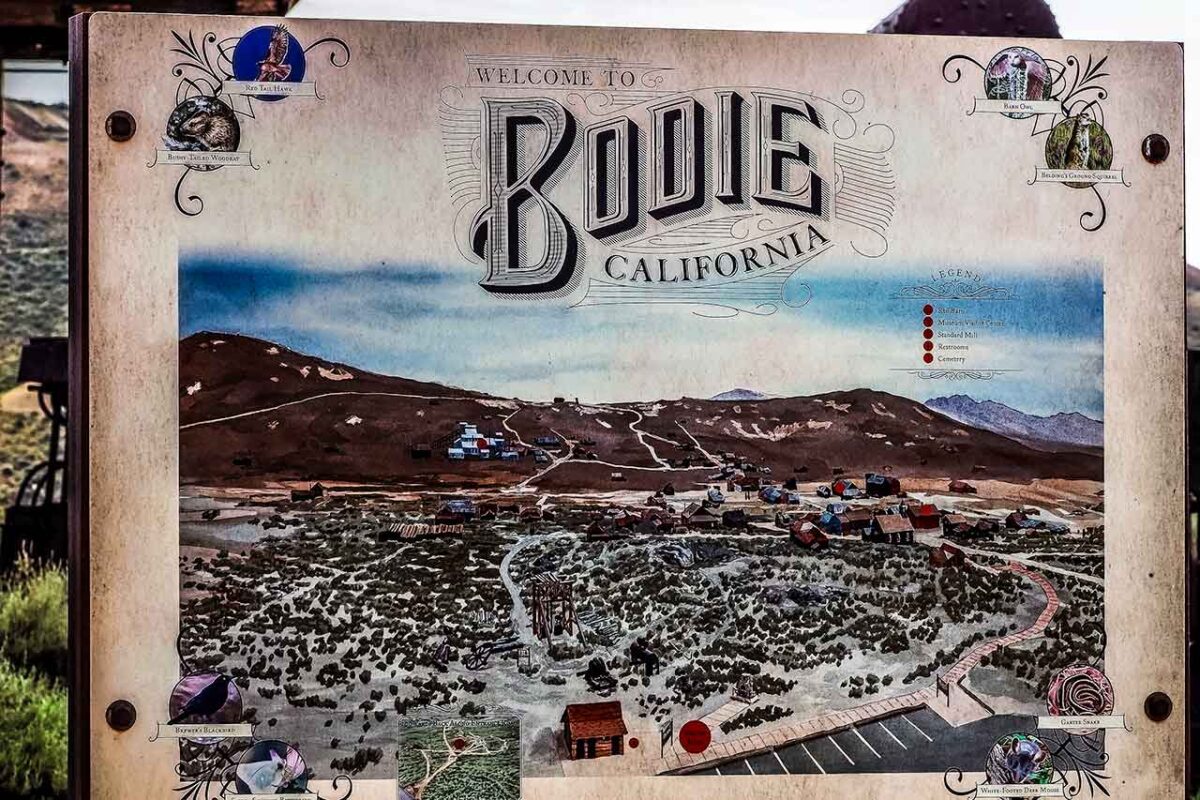
What was life like in Bodie? Bodie was a rough and chaotic place like a wild mustang racing through the Sierra Nevada hills! The town, which grew from the gold rush, quickly became a microcosm of the Wild West with all its colors and shadows.
Bodie – a city of luxury and deprivation
In its heyday, Bodie offered every attraction and convenience an adventurer’s soul could desire:
Interestingly, Bodie went down in the history of technology as the first place in the world to receive electrical energy transmitted by an overhead high-voltage line from Green Creek, a few miles away. Yes, this town of sinners and adventurers outpaced the elegant metropolises of the East Coast in this regard!
The dark side of the golden city.
Men in Bodie worked in dark mine shafts, risking their lives for a few dollars and the dream of a big find. Women? They either ran brothels in the infamous red-light district in the north of the town or laundries – the path to fortune in Bodie was not paved with roses, especially for women.
Children attended makeshift schools unless their parents needed their help at work; education was a luxury not everyone could afford during the gold rush.
A city full of violence.
Bodie had a reputation as one of the most dangerous towns in the American West – and that was no exaggeration! Saloons resounded with music, curses, and quite often – gunshots. The local newspaper ‘The Bodie Miner‘ (later transformed into ‘Bodie Morning News‘) would ironically ask every morning: ‘Have we a man for breakfast?‘ – which could be translated as ‘Do we have anyone for breakfast?’ It was a euphemistic question asking whether the nighttime shootings had resulted in deaths.
The city attracted gunfighters, gamblers, prostitutes, and adventurers from every corner of America and beyond. The term ‘bad man from Bodie‘ became synonymous with the worst kind of thug, even by Wild West standards!
A multicultural city in the wilderness
On the eastern outskirts of the city, a Chinatown emerged – a district where a significant population of Chinese immigrants lived. They operated laundries, restaurants, and… opium dens, which were popular among residents of all neighborhoods. Yes, this drug knew no cultural or class boundaries!
The religious community – mainly Methodist – heroically tried to temper the sins of the residents by leading the church and organizing prayer meetings. With what effect? Well, let’s say, the bars and brothels remained more popular than the church pews.
Struggle with harsh nature
Situated at an altitude of over 2500 meters above sea level, Bodie had to contend with severe natural conditions. Water was brought in from the mountains, and winters – harsher than the pangs of conscience after a Saturday night in the saloon – with temperatures dropping below -30°C, took a deadly toll among the weaker.
The winter of 1878/1879 proved to be particularly cruel and went down in history as the one that decimated the residents, who died en masse from diseases, hunger, and cold. It was the harsh price for dreams of gold in the unfriendly Sierra Nevada mountains.
Despite all the difficulties and dangers, Bodie still offered its residents something hard to find elsewhere – a sense of freedom and unlimited possibilities. In this wild place, far from civilization and law, everyone could try to change their fate – albeit often at the cost of their own health, morality, and sometimes even life.
The legend of decline and reasons for leaving the city: How the gold rush fades
Development lasted until the 1880s. Bodie had a telegraph, its own newspaper ‘Bodie Morning News‘, a bank, a miners’ union, and even a railway line for transporting wood. But fate is fickle, and gold is exhaustible.
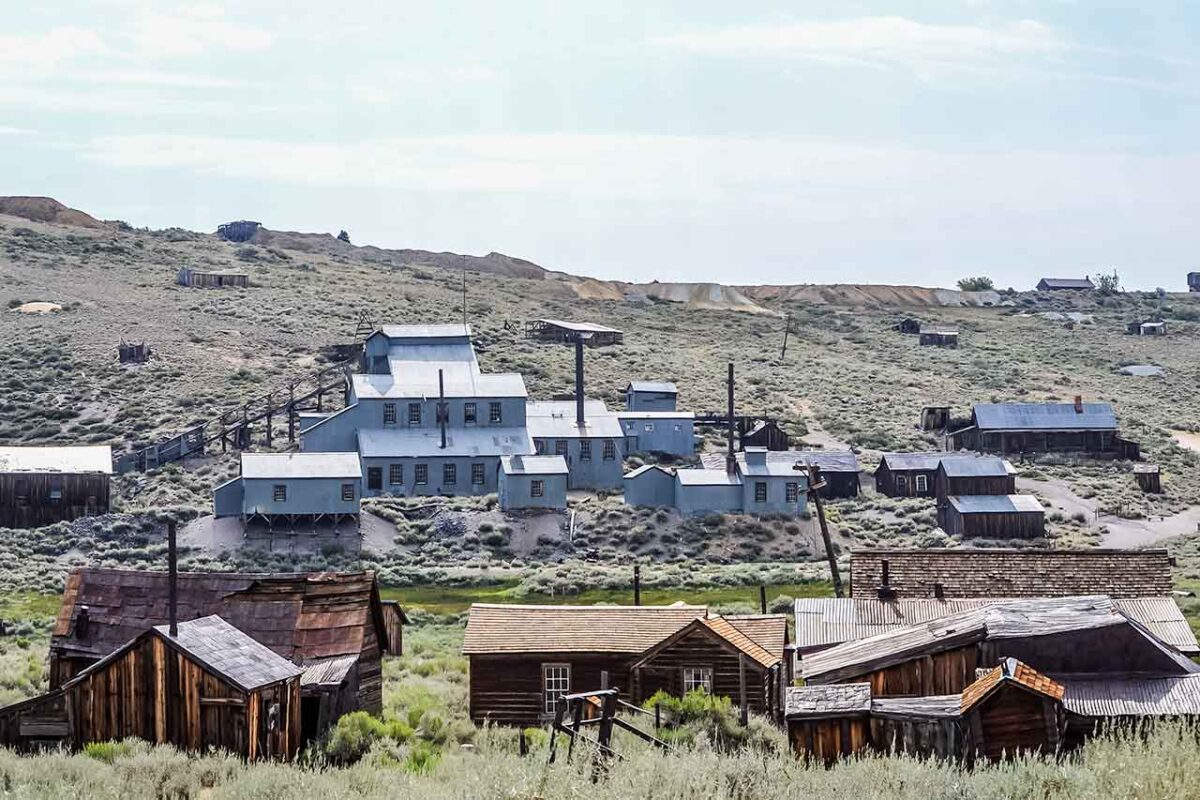
The beginning of the decline occurred in 1881 when gold deposits in the area began to diminish. The population dropped to 1,500 people, and additionally, a fire in 1892 destroyed a significant part of the town. Fate dealt another blow in 1932 – a great fire, caused by a boy playing with matches, consumed most of the remaining buildings.
Mining continued until 1942, but the pace was already very slow. Reasons for abandonment? Depleted deposits, falling gold prices after the Great Depression, a harsh climate, and lack of infrastructure. In 1910, Bodie was home to only about 700 people, and by 1943 – just three!
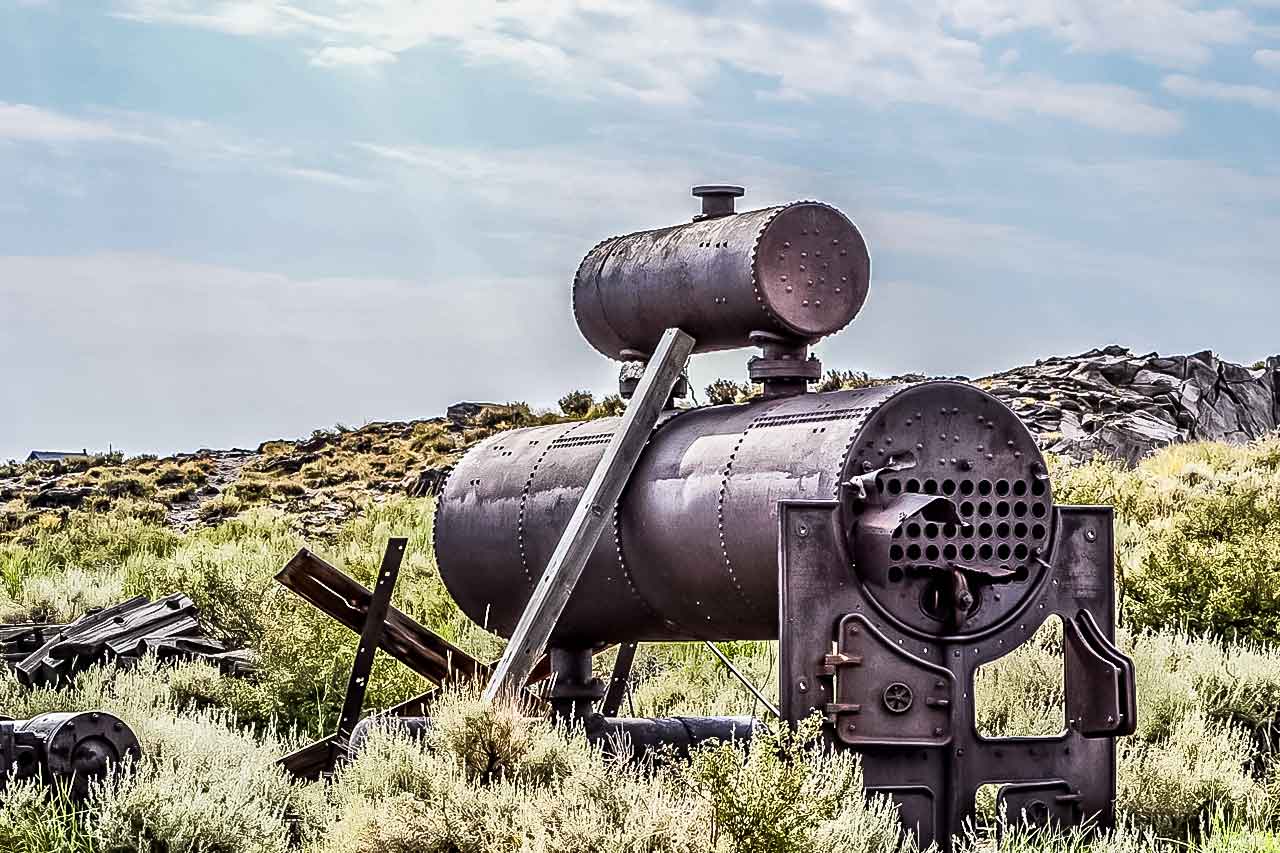

The last residents left in the 1940s, leaving Bodie to the mercy of the wind and time. Today, Bodie is a symbol of the fragility of Wild West fortunes, a city that rose on gold and fell because of it.
Bodie ghost town in present times
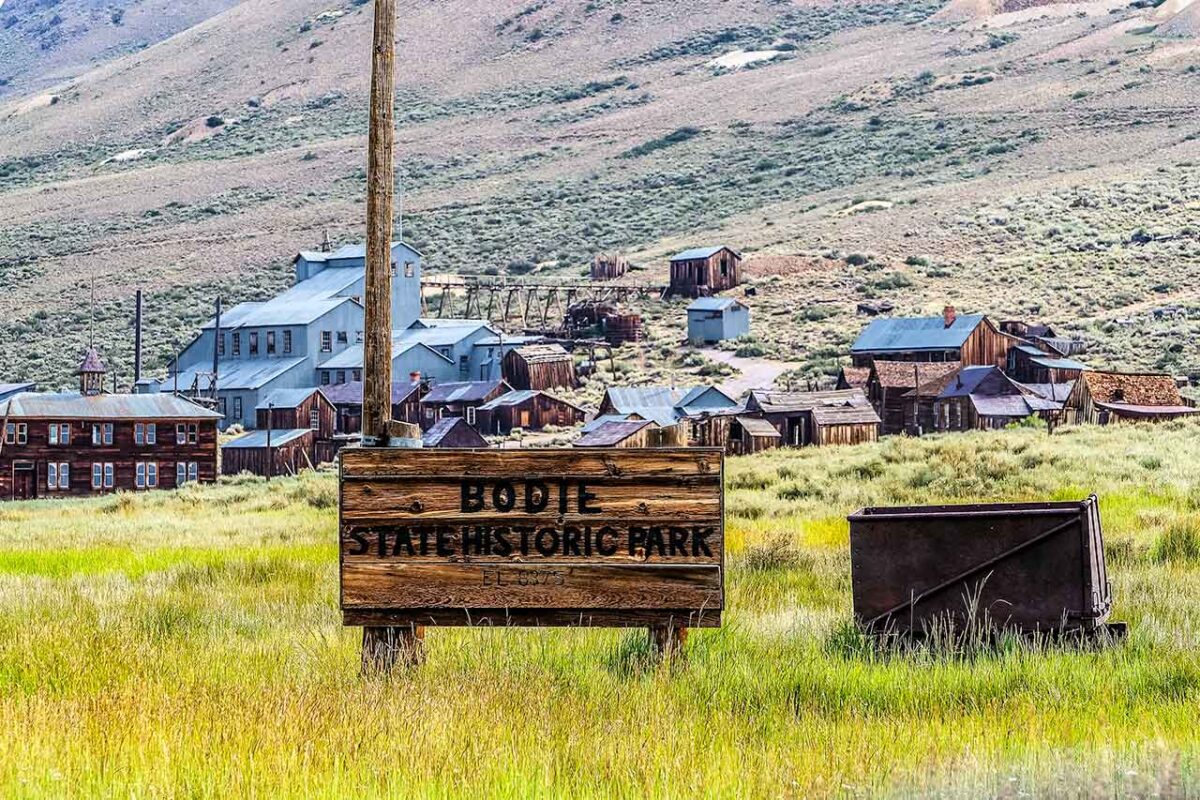
Today, Bodie is a true gem among ‘ghost towns’ – the best-preserved abandoned city in California, and perhaps in the entire United States. Since 1962, the city has functioned as Bodie State Historic Park (National Historic Landmark), protected by state authorities. The town operates according to the concept of ‘state of arrested decay’. This means that park wardens perform minimal maintenance sufficient to prevent the complete destruction of buildings, but do not restore them to their former glory.
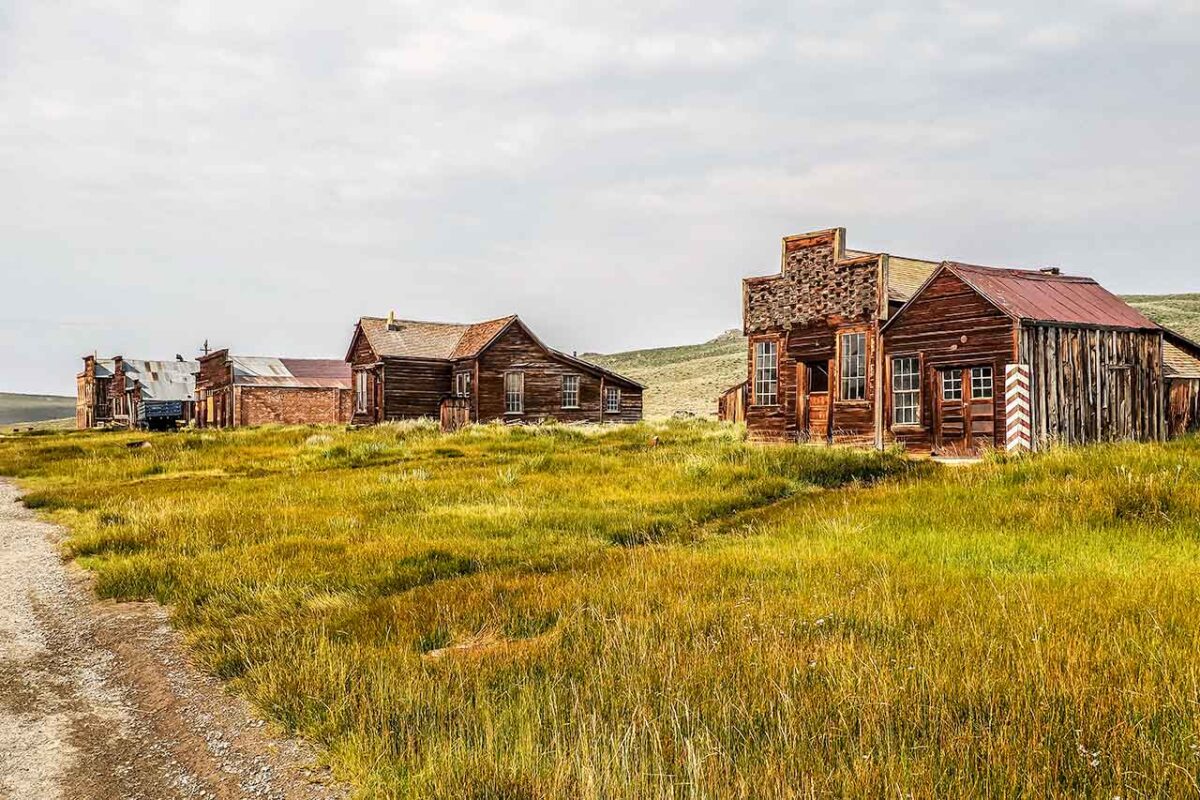
Wood creaks in the wind, paint peels, and inside houses, you can see forgotten furniture, whiskey bottles, and newspapers from the 1930s. Peeking in gives the impression of stepping into a time capsule – everything looks as if the residents stepped out briefly and never returned. Tables are set for meals, clothes hang in wardrobes, books lie on shelves, and tools in workshops.
To this day, less than 10% of the original infrastructure remains – about 170 buildings, including the Methodist church from 1878, a school with benches and blackboards, residential houses with preserved interiors, a saloon with a bar and poker tables, a general store full of cans and tools, the ruins of the Bodie Bank, and remnants of mines, such as the Stamp Mill with ore-crushing machines.
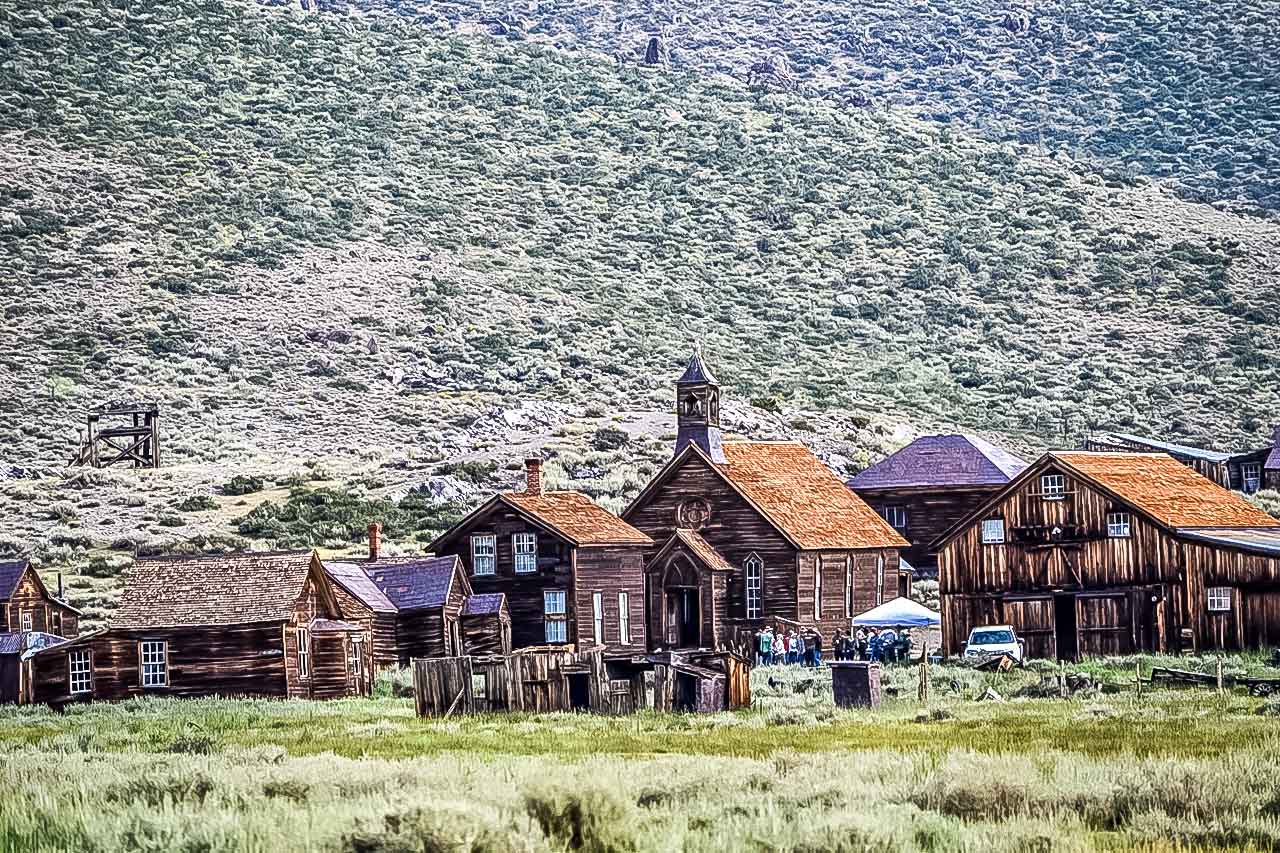
The cemetery on the hill holds the graves of miners, children, and victims of violence, with tombstones telling sad stories. The museum in the former Miners Union Hall building exhibits artifacts: photos, mining tools, and everyday items. Fortunately, there is no commercialization here—no souvenir shops or restaurants; just silence and authenticity. When visiting here, remember that this is not a Western Disneyland but a raw, melancholic relic, a memento of gold rush times where the past is felt in every dusty corner.
Main buildings to visit
Industrial remains
Practical guide to visiting Bodie
How to get to Bodie
Bodie State Historic Park is located in Mono County northeast of Yosemite, 20.9 km east of US-395 highway. From Bridgeport, turn onto State Route 270 heading east – the first 16.1 km is paved, but the last 4.8 km is a dirt, bumpy road, requiring caution (reduce speed to 24-32 km/h). Time from US-395: 30-40 minutes.
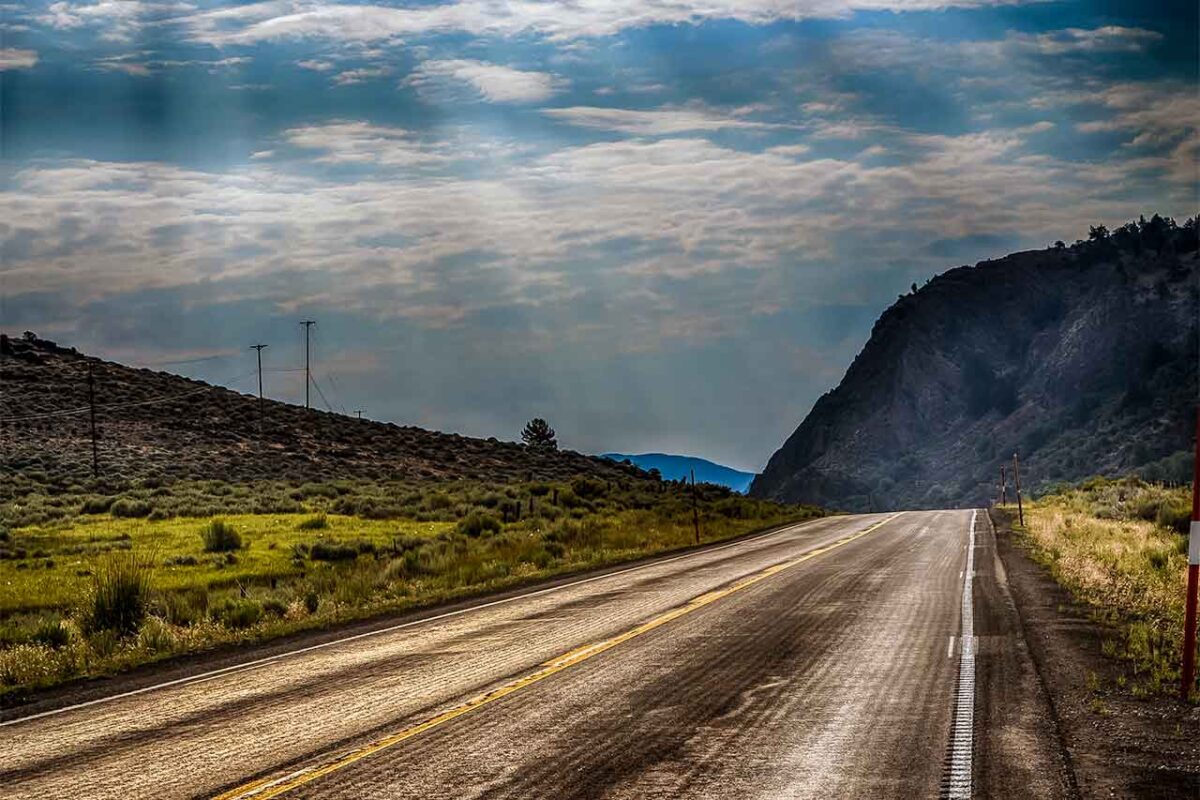
Important road information:
Opening hours
Entrance fees:
Payment: card preferred, but cash is also accepted (preferably exact amount).
Cirque du Soleil
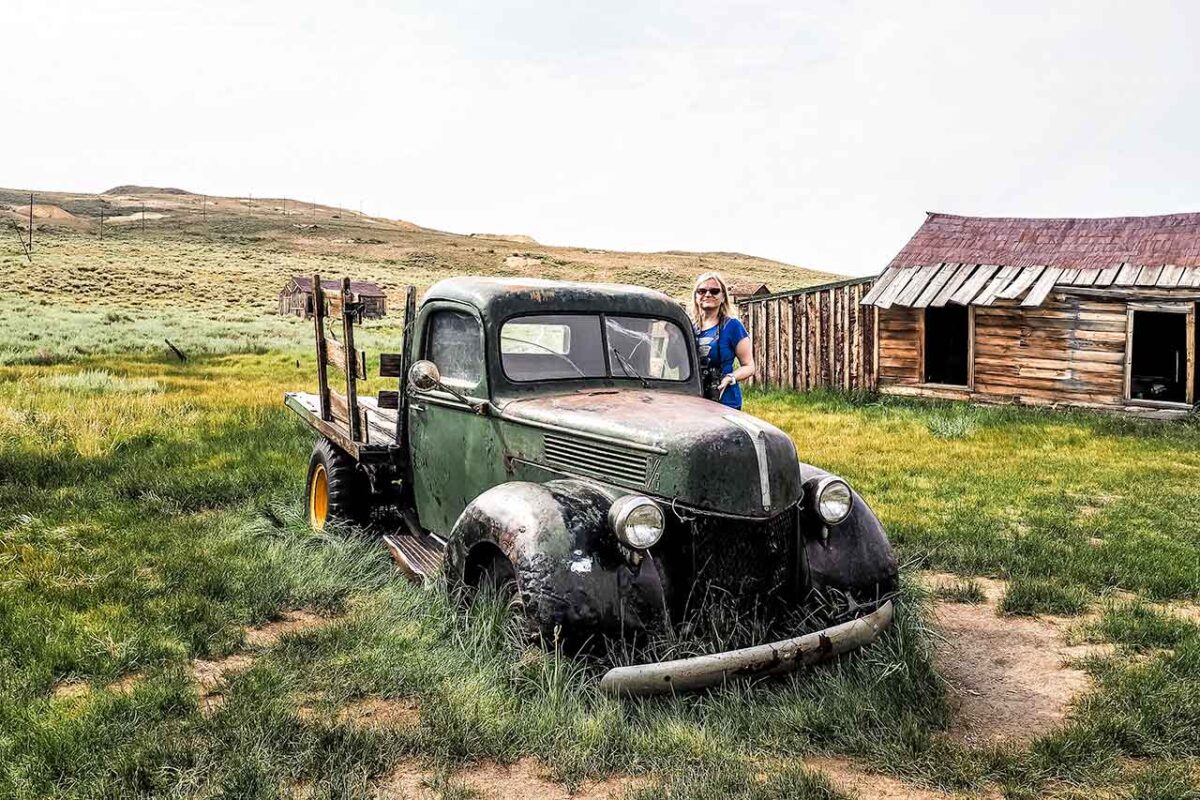
What to bring – ghost town explorer’s essentials
Heading out to meet the ghosts of Bodie, you need more than just a map and a camera! Absolutely bring plenty of water (at least 2 liters) – the desert air will dry you out faster than gold dried the pockets of unlucky gamblers in Bodie’s old saloons. Food and snacks are a must – you won’t find a single operating restaurant in the ghost town (unless you believe in edible dishes served by apparitions!).
Sunscreen is your talisman against the relentless sun, which at an altitude of 2550 meters attacks the skin with double force. A head covering will protect you from heatstroke, and warm clothing – even during summer expeditions – will save you from evening chills, which can surprise you just as unexpectedly as sudden shootouts surprised the residents of old Bodie. It’s also worth having comfortable trekking boots for walking on uneven terrain, a camera with spare batteries (ghosts don’t like to pose twice!), binoculars to peer at details of distant buildings, a park map, and a first aid kit. Remember – at this altitude, the weather changes faster than the fortunes of gold seekers, so even in summer be prepared for sudden storms with hail, which fall without warning, much like Bodie’s curse on those who dare to take souvenirs from here!
What to see in Bodie – visiting plan and main attractions
To get to know Bodie well, plan for at least 3-4 hours for a leisurely tour. Here’s a thoughtful route that will allow you to discover the most interesting places of this ghost town:
Start at the museum (30 min)
It’s best to begin your visit to Bodie with a short stop at the museum. Watch a 28-minute documentary that introduces you to the fascinating history of the town and helps you better understand its significance. It is also a good place to purchase a map with building descriptions and sign up for a tour of Standard Mill – the only opportunity to tour the interior of an industrial facility with a guide (tours are available only from late May to early September).
Main Street (60 min)
Main Street is the heart of old Bodie. Walking along this street, you’ll see the best-preserved buildings, including:
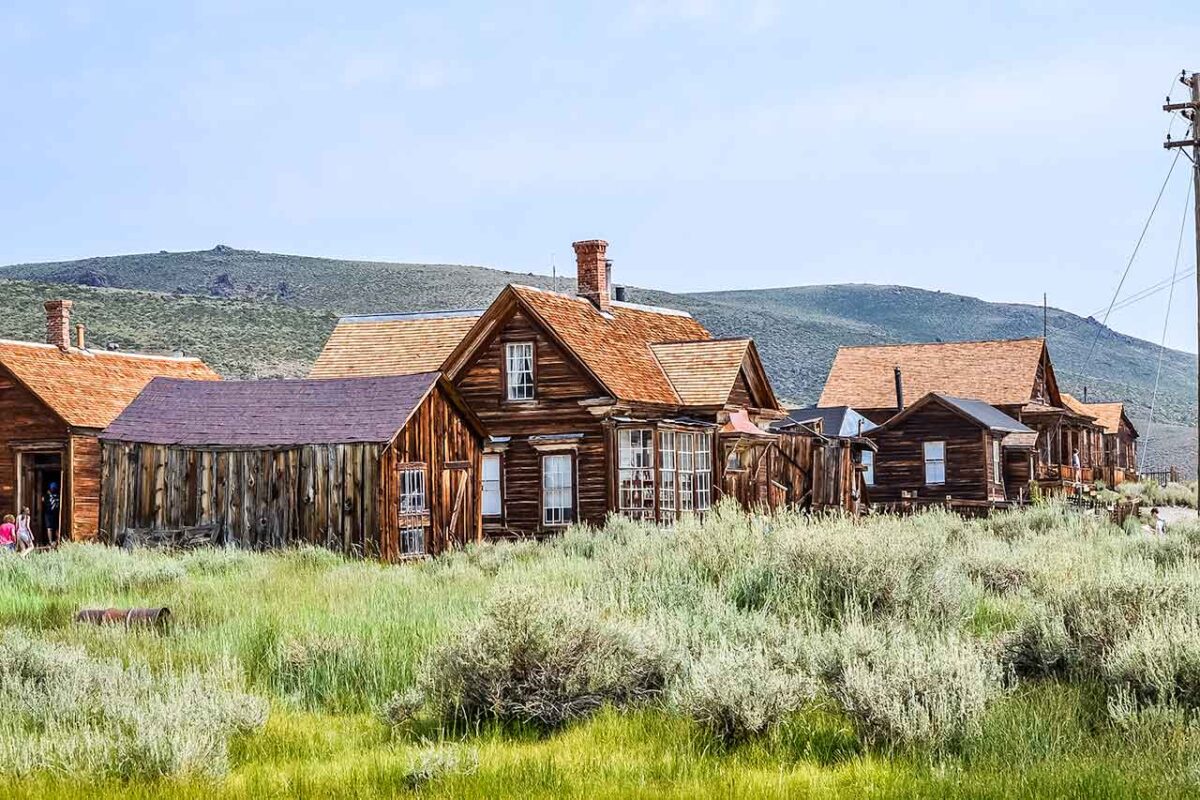
Through the windows, you can peek into the interiors of most buildings – they are preserved as they were left by the last residents.
School area (30 min)
A little further from the main street, there are two important buildings:
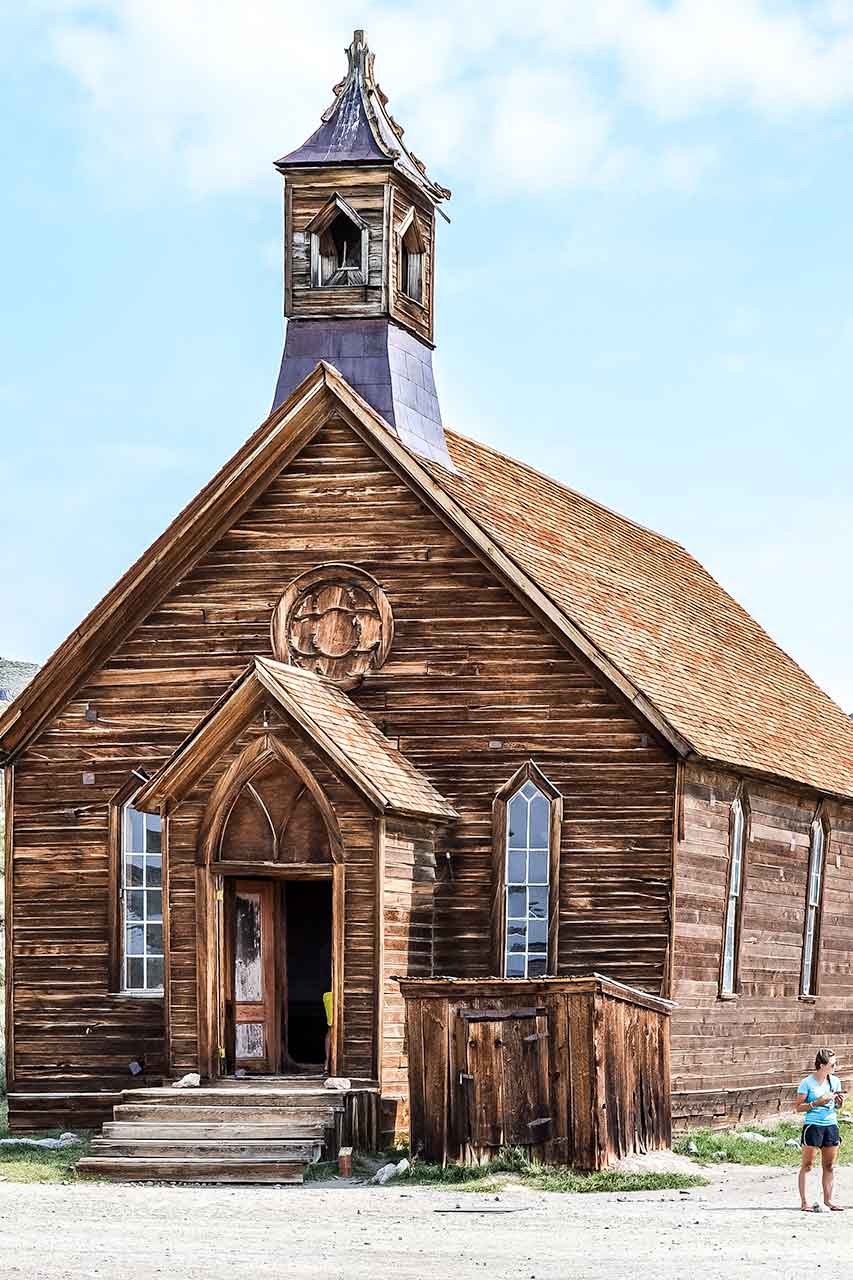
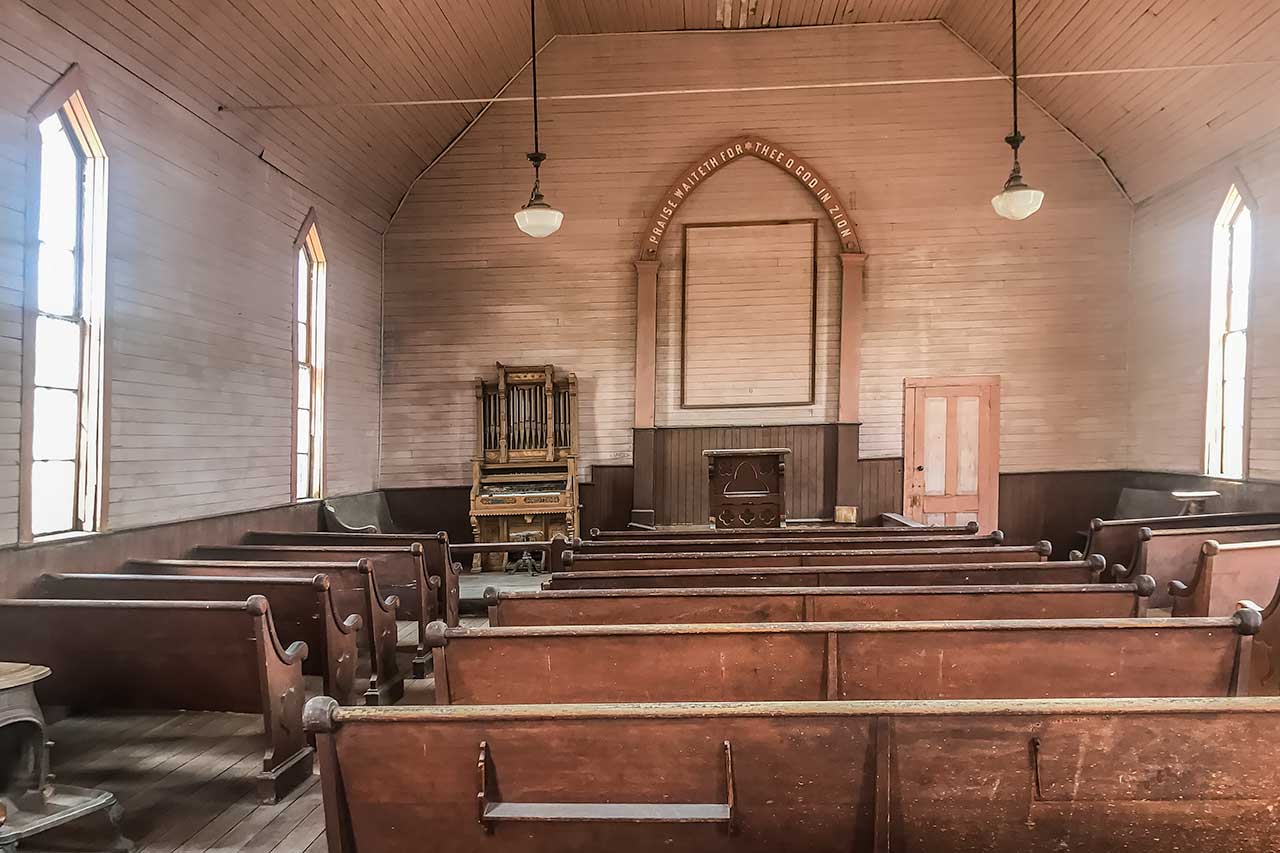
Cemetery (45 min)
Situated on a hill, the cemetery is one of the most poignant places in Bodie. Walking among the tombstones, you can learn the stories of former residents:
The cemetery also offers a beautiful view of the entire town and the surrounding mountains.
Standard Mill (60 min – guide only)
If you managed to sign up for a tour, Standard Mill will be the culmination of your visit. This impressive industrial building is where gold ore from nearby mines was processed. The guide will show you the entire processing procedure and talk about the technology of extracting the precious metal in the 19th century.
Practical information for visitors
‘The Bodie Curse’ is a real part of local legend – regularly, tourists return items taken from Bodie as ‘souvenirs‘ along with (sometimes dramatic) descriptions of a series of unfortunate events. Respecting these rules helps protect the unique heritage of this place.
Legends, ghosts, and mysterious tales
The Bodie Curse – the most famous legend
The most well-known legend associated with Bodie is the ‘ghost town curse’. According to local stories, the spirits of deceased residents protect the town and take revenge on anyone who dares to take even the smallest item.
Allegedly, park rangers regularly receive packages from tourists who return the ‘acquired’ souvenirs along with apology letters. The letters describe a series of misfortunes, illnesses, accidents, and financial troubles that affected the ‘thieves’ after returning from Bodie. Only the return of items was said to end the streak of bad luck.
Is it true? No one knows for sure, but the legend effectively protects Bodie from vandalism and theft.
The Angel of Bodie – the spirit of a little girl
Evelyn Myers was a seven-year-old girl who tragically died of diphtheria in 1897 – one of many diseases that devastated mining communities. Her spirit, called ‘The Angel of Bodie’, is said to haunt the cemetery where her body rests.
A local legend speaks of a child spirit that likes to play with living children visiting the cemetery. Some parents tell of their children talking to ‘an invisible friend’ by the old graves on the hill. The children describe their companion in detail, even though adults see no one.
No one can confirm if it is the spirit of little Evelyn, but the cemetery in Bodie indeed has a reputation for being a haunted place, and the children’s graves from the Gold Rush era are a reminder of the harsh living conditions in the mining town.
The story of the woman in the window
The story of the woman in the window is one of the popular haunted legends in Bodie, circulating among tourists and paranormal enthusiasts.
The J.S. Cain House, once belonging to the wealthy mining entrepreneur James S. Cain, indeed stands in Bodie and is one of the better-preserved buildings. According to local legend, in one of the windows upstairs, one can sometimes see the silhouette of a woman observing visitors.
According to some versions of this story, the apparition is the ghost of a Chinese maid who worked in Cain’s house. Other stories suggest it is the ghost of Cain’s wife or daughter. It is said that some park guards and tourists claim to have seen this figure, especially at dusk.
It is worth remembering, however, that these are urban legends and paranormal stories that do not have confirmed status in the official materials of California State Parks. Official park guides usually do not include such information, focusing on historical facts.
These ghost stories are nevertheless part of Bodie’s folklore and add a mysterious atmosphere to the town, which attracts tourists interested in both Wild West history and paranormal phenomena.
What to see around Bodie?
Bodie is just the beginning of a fascinating journey through Eastern California! It is only 120 km from the eastern entrance to Yosemite National Park, which creates a perfect opportunity to plan a multi-day trip. You can start by spending 3-4 hours in Bodie, exploring the mysteries of the ghost town, and then devote the next two days to discovering the wonders of Yosemite – spectacular waterfalls, majestic sequoias, and breathtaking views from Glacier Point.
Just a 20-minute drive from Bodie awaits another natural curiosity – Mono Lake, one of the oldest lakes in North America, over a million years old. This saline lake with its characteristic limestone columns (tufa towers) creates a surreal landscape, as if taken straight from another planet.
The entire route is best covered by the famous Highway 395, considered one of California’s most beautiful road trails, stopping along the way in historic Bridgeport with its Wild West atmosphere, at the scenic Convict Lake surrounded by dramatic peaks, in the Mammoth Lakes resort popular among skiers and anglers, and concluding the day with relaxation in the natural hot springs, which are plentiful in this area.
Summary: Bodie – A Town Frozen in Time
Bodie State Historic Park is an extraordinary ghost town preserved in a state of ‘arrested decay.’ Unlike other abandoned Wild West towns that have been restored or turned into commercial attractions, Bodie remains authentic – the buildings stand as the last residents left them.
Walking through the empty streets and peering through the windows of abandoned houses, you can see everyday items: books, furniture, tools, and goods on store shelves. It’s a true time capsule set in the rugged landscape of the eastern slopes of the Sierra Nevada.
Explore at your own pace, without rushing. Read the informational boards – each tells a fragment of the history of former residents. Pause for a moment at the school, imagine children learning in the classroom, or at the saloon, where once the hum of conversations and the sound of a piano filled the air.
If you plan a trip to California, Bodie is worth placing on your list of places to visit. This visit will allow you to better understand the life of the pioneers of the American West.
Official page:
Will you be the next person to discover the secrets of Bodie? Plan your visit today – but remember: leave only footprints, take only photos. The ghosts of Bodie are alert.