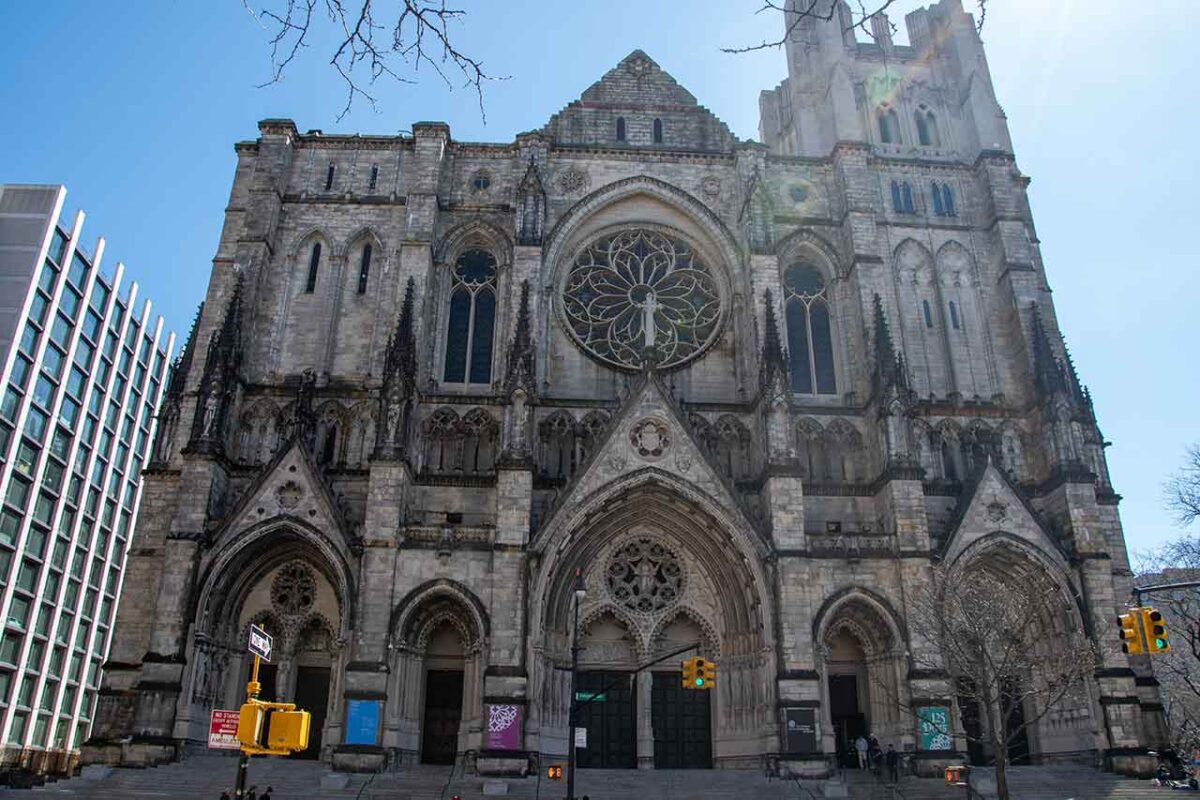
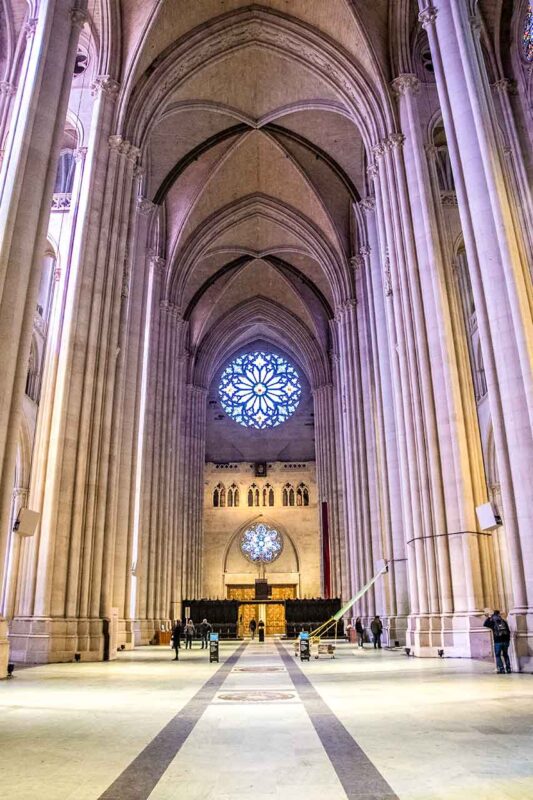
The enormous Cathedral of St. John the Divine in New York on Manhattan
The Cathedral of St. John the Divine in New York (Cathedral of Saint John the Divine) is an architectural giant and a monument of historical significance. As the largest cathedral in the world, it stands as a testament to human creativity and spiritual commitment. I had the opportunity to visit it twice – the first time when the entrance was still free, and the second time quite by chance, wandering around the Upper West Side. In this guide, you’ll find all the essential information to organize a visit, from transportation and parking to nearby accommodation and ticket information.
Dimensions of the temple
The Cathedral of St. John the Divine is one of the largest cathedrals in the world, both in terms of area and volume. Here are some key dimensions:
Length: The cathedral measures approximately 183 meters in length.
Width: At its widest point, the cathedral is about 70 meters wide.
Height: The ceiling of the main nave reaches a height of about 38 meters.
Its area covers approximately 11,200 square meters (121,000 square feet), making it the largest cathedral in the world by area.
Its vast size allows for the hosting of various events and welcoming a large number of visitors.
History and architecture
Historical overview of the Cathedral of St. John
The Basilica of Saint John of God, also known as “Unfinished Basilica of Saint John“, is located in New York. It is situated at 1047 Amsterdam Avenue in the Morningside Heights neighborhood of Manhattan. It has been under construction for over 120 years and remains unfinished.
The original design, by architects George Lewis Heins and Christopher Grant LaFarge, was in the Romanesque-Byzantine style.
Construction began in 1892, but after the crossing of the nave was opened in 1909, the design changed to Gothic Revival style according to the design by Ralph Adams Cram.
The construction of the cathedral encountered numerous delays due to lack of funds, style changes, and unstable ground. Despite these challenges, the cathedral was partially opened in 1941.
During the 2001 fire, part of the cathedral was damaged, resulting in the need for renovation and re-consecration in 2008. Today, it remains the sixth largest church in the world by area. It is the largest or second largest Anglican cathedral.
Cathedral Tours
Key Architectural Features
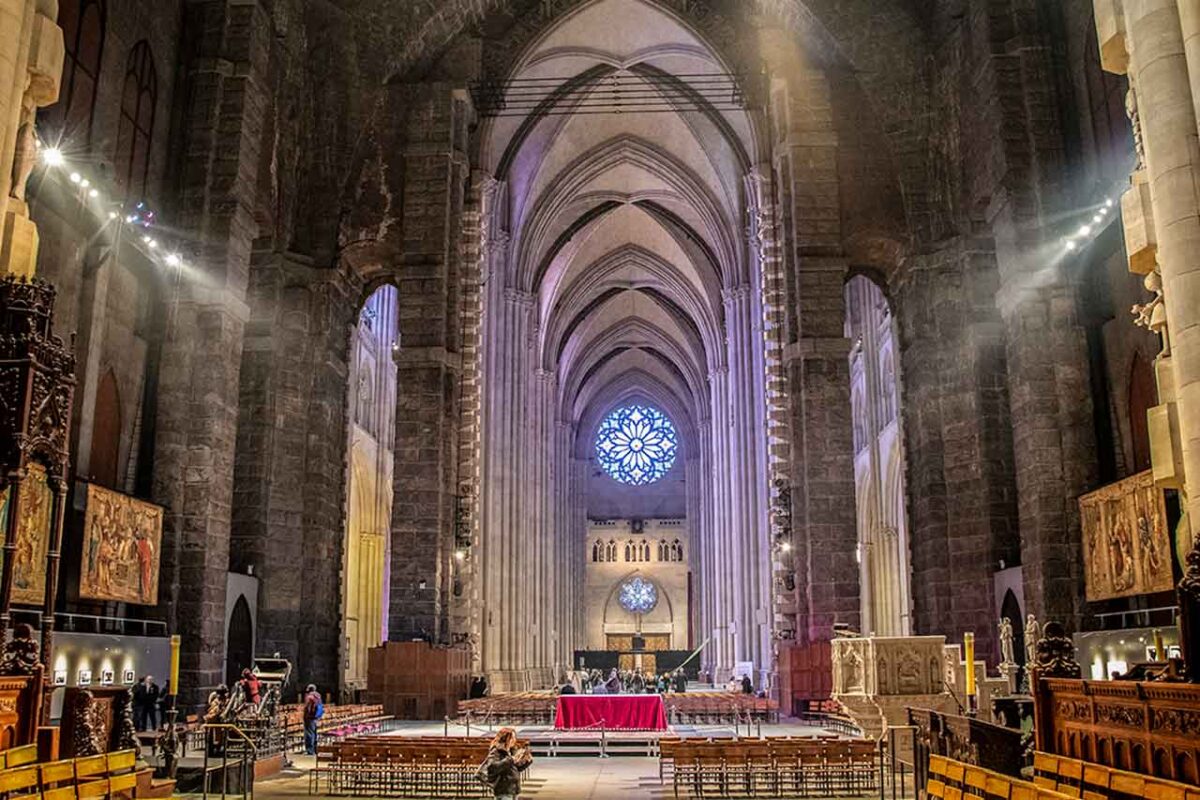
Nave: A true triumph of Gothic Revival architecture, the nave is one of the most striking features of the cathedral.
Chapels: The seven apse chapels, each built in a different national style, reflect the diverse cultural wealth of early 20th-century American immigrants.
Dome: The temporary Guastavino tile dome over the crossing is large enough to fit the Statue of Liberty beneath it.
Symbolism: the cathedral’s design features numerous symbolic elements, such as the number seven, which is one of the symbols in the Book of Revelation.
Key attractions and interior elements
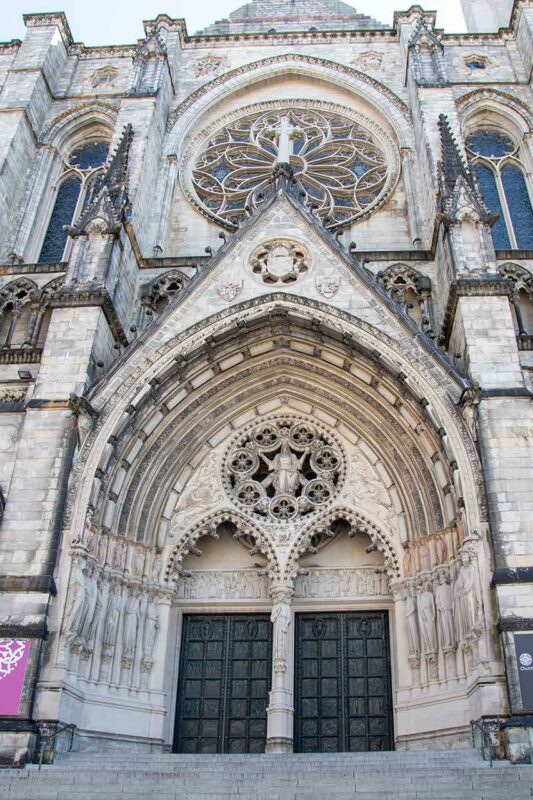
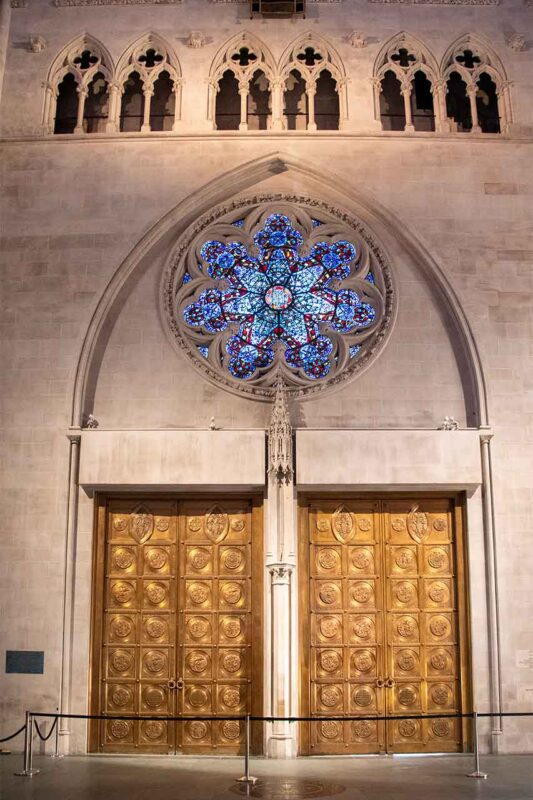
Great Bronze Doors: Cast by Barbedienne from Paris, these doors are about 5 and a half meters high and weigh three tons each. They depict stories from the Old and New Testaments on the outside, and nature on the inside.
Altar of Peace: Made by George Nakashima from 300-year-old black walnut, this altar is meant to symbolize global peace.
The Life of Christ: A triptych made of bronze and white gold by Keith Haring, completed just a few weeks before his death, depicting angels and human figures.
Christa: A controversial bronze sculpture depicting a female figure of Christ by Edwina Sandys, displayed in the Chapel of St. Savior.
Choir: a 15th-century German choir on permanent loan from the Metropolitan Museum of Art
Japanese Vases: gifted by Ambassador Tsuneo Matsudaira in 1926, depicting the hibiscus mutabilis flower and Japanese birds.
Tom Otterness sculptures in the cathedral
Tom Otterness, known for his whimsical and often socially critical sculptures, is the author of several works in the Cathedral of St. John the Divine. Among his works are:
The Tables (1986-1987): This large bronze sculpture, originally part of the Whitney Museum collection, was installed in the cathedral as part of the “The Value of Food” exhibition. It features a series of interconnected tables with various figures and scenes exploring themes related to food and community.
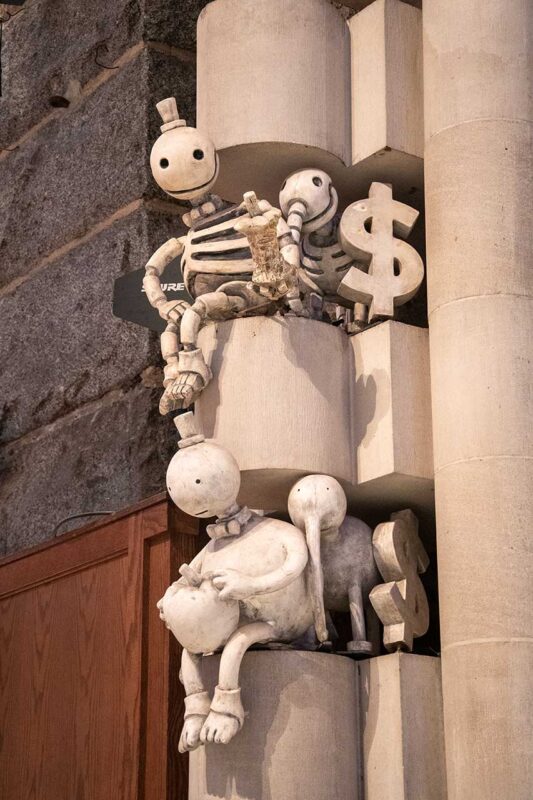
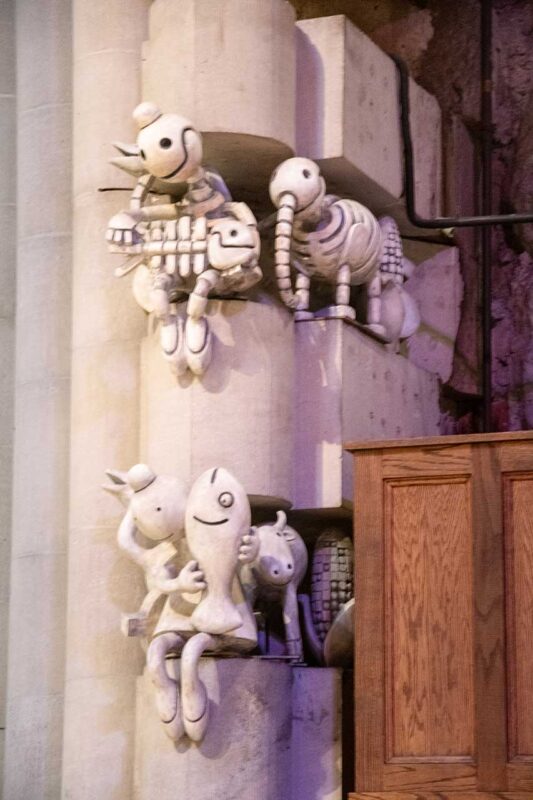
Life and Death (2015): This installation consists of numerous small sculptures made of hydrocal plaster placed in the niches of the cathedral’s columns. These figures, described as “cones” and “spheres,” depict a range of human and animal forms, some skeletal, symbolizing different stages of life and death. The slightly whimsical yet eerie nature of these sculptures adds a unique note of reflection to the cathedral’s spiritual and architectural space.
Sculptures in the cathedral garden
The cathedral gardens are not only a beautiful relaxing corner but also conceal several notable sculptures that add an artistic atmosphere to the place.
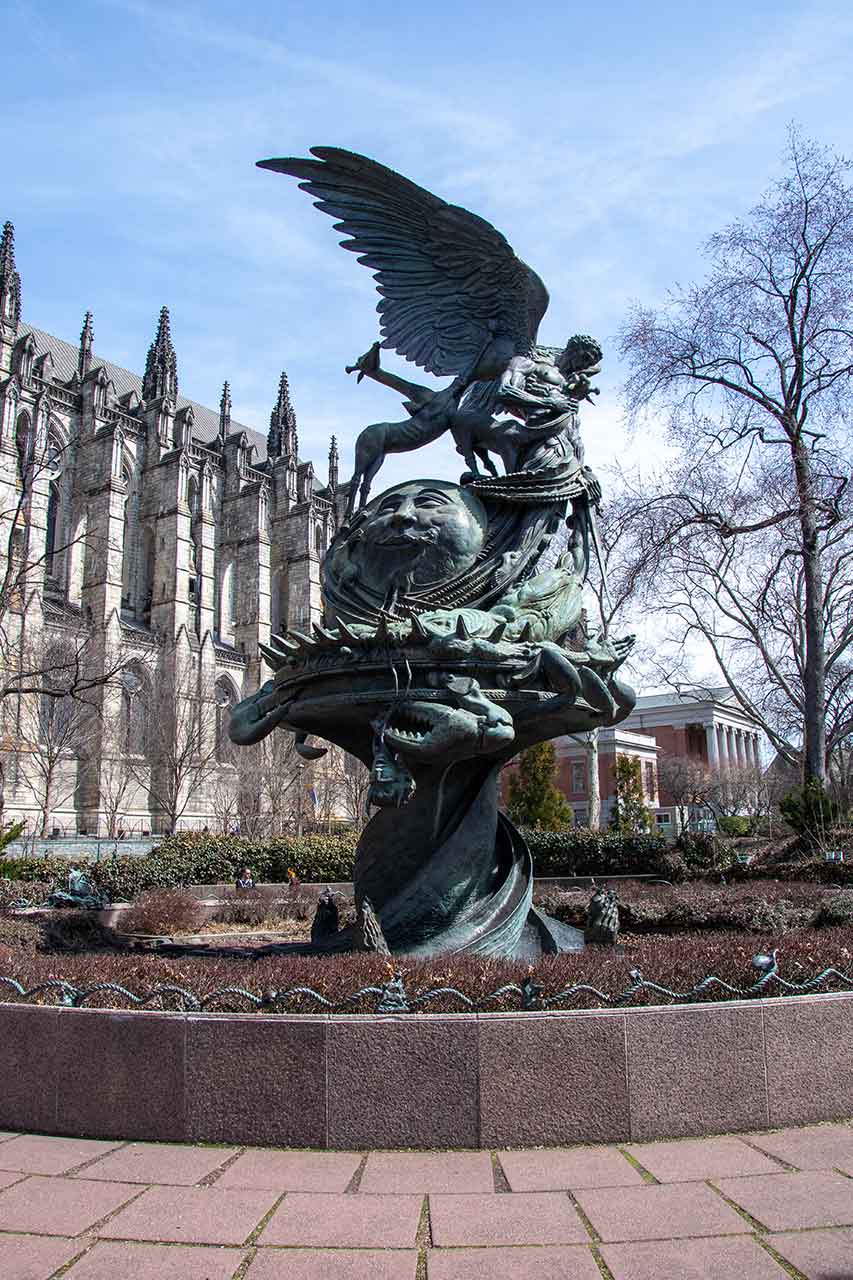
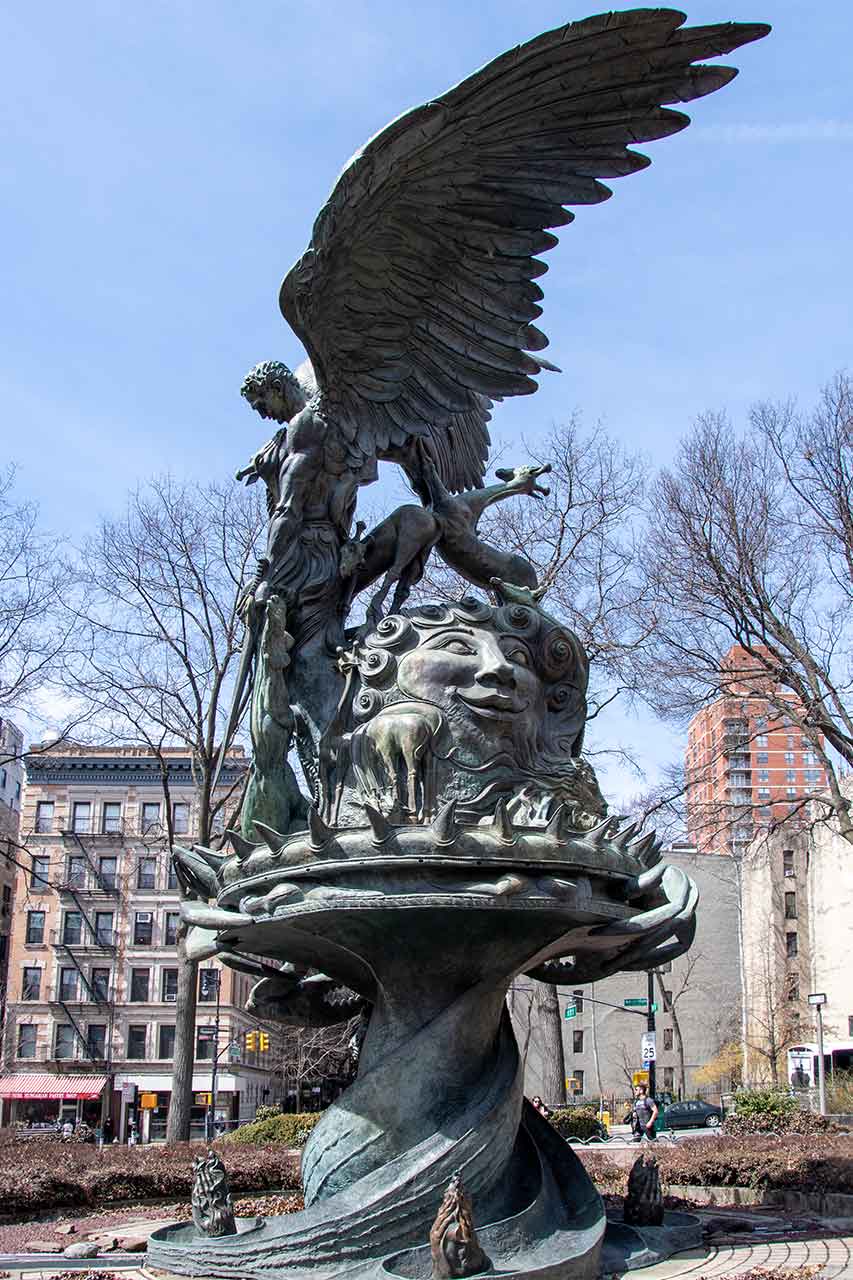
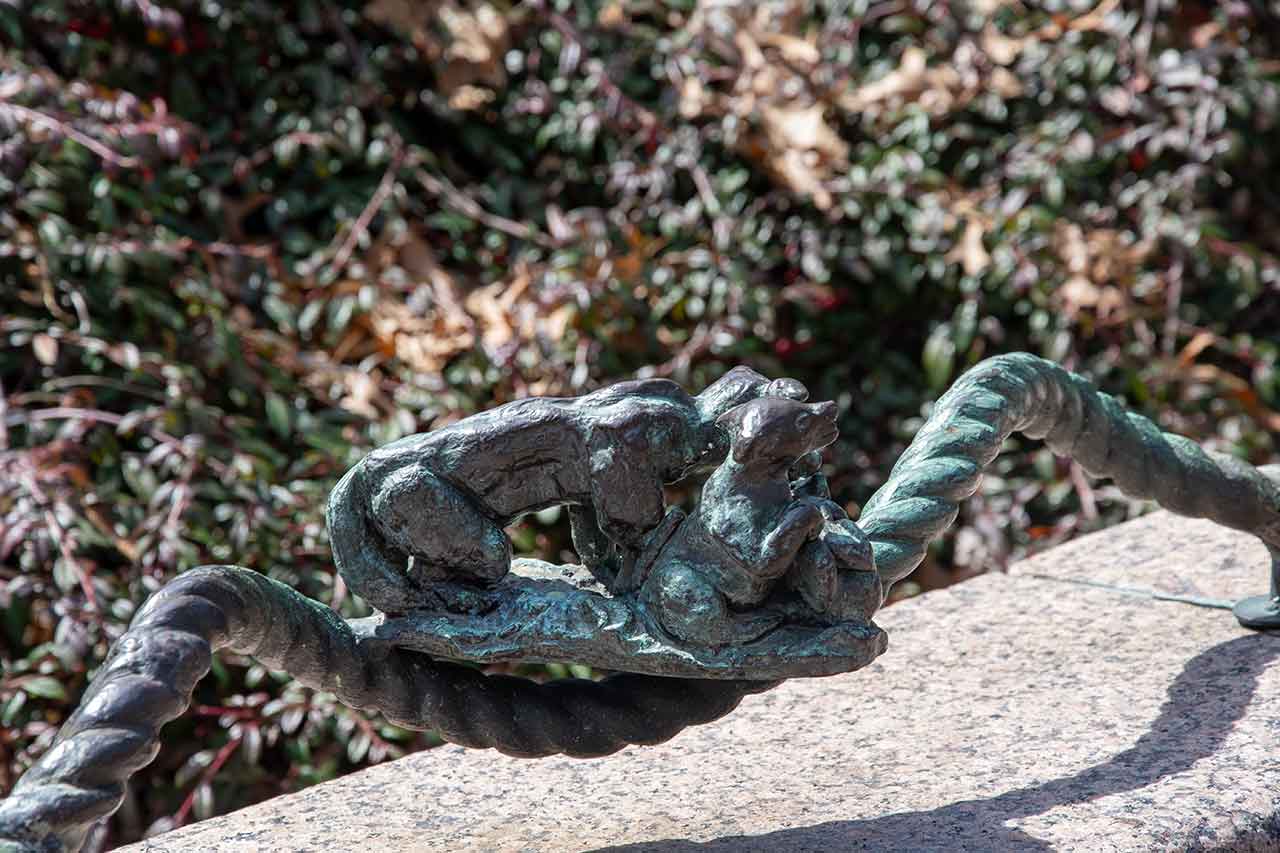
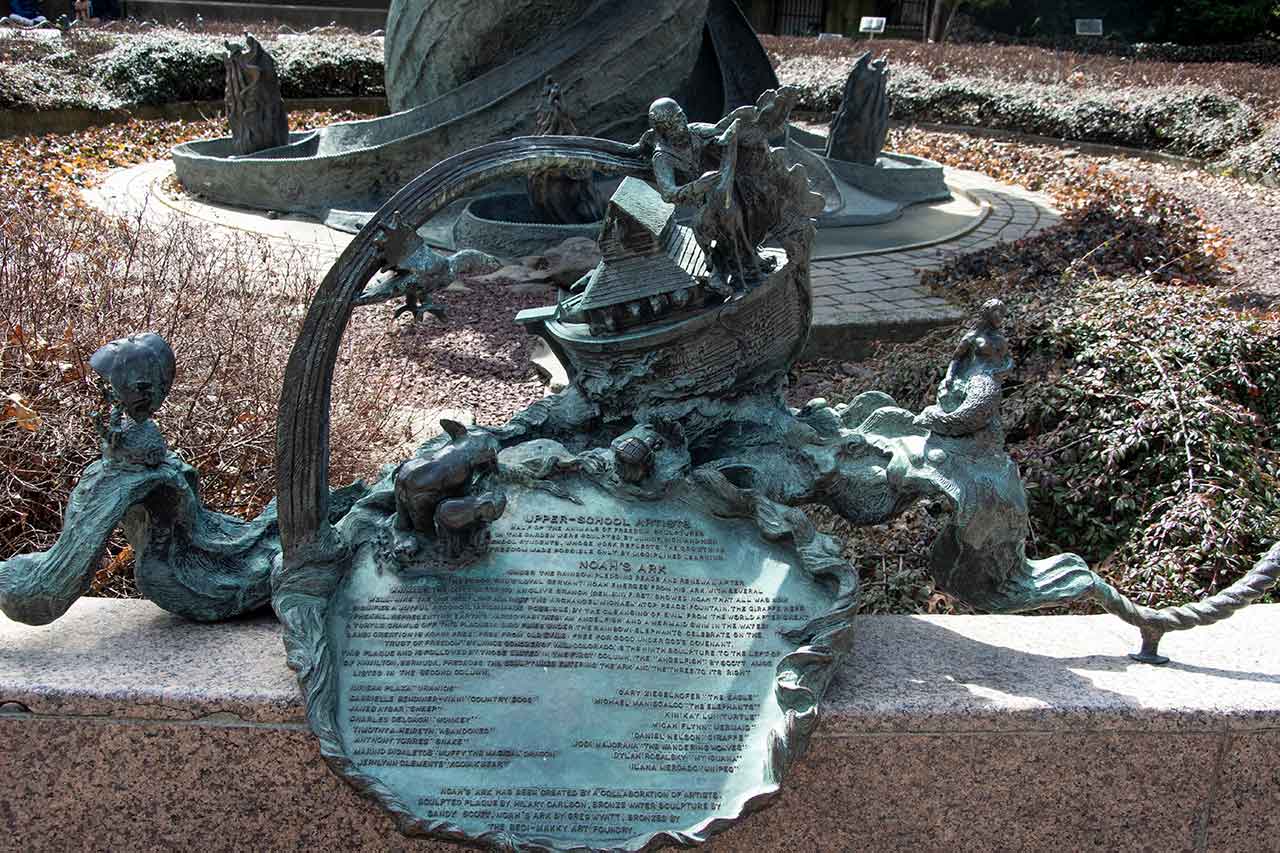
Peace Fountain: One of the most distinctive sculptures in the garden, the Peace Fountain, was created by sculptor Greg Wyatt in 1985. This 40-foot bronze sculpture depicts the struggle of good versus evil, symbolized by the archangel Michael defeating Satan. The fountain also features various animals, including a giraffe, crab, and lion, representing the harmony of Creation.
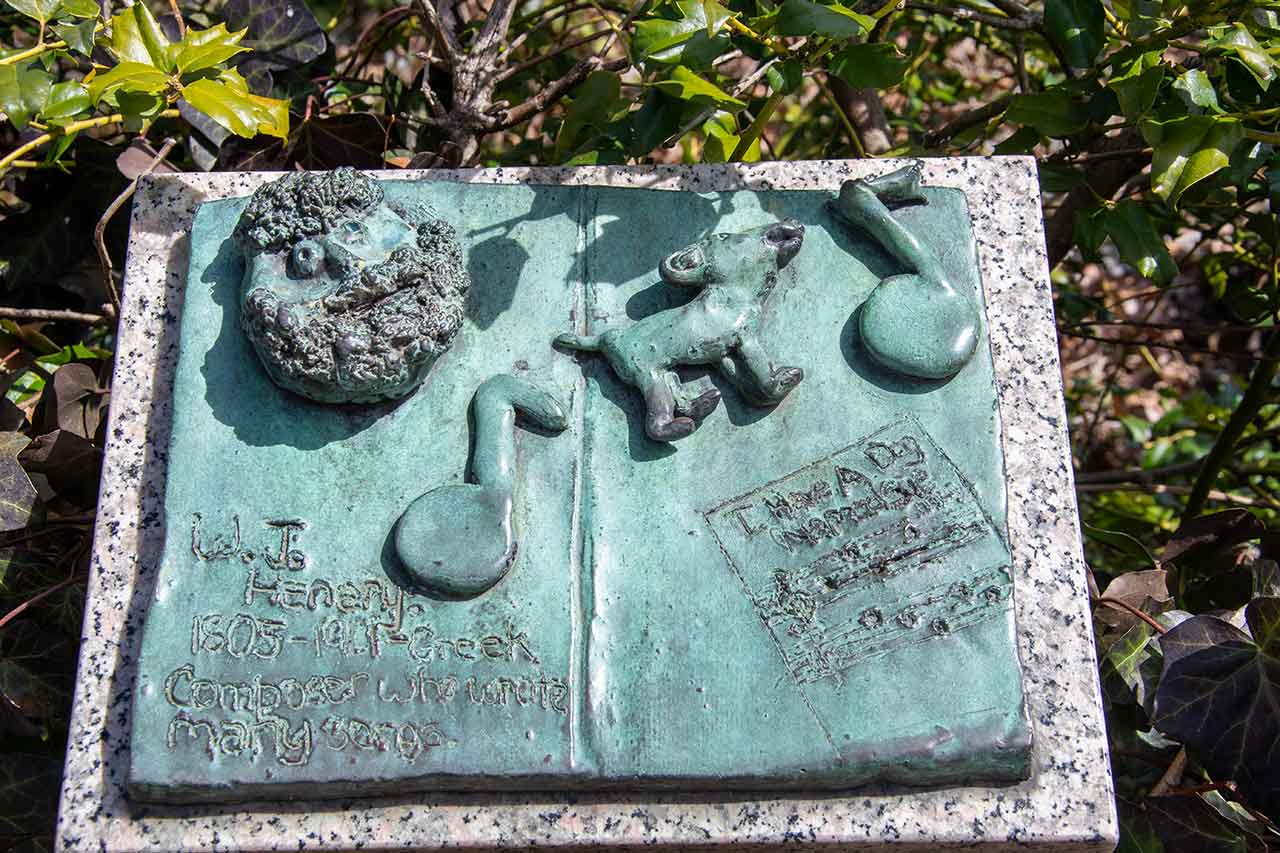
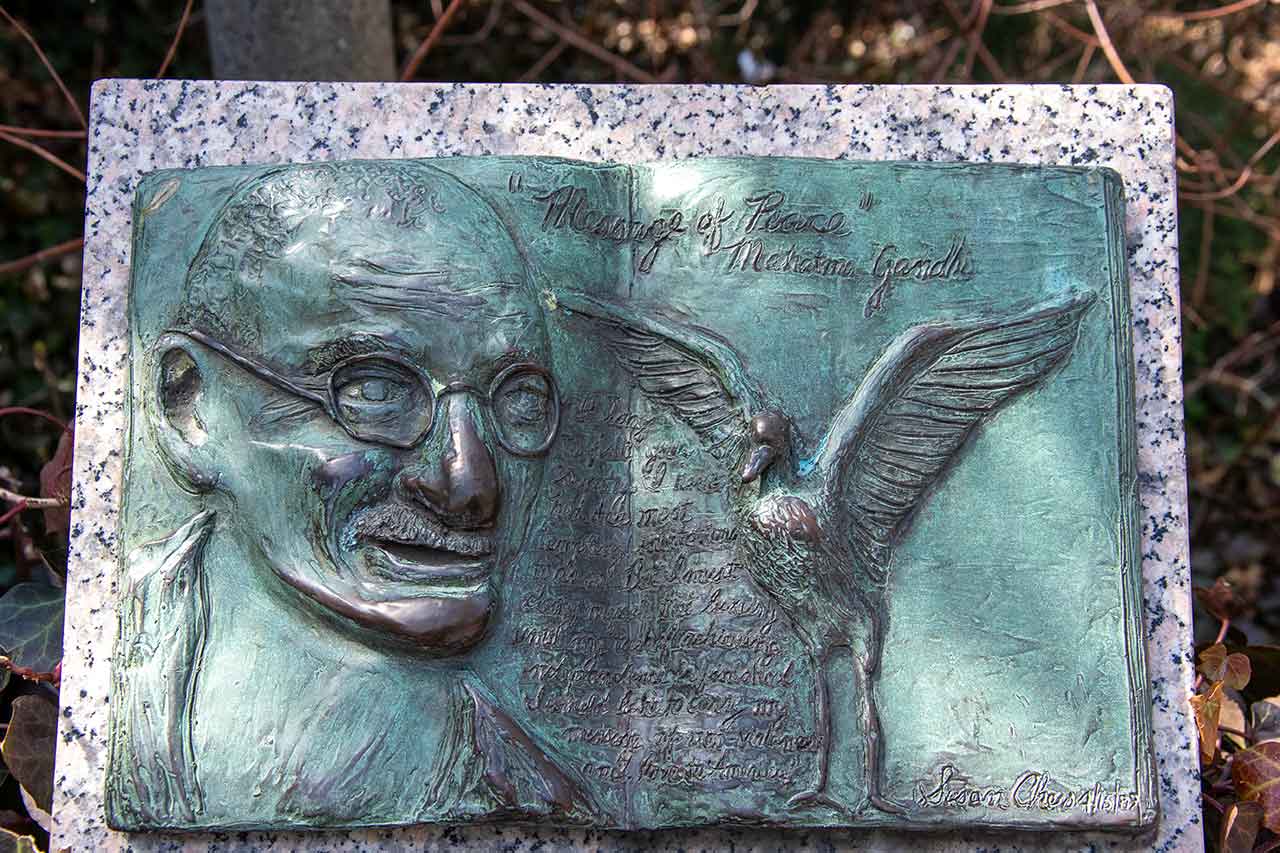
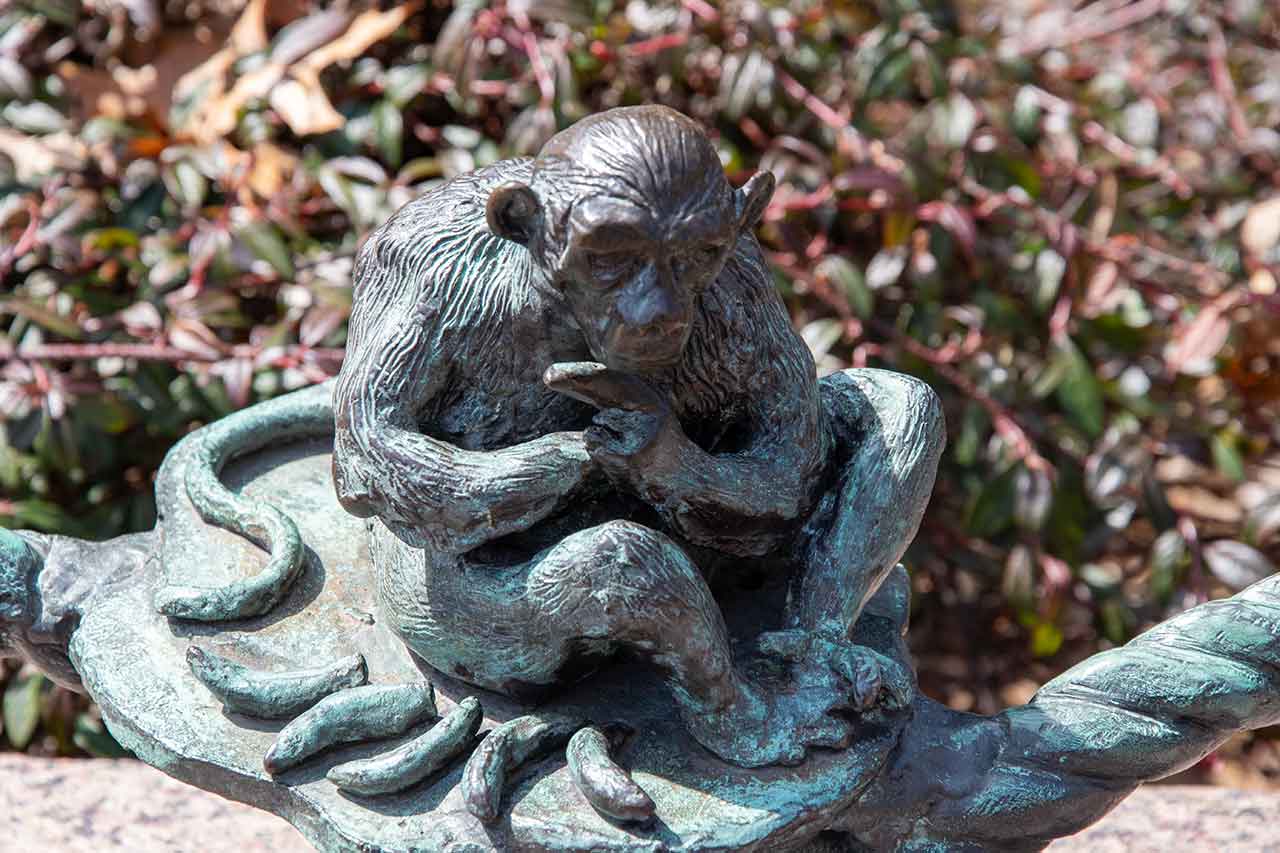
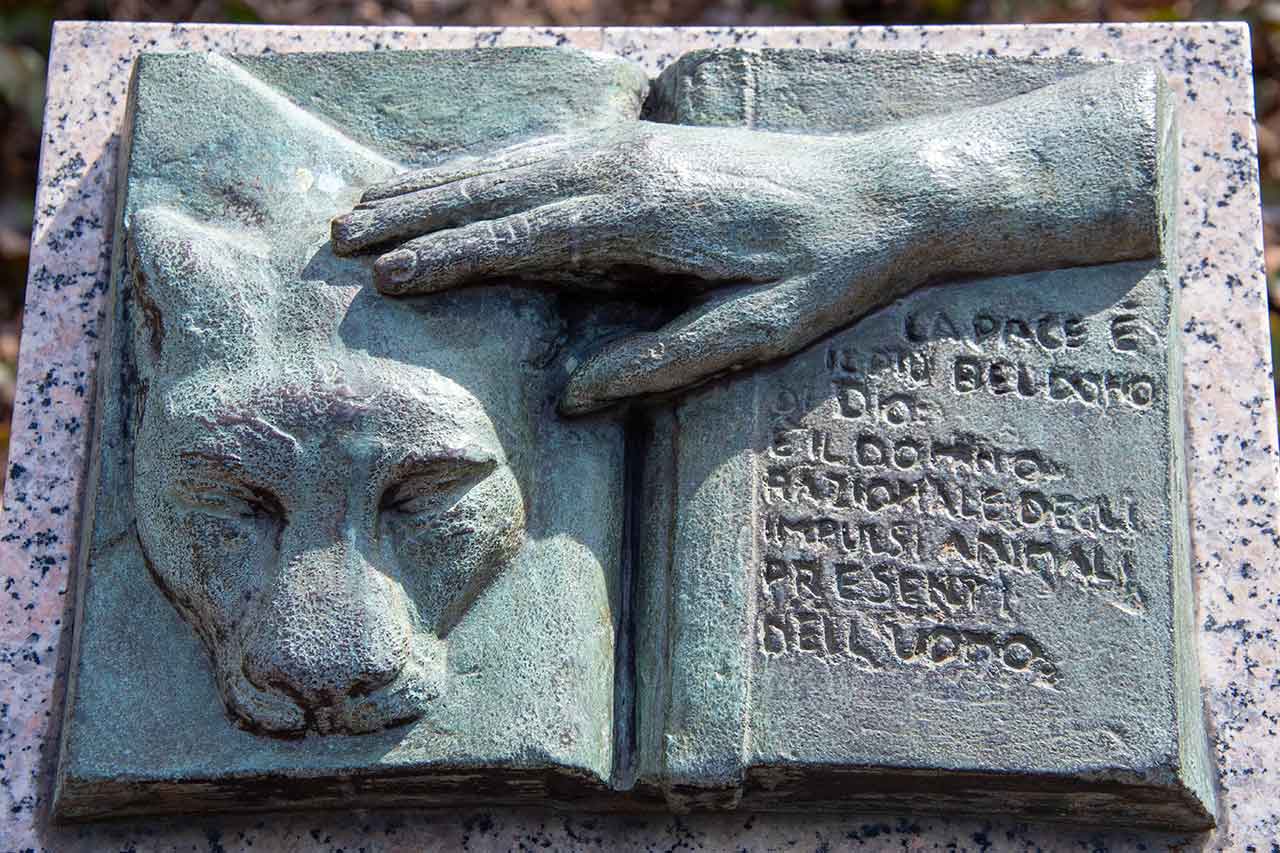
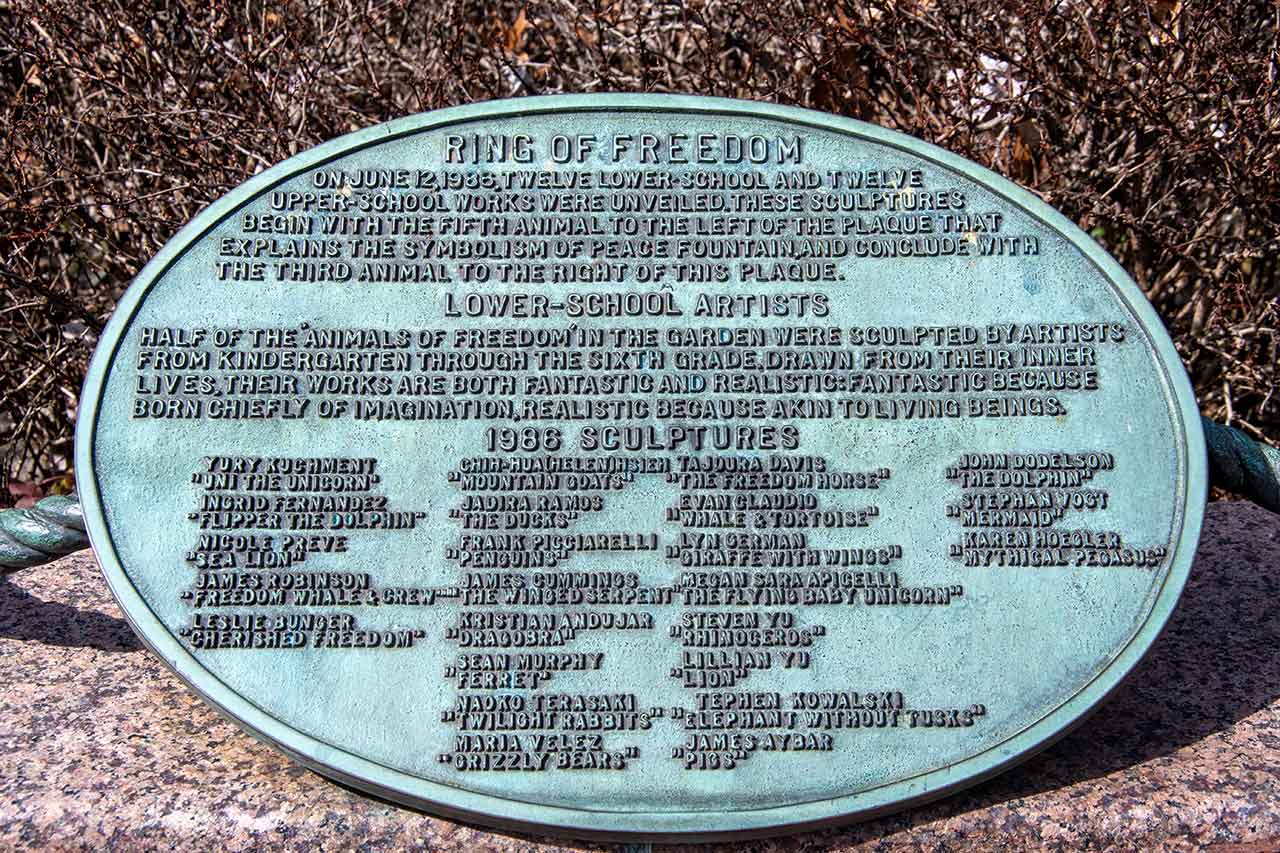
Children’s Sculpture Garden: Near the Peace Fountain are sculptures created by children from the Cathedral School and other local schools. These whimsical and imaginative works provide a fun and educational element to the garden.
Biblical Garden: This garden contains plants mentioned in the Bible, such as fig trees, pomegranates, and olives. Among these plants are small sculptures and plaques that provide biblical references and information about their significance.
Phoenix: Another intriguing sculpture by Greg Wyatt, the Phoenix symbolizes rebirth and renewal. This sculpture is significant in relation to the cathedral, which has undergone numerous renovations and reconstructions over the years.
Visitor Information
Opening Hours and Admission
Opening Hours
Monday to Saturday: from 9:30 to 17:00
on Sunday: from 12:00 to 17:00
Admission
Adults: $15
Seniors: $12
Students: $10
Free for those seeking prayer or meditation.
Timed tickets and tours:
Timed Tickets: It is recommended to purchase tickets in advance to ensure entry. Tickets can be bought online and are delivered via email.
Tours: Guided tours are currently suspended, but audio tours are available. New York Pass holders can enjoy free admission and tour when available.
Additional tips for visitors to St. John’s Cathedral
Accessibility
The cathedral is wheelchair accessible. However, access to some areas might be limited due to ongoing renovation work.
Events
Various events take place at the cathedral, including concerts by the New York Philharmonic and Paul Winter Consort. The current event schedule can be found on the cathedral’s website.
Summary
Visiting St. John’s Cathedral can be a unique experience, especially for architecture enthusiasts. It’s worth taking a moment to discover this extraordinary place while strolling through Upper Manhattan. After visiting the cathedral, you can go on a relaxing walk in the northern part of Central Park, which is within a short walking distance.
With New York CityPASS®, you can save 40% on admission to 5 famous New York attractions. It includes the 86th floor observatory and 2nd floor museum at the Empire State Building and the American Museum of Natural History. Choose 3 additional attractions from Top of the Rock® observation deck, Statue of Liberty and Ellis Island ferry, 9/11 Memorial and Museum, Circle Line sightseeing cruises, Intrepid Sea Air and Space Museum, or Guggenheim Museum. All offers are subject to availability.
To provide you with the best experience, we use technologies such as cookies to store and/or access information on your device. Consent to these technologies will allow us to process data such as browsing behavior or unique identifiers on this website. Failure to consent or withdrawal of consent may adversely affect certain features and functions.
Functional
Always active
The storage or access to technical data is strictly necessary for the legitimate purpose of enabling the use of a specific service explicitly requested by the subscriber or user, or solely for the purpose of transmitting a communication over an electronic communications network.
Preferenze
Storage or technical access is necessary for the legitimate purpose of storing preferences that are not requested by the subscriber or user.
Statistics
Technical storage or access that is used solely for statistical purposes.Technical storage or access that is used exclusively for anonymous statistical purposes. Without a court order, voluntary compliance by the internet service provider, or additional records from a third party, information stored or retrieved solely for this purpose cannot normally be used to identify the user.
Marketing
Storage or technical access is required to create user profiles for the purpose of sending advertisements or tracking the user on a website or across several websites for similar marketing purposes.


 Italiano
 Polski