Italiano
 Polski

Why visit Florence?
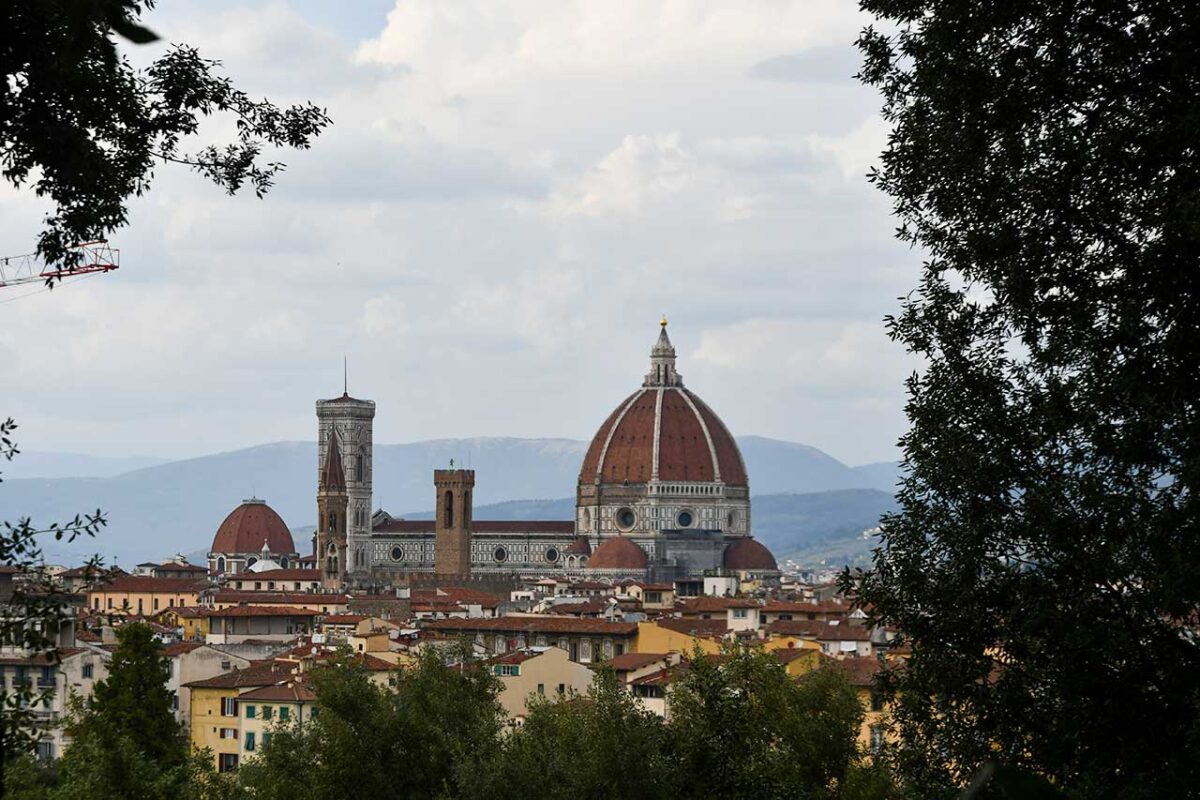
Florence (Italian: Firenze), the capital of the Tuscany region in Italy, is a city that embodies the quintessence of the Italian Renaissance, a period of cultural, artistic, and intellectual rebirth that profoundly influenced all of Europe. The city is an open-air museum, rich in architectural masterpieces and invaluable works of art, making it a must-visit destination for tourists from around the world.
In the 15th century, Florence became the center of the Renaissance thanks to the patronage of the Medici family and the ingenuity of artists such as Michelangelo, Leonardo da Vinci, Donatello, and Brunelleschi. These artists transformed the city with their works, inspiring successive generations of artists in Italy and beyond.
Florence in a nutshell:
The history of Florence, the cradle of the Renaissance
Florence, widely recognized as the cradle of the Renaissance, played a pivotal role in the cultural and artistic development not only of Italy but of the entire western world. Its history is marked by a series of significant events that shaped the city and its cultural legacy.
The founding and early development
Florence was founded as a Roman colony around 59 BC under the name Florentia. Situated in a fertile valley crossed by the Arno River, it quickly became an important trade center. In the Middle Ages, the city gained significance due to its strategic location along trade routes between Rome and northern Europe.
The rise of the Medici family and the Renaissance era
The Renaissance in Florence began in the 14th century, but reached its peak in the 15th and 16th centuries, during which the Medici family became one of the most influential patrons of art and culture. Under their patronage, artists such as Leonardo da Vinci, Michelangelo, and Botticelli created some of their most famous works.
The wealth amassed through trade and banking services allowed the Medici to invest in works of art and architecture, transforming Florence into a center of extraordinary artistic and intellectual creativity. During this period, important buildings such as the Santa Maria del Fiore Cathedral, with the famous dome designed by Brunelleschi, were also constructed.
Political and social events
Over the centuries, Florence experienced periods of political turmoil, including temporary dominance by foreign powers and intense internal rivalry. In 1434, Cosimo de’ Medici consolidated his family’s control over the city, marking the beginning of a long period of stability under Medici rule.
Florence became the capital of the Grand Duchy of Tuscany in the 16th century, and later, from 1865-1871, it was the capital of the Kingdom of Italy, during which the city underwent significant urban transformations.
Cultural influence and legacy
The influence of the Florentine Renaissance extended far beyond the city’s borders. Innovations in art, literature, and science that began in Florence spread throughout Europe, profoundly affecting the development of Western culture. Florence’s historic center, with its numerous monuments and museums, has been inscribed on the UNESCO World Heritage List, emphasizing its universal value as a symbol of the Renaissance.
The history of Florence is inextricably linked to the Renaissance, a period of remarkable cultural revival that left an indelible mark on the history of world art and culture. The city continues to celebrate and preserve this rich legacy through its monuments, museums, and vibrant cultural life, which attract tourists from all over the world.
What to see in Florence: the best museums and art galleries
Florence is renowned for its world-famous museums, which house some of the most important works of Renaissance art. Among them, the Uffizi Gallery and the Accademia Gallery are the two most notable institutions.
Uffizi Gallery (Galleria degli Uffizi)
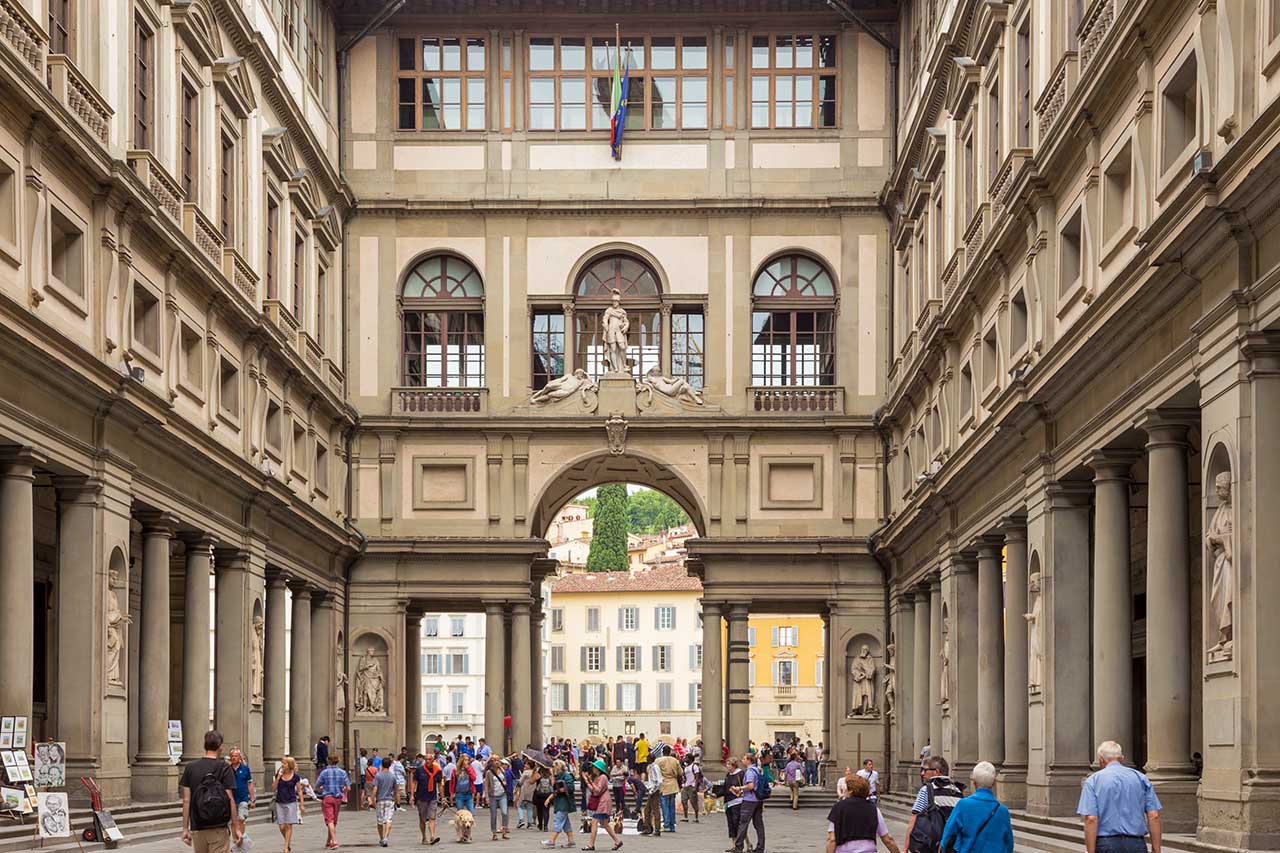
The Galleria degli Uffizi is one of the most renowned art museums in the world and an essential point of reference for those visiting Florence. This gallery houses an incomparable collection of Renaissance art, including masterpieces by artists like Leonardo da Vinci, Michelangelo, and Botticelli.
The Uffizi Gallery is located at Piazzale degli Uffizi, 6. It is situated between Palazzo Vecchio and the Arno River, offering a spectacular view of Ponte Vecchio.
The opening hours of the Uffizi Gallery are from Tuesday to Sunday, 8:15 AM to 6:50 PM, with the last admission allowed at 5:30 PM. The museum is closed on Mondays, as well as on Christmas and New Year’s Day.
As for ticket booking, it is strongly recommended to purchase them in advance to avoid long waits, especially during the high season.
Accademia Gallery and Michelangelo’s David
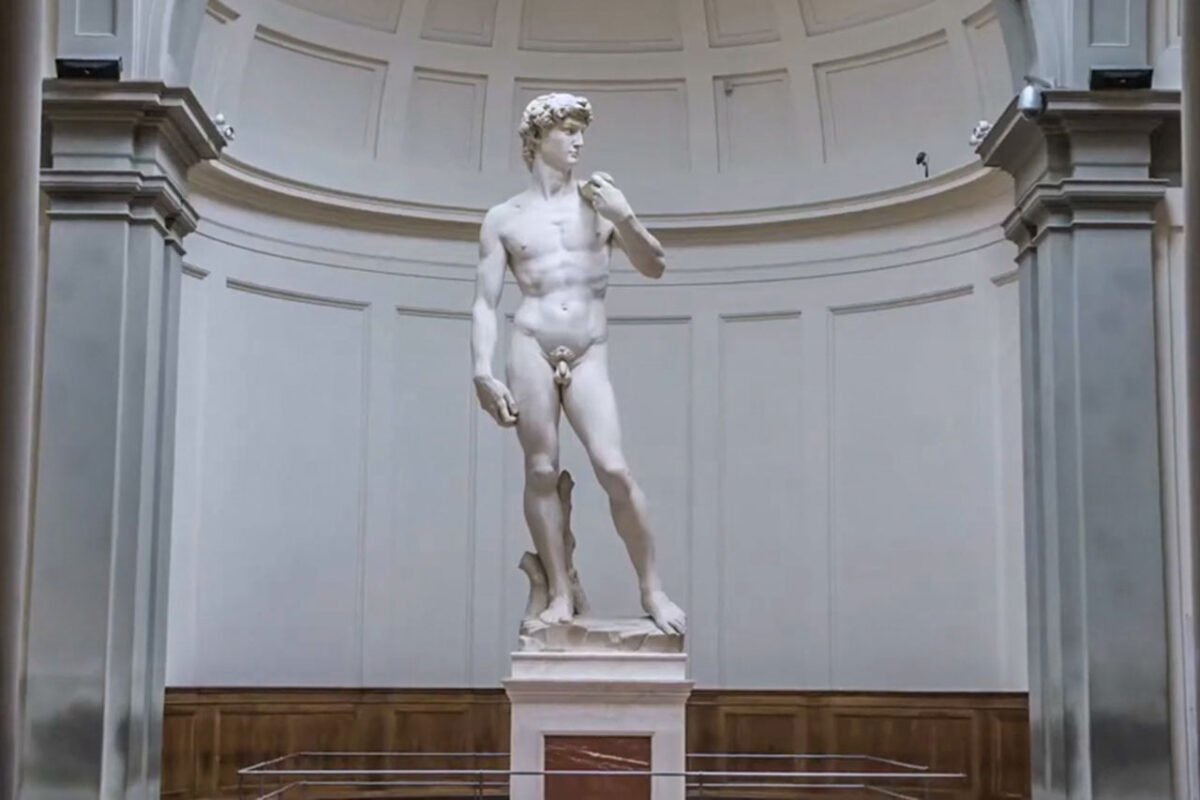
The Accademia Gallery (Galleria dell’Accademia) is best known for housing Michelangelo’s David, one of the most famous and admired sculptures in the world. In addition to David, the gallery houses other works by Michelangelo and a collection of Renaissance paintings.
The opening hours of the Accademia Gallery are from Tuesday to Sunday, from 8:15 AM to 6:50 PM, with the last entry allowed at 5:30 PM. The gallery is closed every Monday, and also on New Year’s Day, May 1st, and Christmas Day.
To book tickets for the Accademia Gallery, you can do so online by selecting your desired date and time through the reservation form on the official website or on other sites offering booking services.
Lesser-known museums worth visiting in Florence
Apart from the major ones, Florence is full of lesser-known, but equally fascinating museums worth visiting:
National Archaeological Museum of Florence
This museum offers a rich collection that includes Etruscan, Roman, and Egyptian artifacts. Particularly notable is the Egyptian section, which is the second most important in Italy after the Egyptian Museum in Turin.
Buonarroti House Museum
This house-museum was once the home of Michelangelo’s family and now houses artworks and memorabilia commemorating the life and work of the artist. The collection also includes archaeological artifacts collected by Michelangelo’s descendants.
Museum of San Marco
This museum is another hidden treasure of Florence, known for its religious art and the monastery where the monk-painter Fra Angelico lived.
Stibbert Museum
This museum houses the largest collection of armor in the world, as well as a wide selection of artworks and historical objects from various parts of the world.
Bardini Museum and Horne Museum
Both offer unique collections of art and furniture, providing a more intimate and individual insight into the cultural history of Florence.
These museums offer a deeper and more diverse perspective on Florence’s rich cultural heritage, allowing visitors to go beyond the usual tourist paths.
Florence: attractions and must-see places
In addition to the previously mentioned museums, Florence offers a wealth of places that every history and culture enthusiast should visit. Here are some of the major attractions:
Florence Cathedral (Duomo): Cathedral of Santa Maria del Fiore
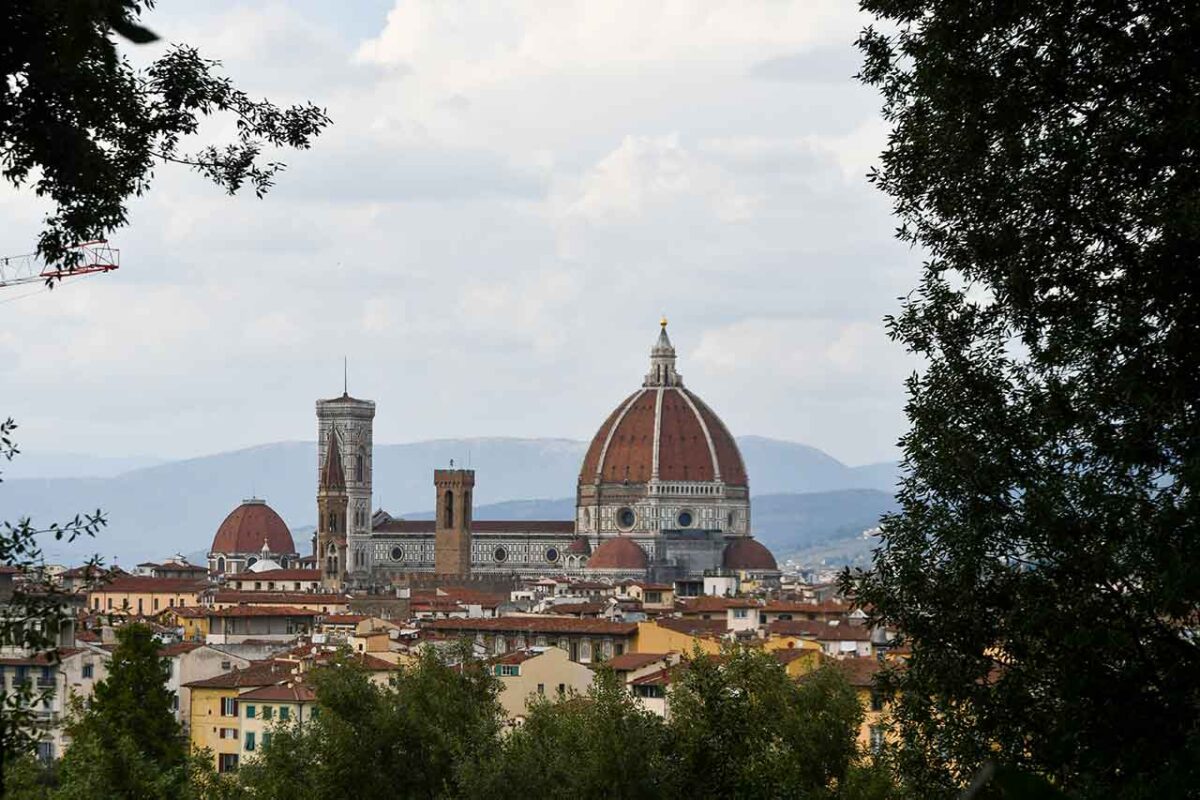
The Cathedral of Santa Maria del Fiore, better known as the Duomo, is a must-see. This famous symbol of Florence is a triumph of Gothic and Renaissance architecture, started in 1296 by Arnolfo di Cambio and continued by legends such as Giotto and Brunelleschi. The famous dome of Brunelleschi, completed in 1436, is one of the greatest architectural achievements of the Renaissance and remains the largest existing masonry dome, a true symbol of the creativity of those times.
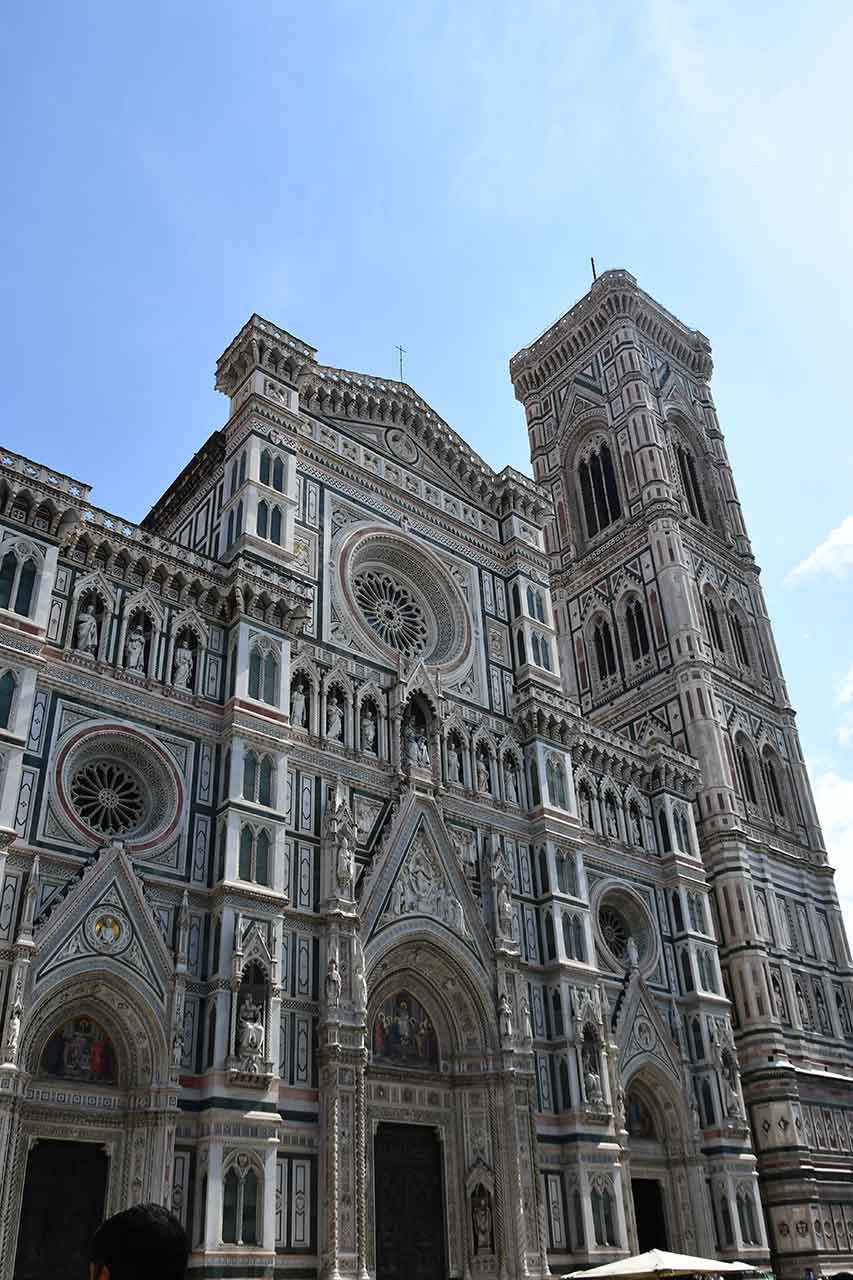
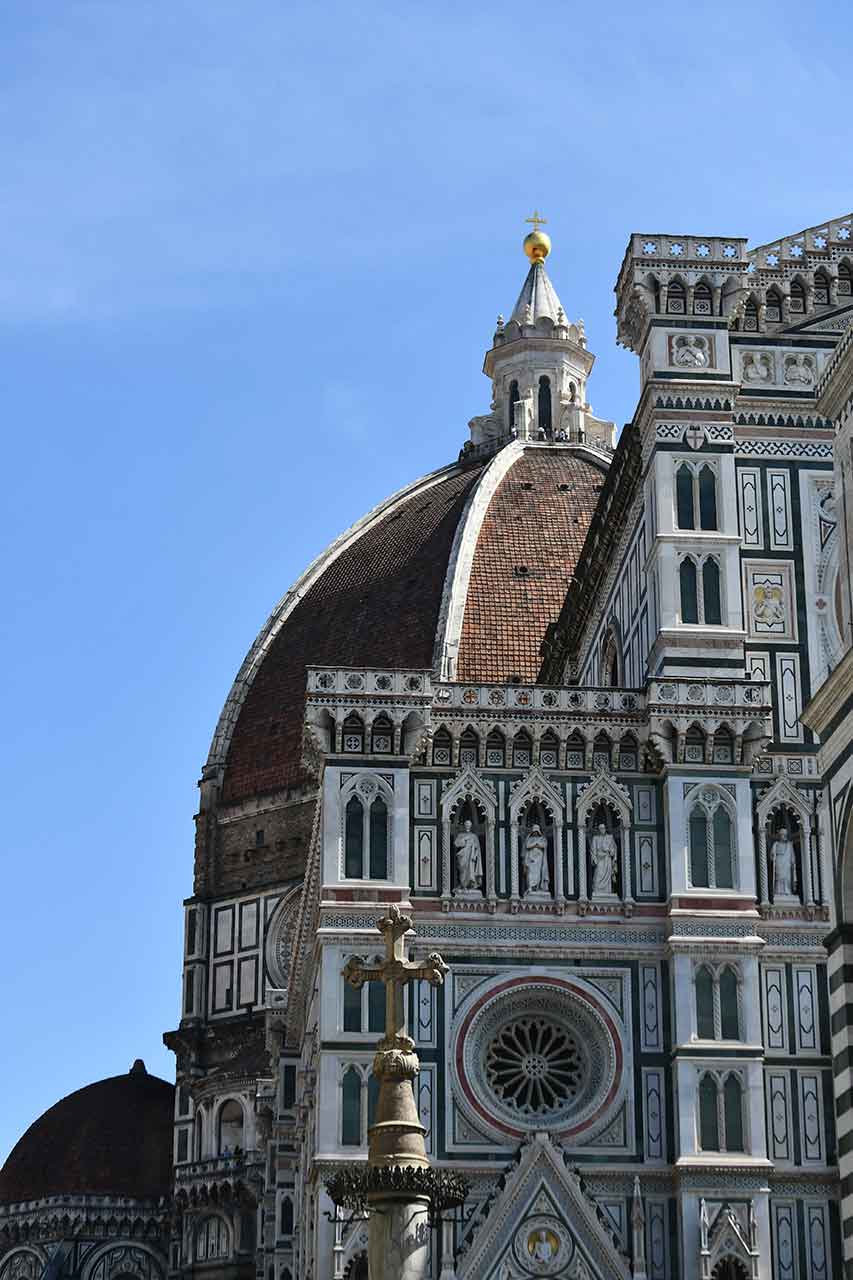
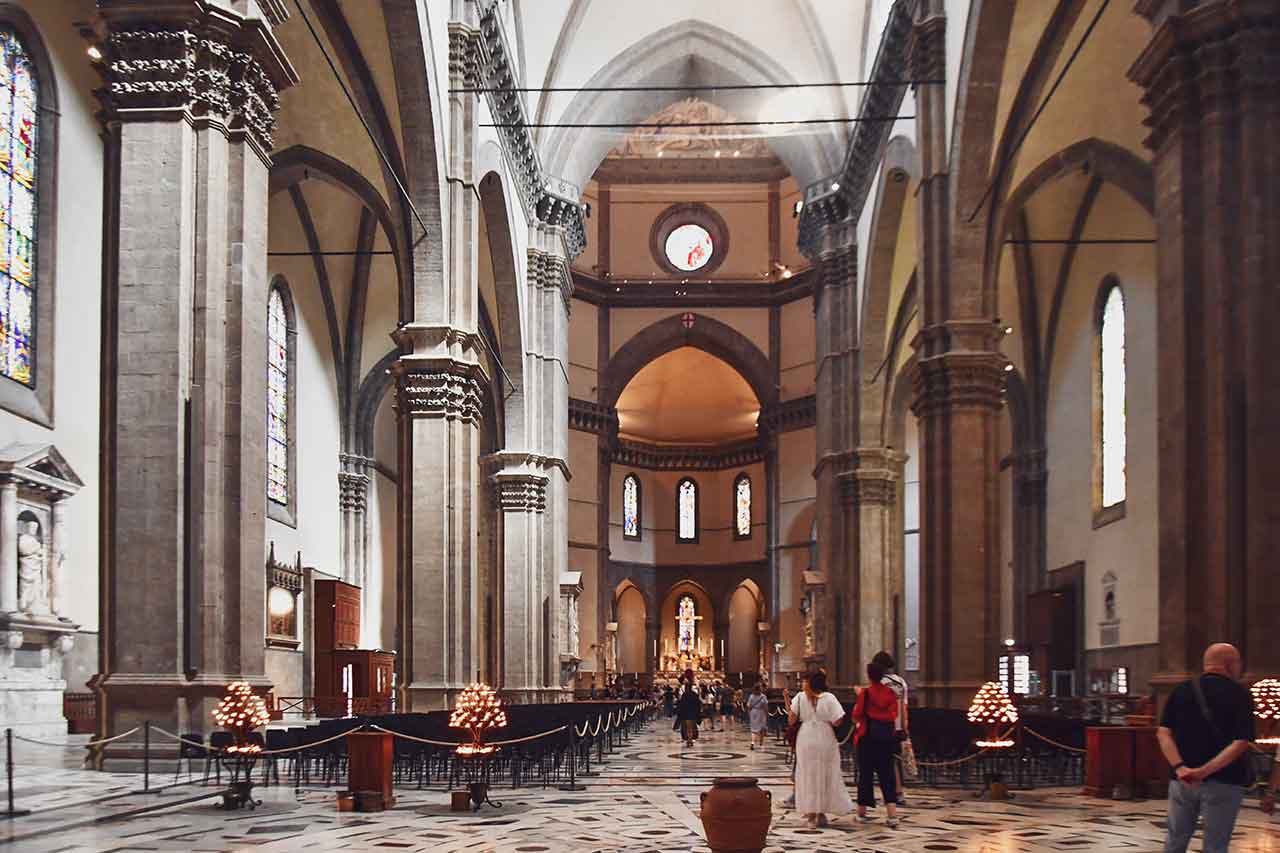
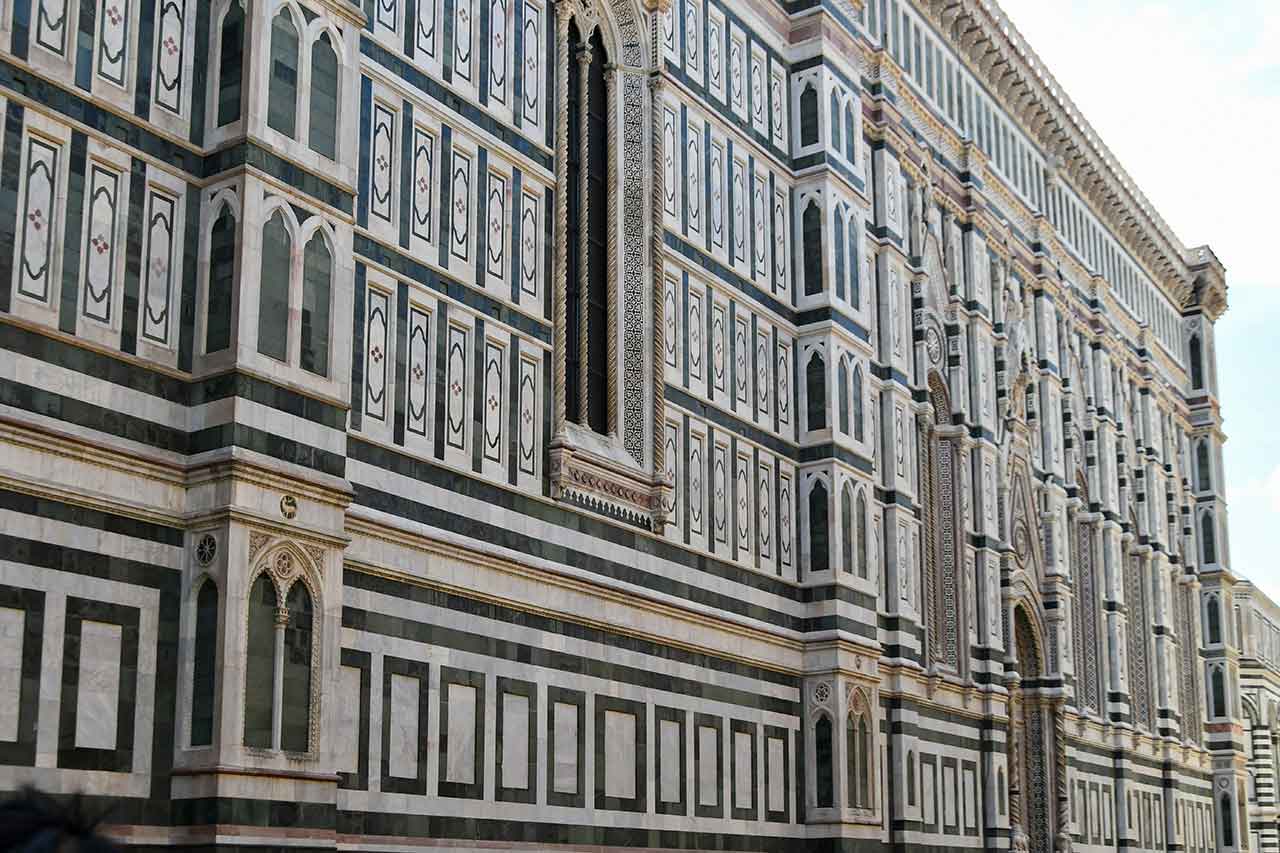
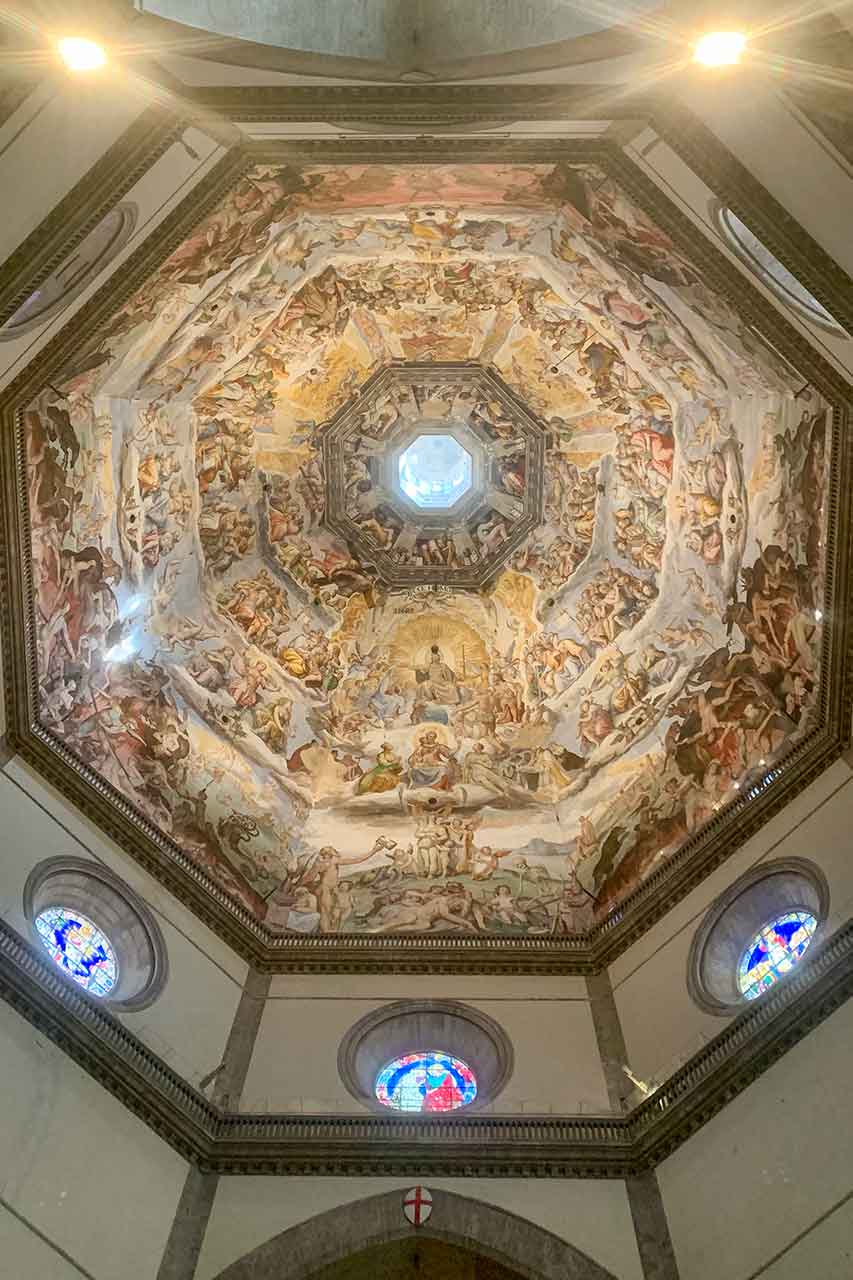
The Neo-Gothic façade, only completed in 1887, is in turn a magical mix of colorful marble, sculptures, and mosaics depicting religious figures and symbols of Florence.
Campanile di Giotto: Giotto’s bell tower and view of Florence
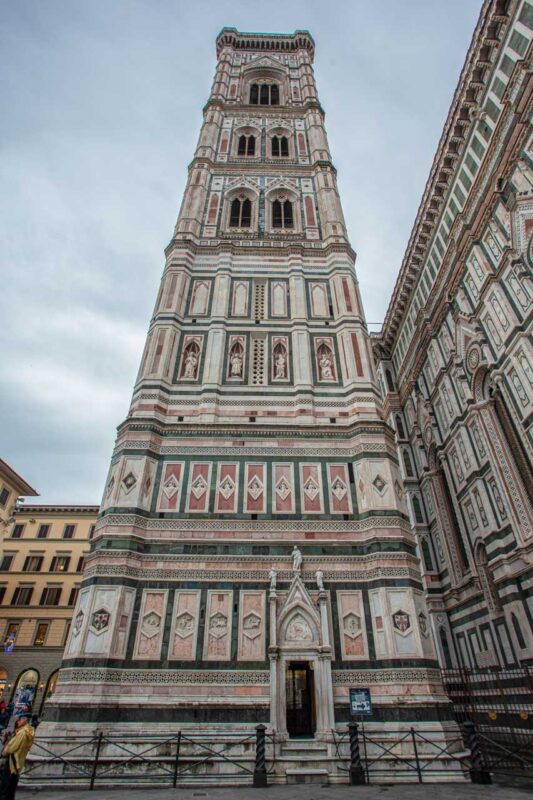
If you are in Florence, you cannot miss the Campanile di Giotto, right next to the cathedral at Piazza del Duomo. This tower, a true Gothic gem from the 1300s, was designed by Giotto, the famous Renaissance artist. Although Giotto did not see the finished work, Andrea Pisano and Francesco Talenti fulfilled his dream, completing the tower in 1359. Nearly 85 meters high, the tower is a spectacle of colorful marbles and decorations, featuring sculptures depicting stories of saints and biblical scenes.
But the true magic happens when you start climbing the 414 steps. Yes, it’s a big challenge, but the view of Florence waiting at the top is priceless. Along the way to the top, you can also take a closer look at the bells and copies of the original sculptures, which are now safely housed in the Museo dell’Opera del Duomo.
If you want to visit, it is open every day from 8:15 AM to 7:00 PM, and the ticket may also include access to the entire cathedral complex. Trust me, it’s an experience you won’t forget!
Baptistery of San Giovanni (St. John)
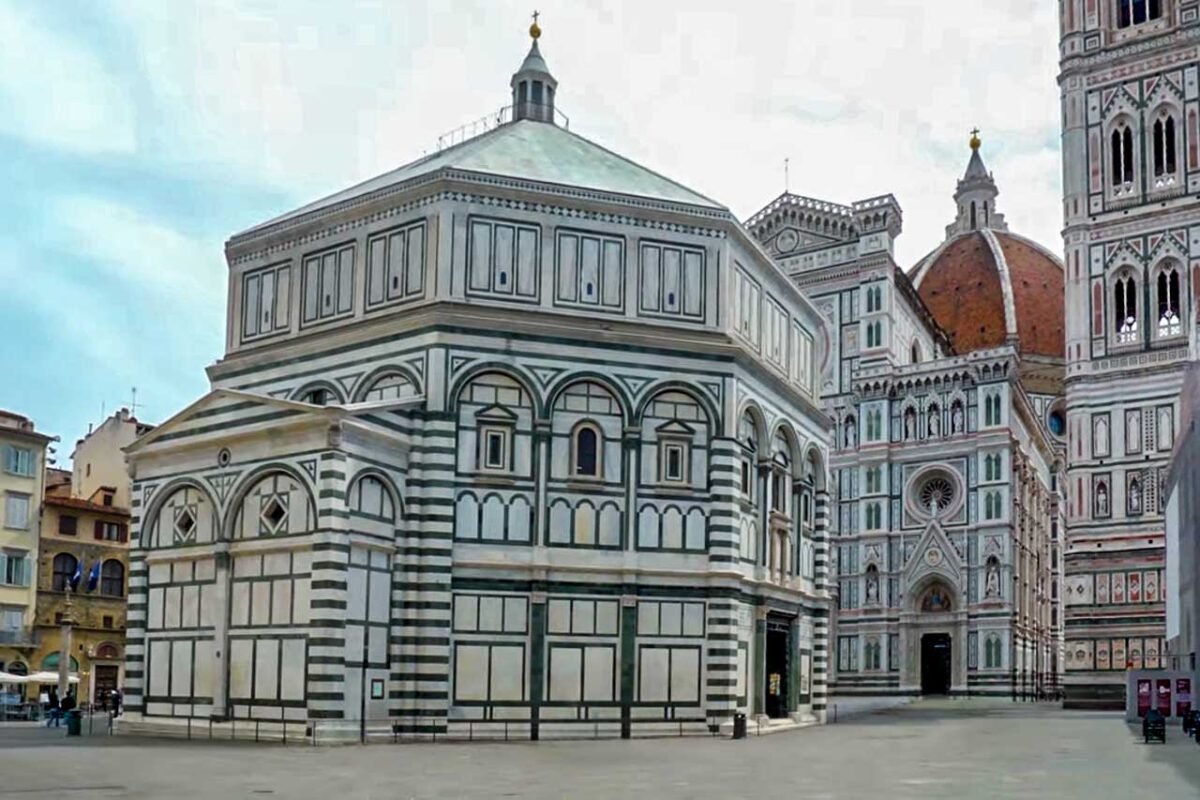
The Baptistery of San Giovanni is one of the city’s oldest and most fascinating buildings. Located opposite the cathedral, the baptistery is dedicated to Saint John the Baptist, the patron of Florence. Its origins are shrouded in mystery, with some theories suggesting it was built on the ruins of a Roman temple dedicated to Mars.
Consecrated in 1059, the baptistery today has an extraordinary octagonal shape, typical of late antique and Byzantine architecture, and its exterior is covered with white Carrara marble and green Prato marble.
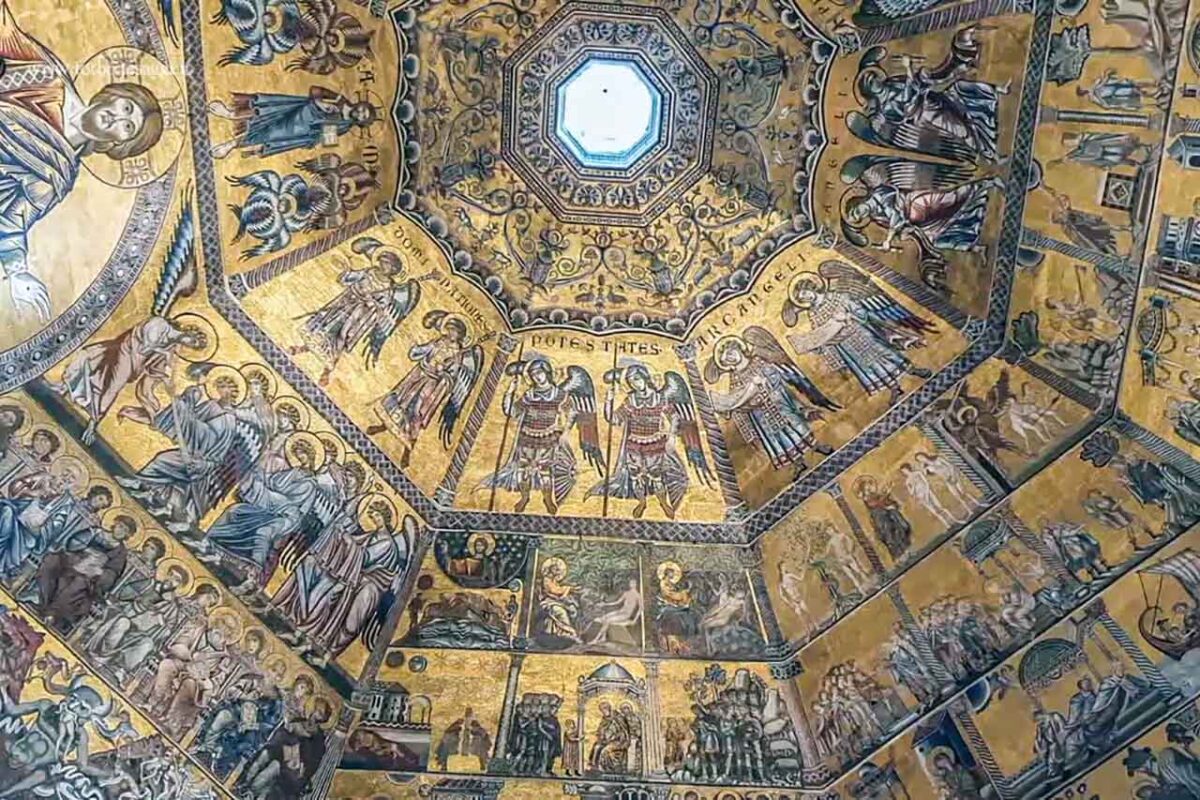
However, the interior is breathtaking: the mosaics covering the dome and the vault of the apse are simply amazing. Started in 1225 and completed about a century later, these mosaics depict scenes of the Last Judgment, biblical stories, and figures of saints, whose richness makes you feel small.
One cannot forget about the doors of the baptistery, especially the Porta del Paradiso (Gate of Paradise) by Lorenzo Ghiberti, a true masterpiece of art and creativity.
The Duomo, along with the baptistery and the campanile, has been listed as a UNESCO World Heritage Site.
Ponte Vecchio (Old Bridge) called the Jewelers’ Bridge
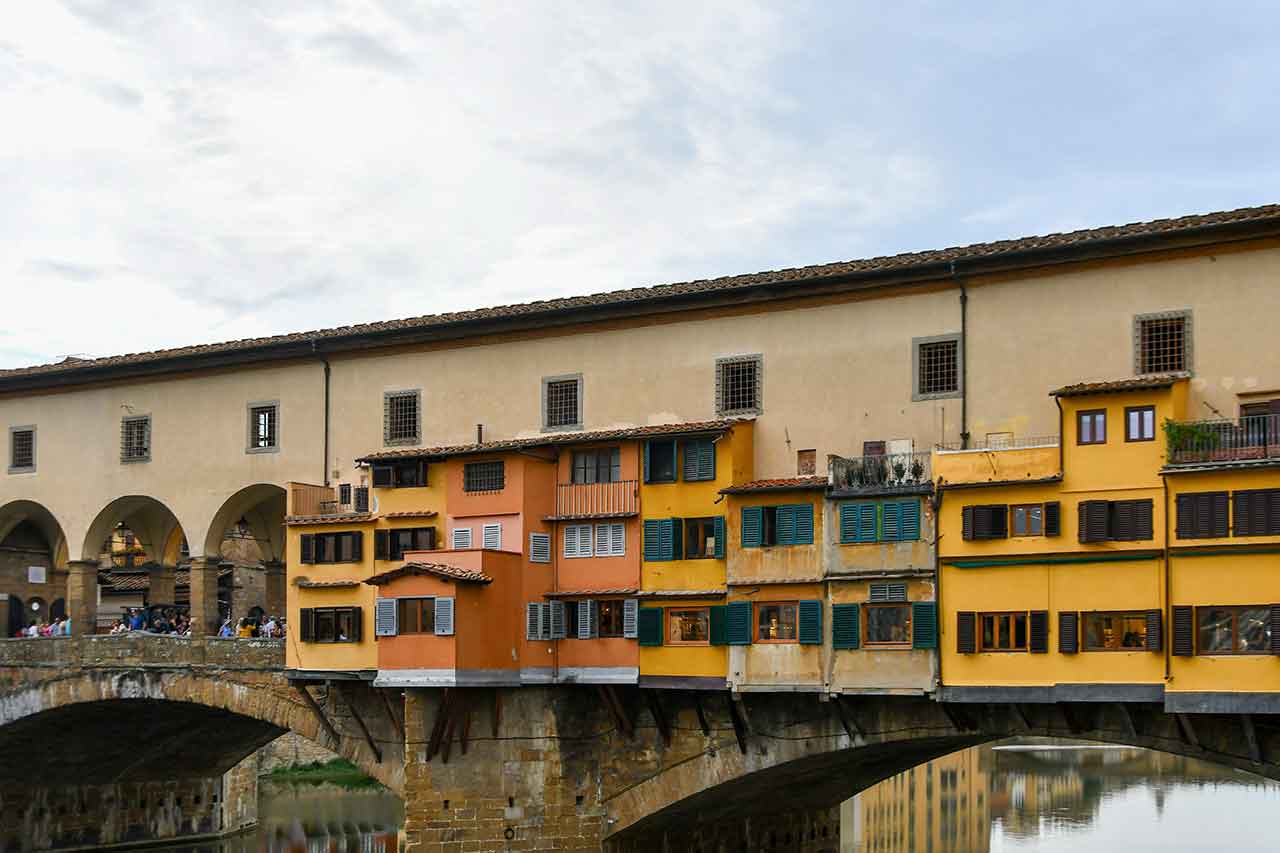
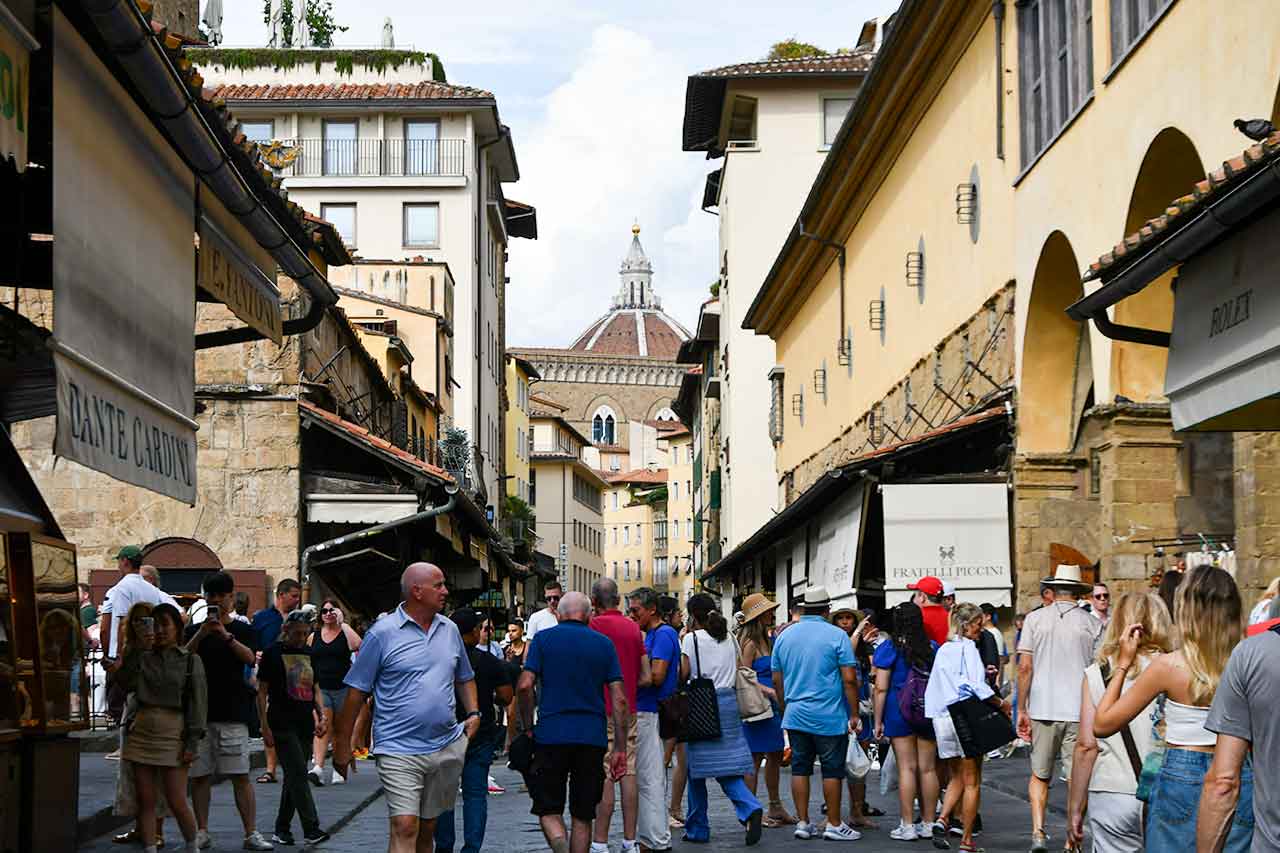
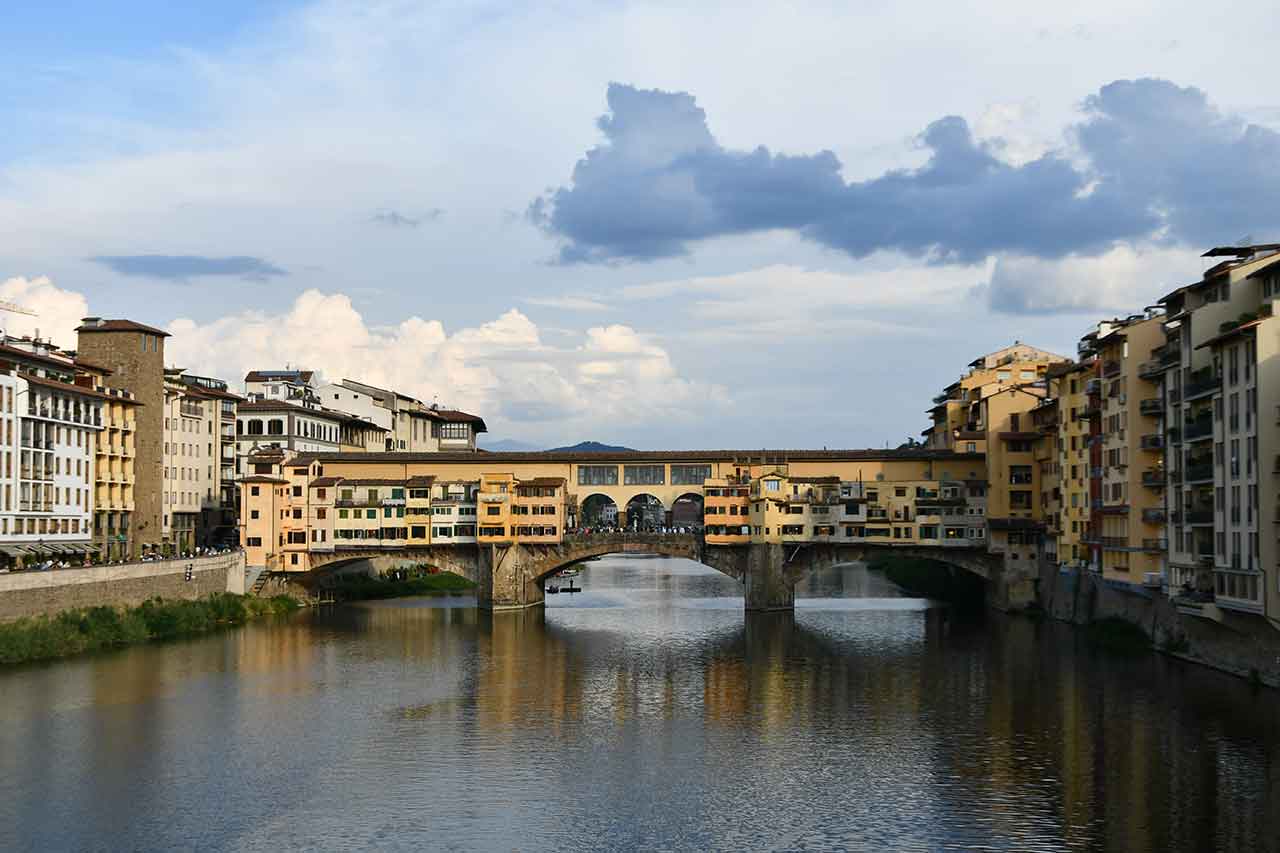
Ponte Vecchio is one of the most recognizable symbols of Florence. This medieval bridge, known for its goldsmith workshops, crosses the Arno River at its narrowest point. It is the only Florentine bridge that survived World War II almost intact, and its current structure dates back to 1345. Ponte Vecchio offers picturesque views of the Arno and surrounding towns and is a favorite spot for taking photos and romantic strolls.
Piazza della Signoria and its tourist attractions
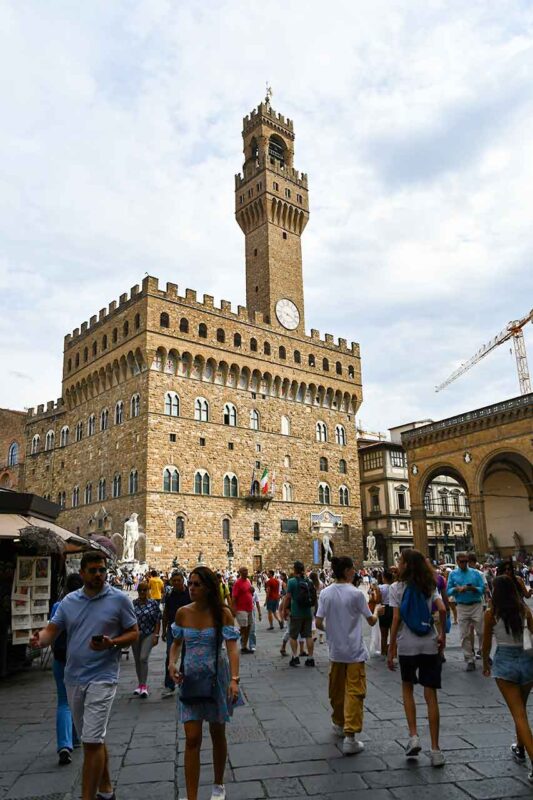
Piazza della Signoria, located in front of the majestic Palazzo Vecchio, has witnessed key historical moments such as the infamous ‘Bonfire of the Vanities’ in 1497 and the return of the Medici in 1530.
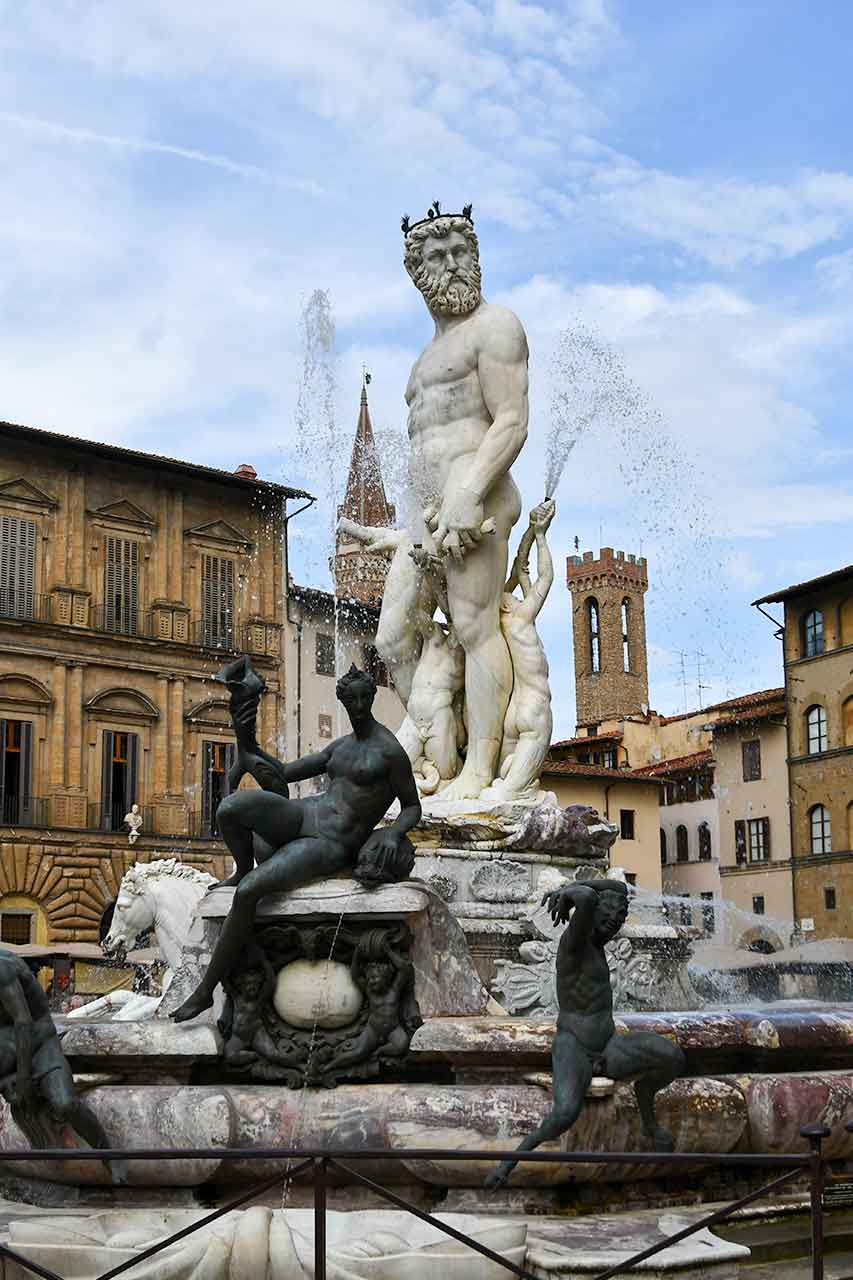
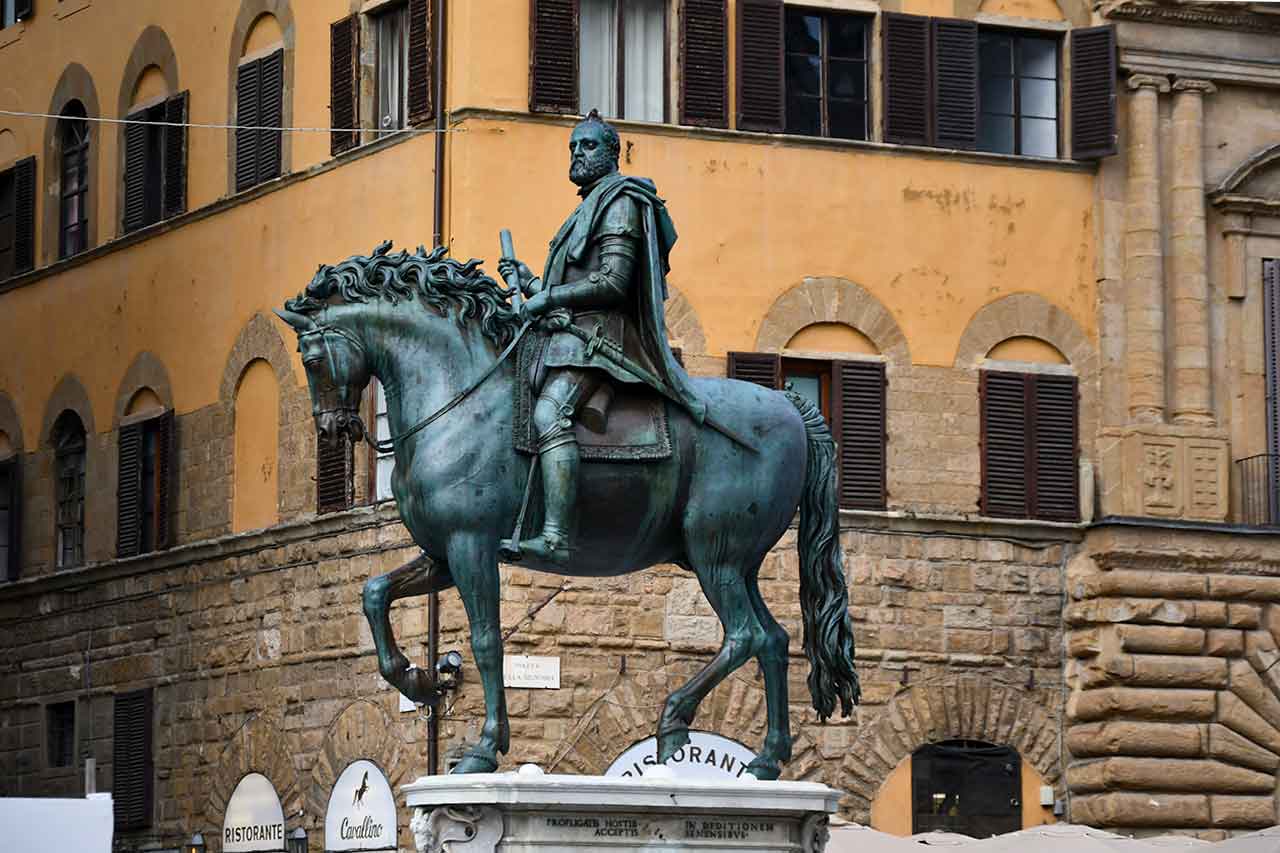
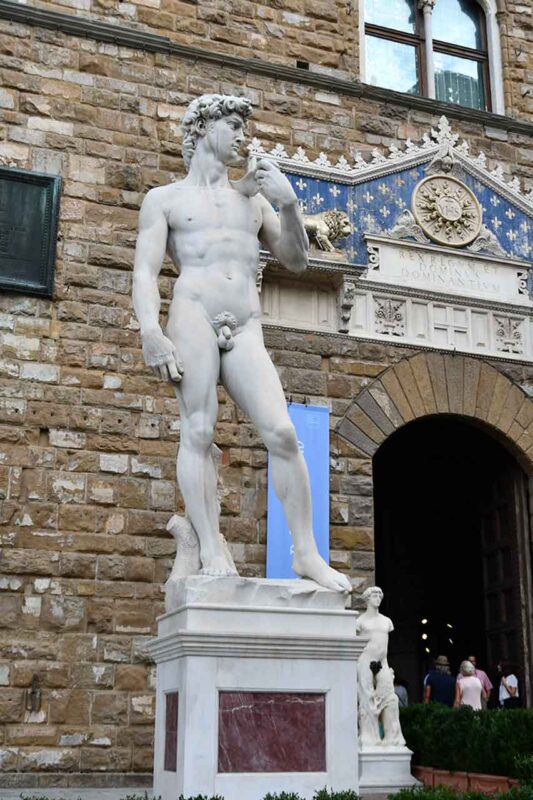
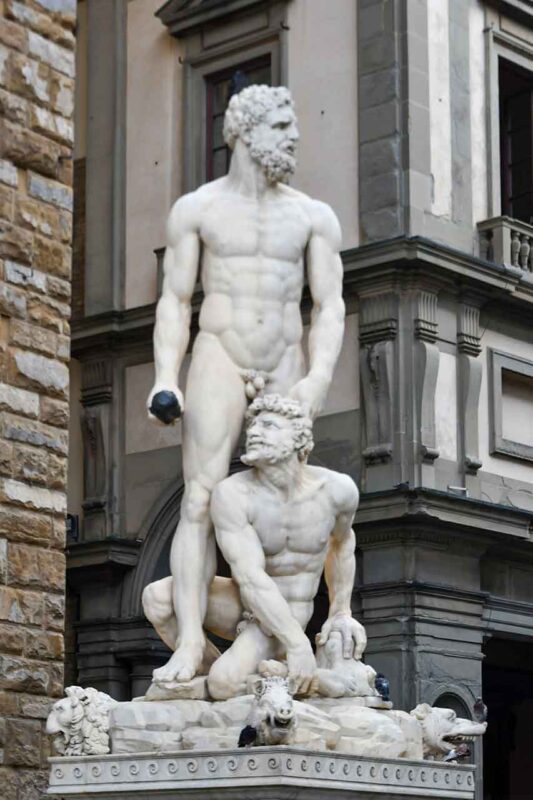
This square is a true open-air museum. Here you will find a replica of Michelangelo’s David and other breathtaking sculptures, such as Hercules and Cacus by Bandinelli and the Neptune Fountain, representing the Medici’s maritime ambitions. Do not miss the equestrian statue of Duke Cosimo I, commemorating the man who united Tuscany.
During the ‘Bonfire of the Vanities‘, which took place on February 7, 1497, in Florence, the monk Girolamo Savonarola and his followers, the ‘Piagnoni’, burned items perceived as symbols of moral decadence in Piazza della Signoria, such as mirrors, cosmetics, extravagant clothes, jewelry, musical instruments, ‘immoral’ books, and artworks, including Botticelli’s mythological paintings. This act aimed to cleanse the city of corruption by promoting Christian values and theocratic politics, opposing the luxury promoted by the Medici and contemporary Florentine society.
Palazzo Vecchio
Palazzo Vecchio, located on Piazza della Signoria, has been the center of political power in Florence for centuries. Originally built as the seat of city governance, it also served as the residence of the Medici family. The palace is known for the Salone dei Cinquecento, decorated by Vasari, and numerous works of art, including sculptures by Michelangelo and Donatello. Today, Palazzo Vecchio serves as both a museum and the city hall.
Loggia dei Lanzi
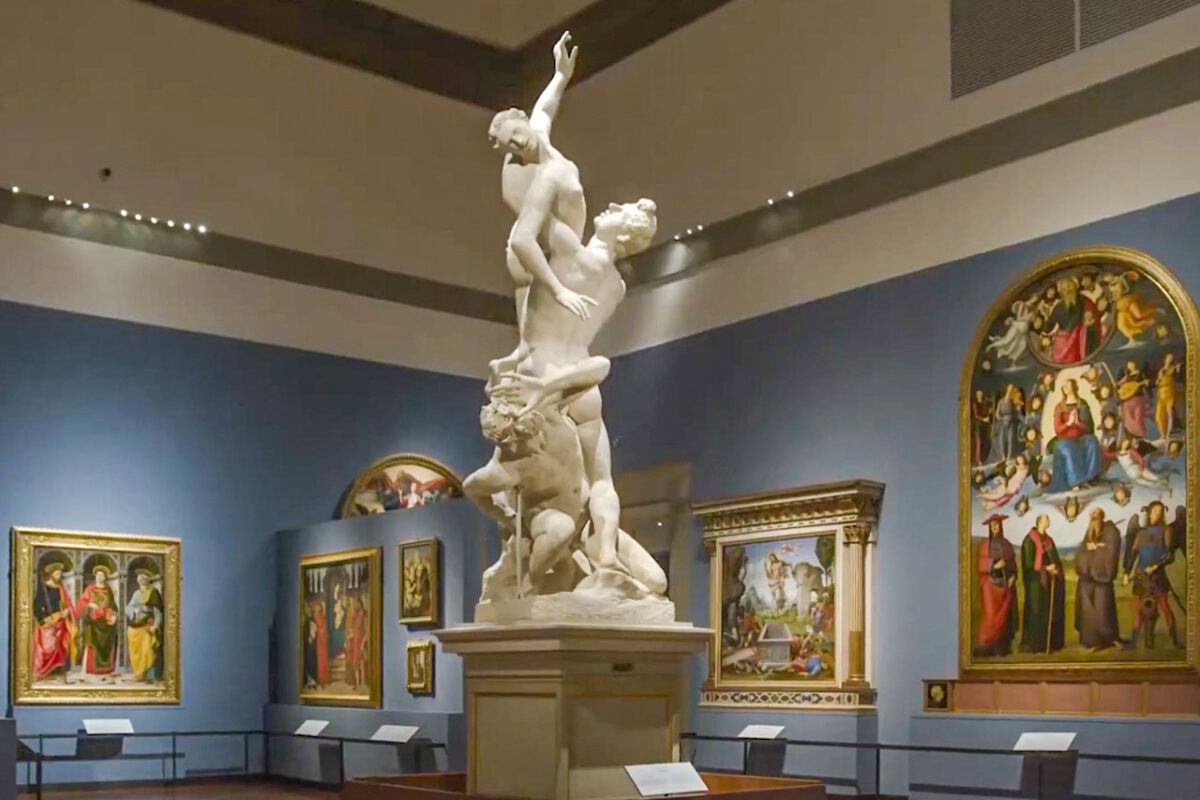
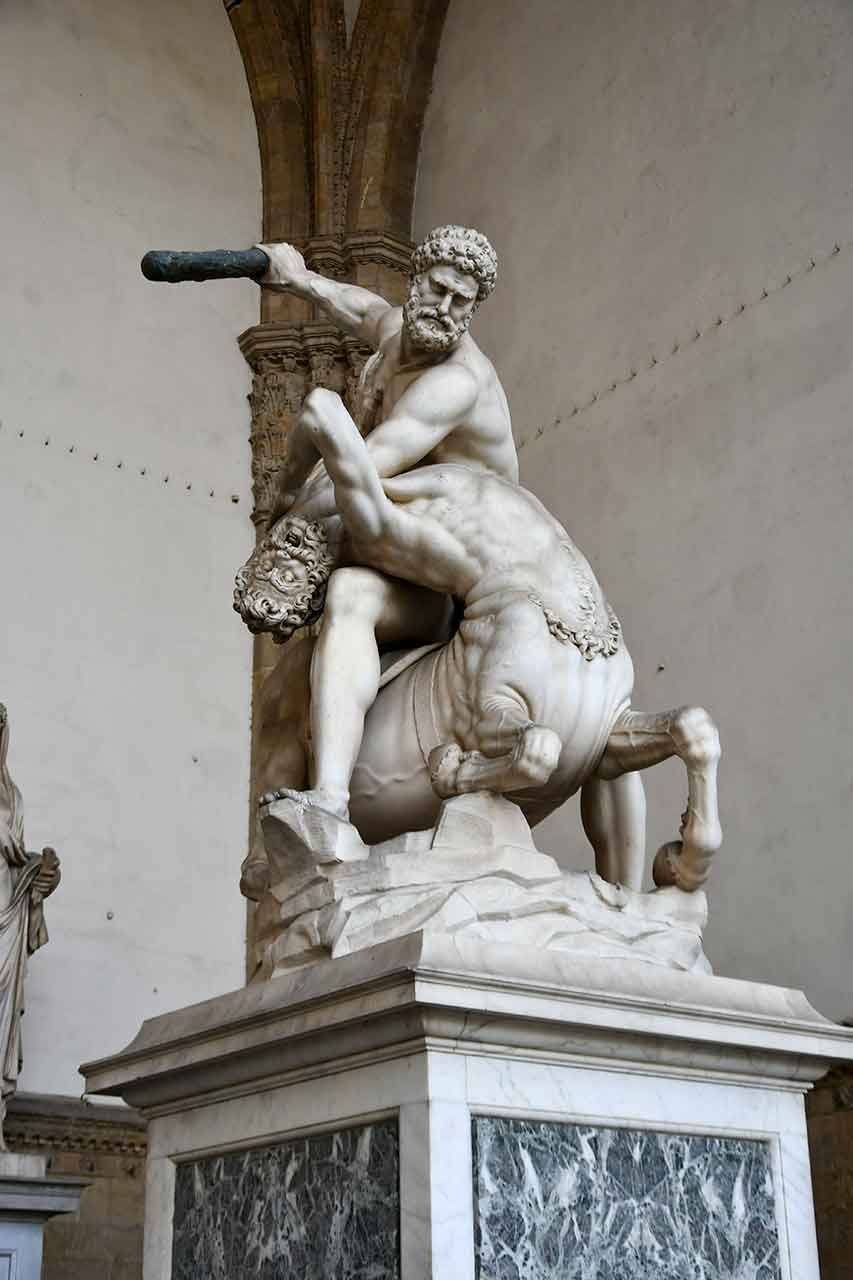
Also visit the Loggia dei Lanzi, right next to Palazzo Vecchio, where you can admire Renaissance sculptures such as Cellini’s Perseus with the Head of Medusa and Giambologna’s The Rape of the Sabine Women.
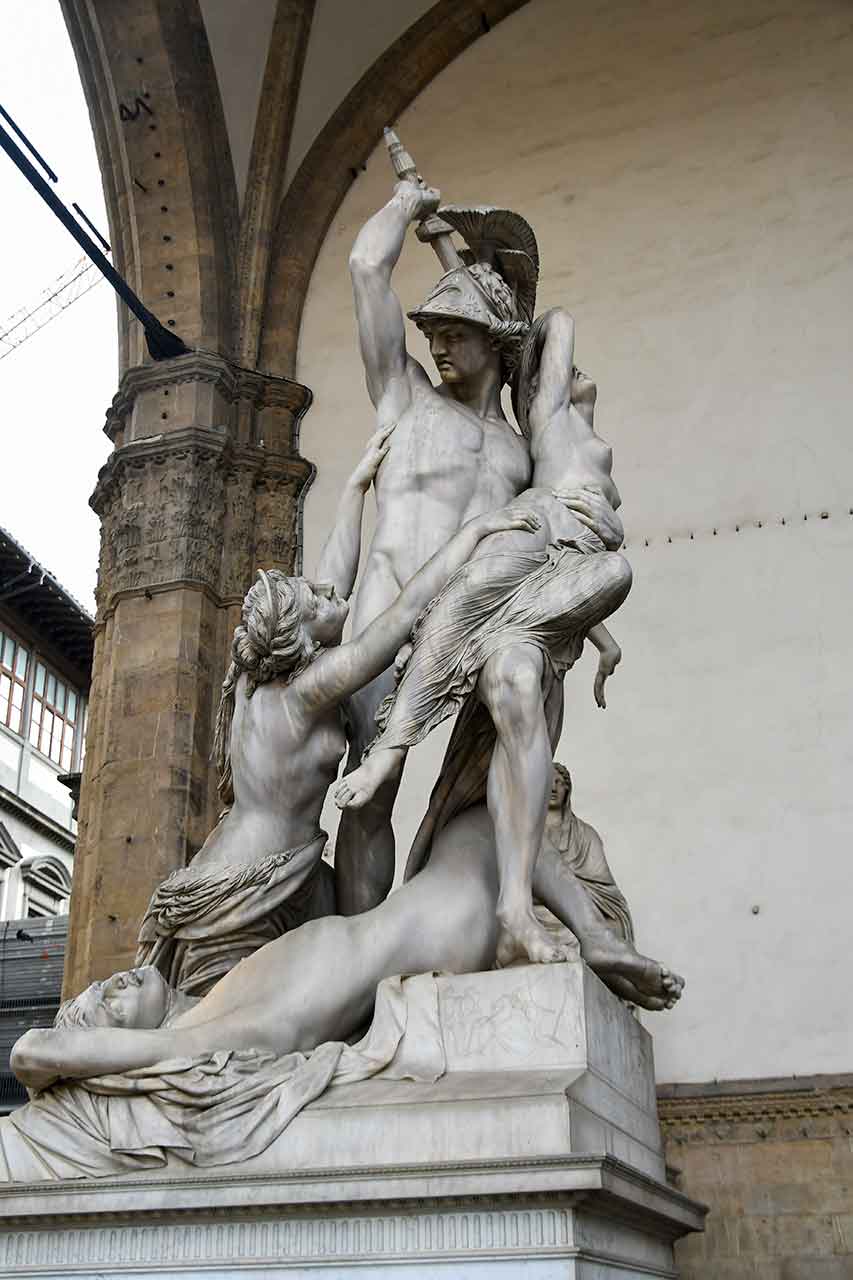
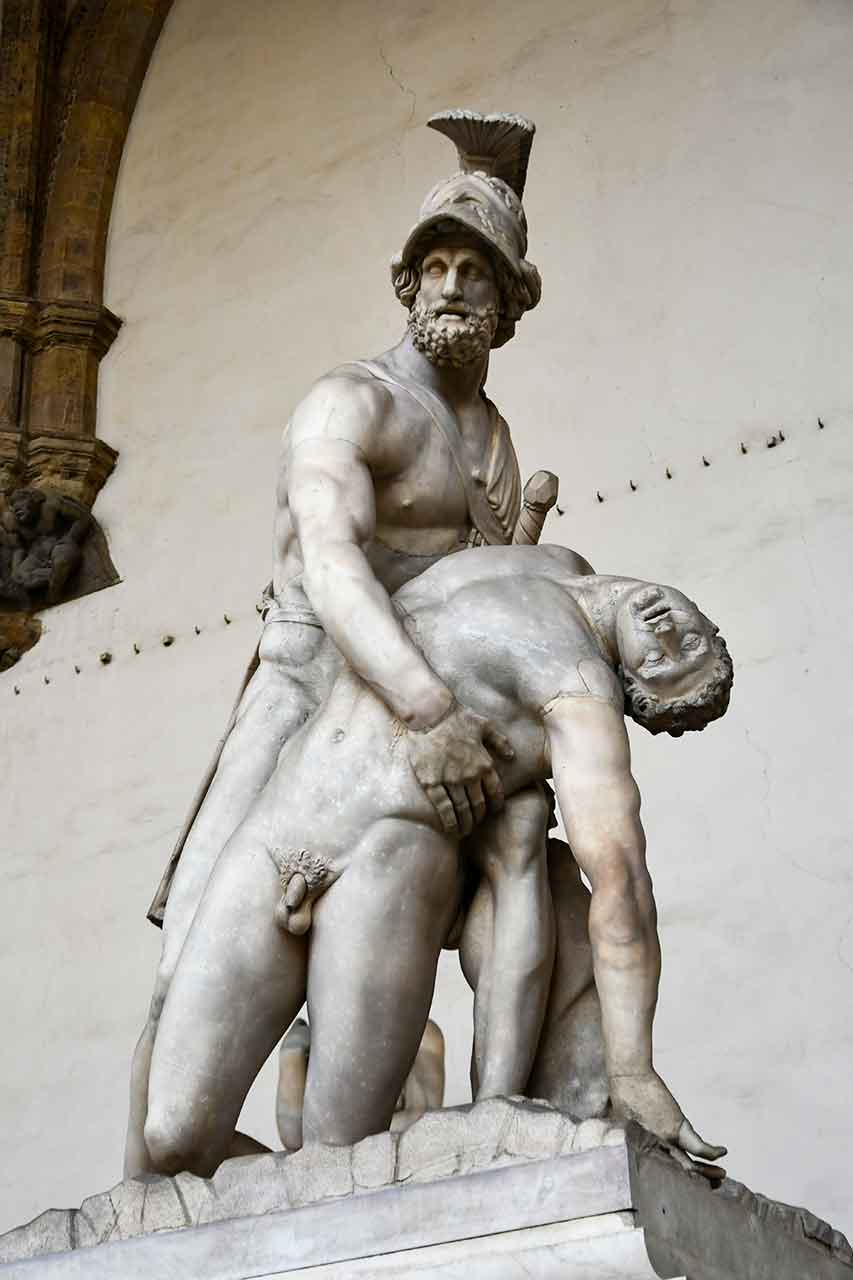
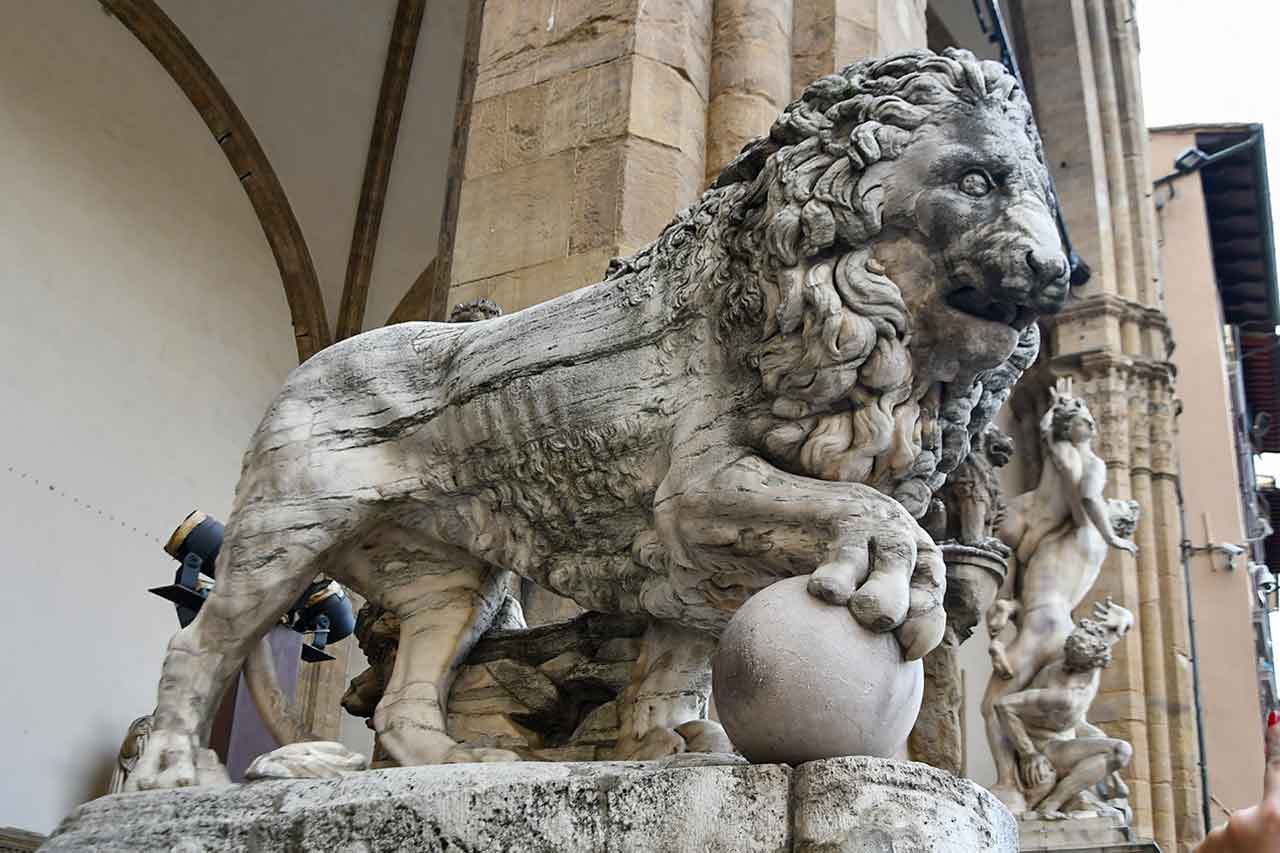
And if you are an art lover, from here you can easily reach the Uffizi Gallery.
What else is worth seeing in Florence?
Palazzo Pitti and Boboli Garden
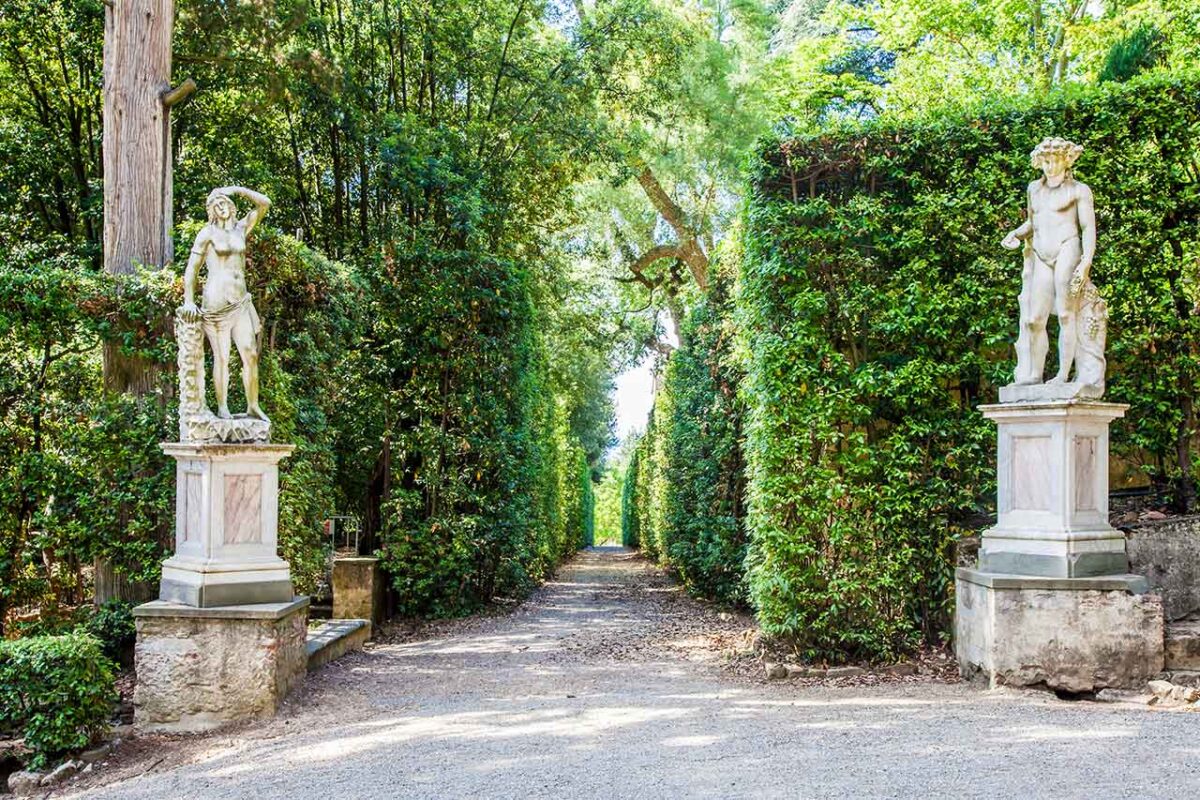
Palazzo Pitti, located just a stone’s throw from the Ponte Vecchio on the southern bank of the Arno River, is an impressive Renaissance residence that has housed the most important Tuscan dynasties, from the Medicis to the Habsburg-Lothringen and the Savoy dynasties. Originally built in 1458 for the banker Luca Pitti, today the palace is a true treasure trove of art and culture, housing the largest museum complex in Florence, with galleries such as the Palatine Gallery and the Museum of Fashion and Costumes.
Behind the palace lies the Boboli Gardens, a true masterpiece of Italian horticulture that has inspired many royal gardens in Europe, including Versailles. Created for the Medicis in the 16th century, the garden is an open-air museum filled with sculptures, historical grottos like Buontalenti, and impressive fountains. The Boboli Garden is not only a place of incredible beauty but also a historically interesting garden, offering everyone who visits a unique experience. A must-see for anyone in Florence!
Basilica of Santa Croce
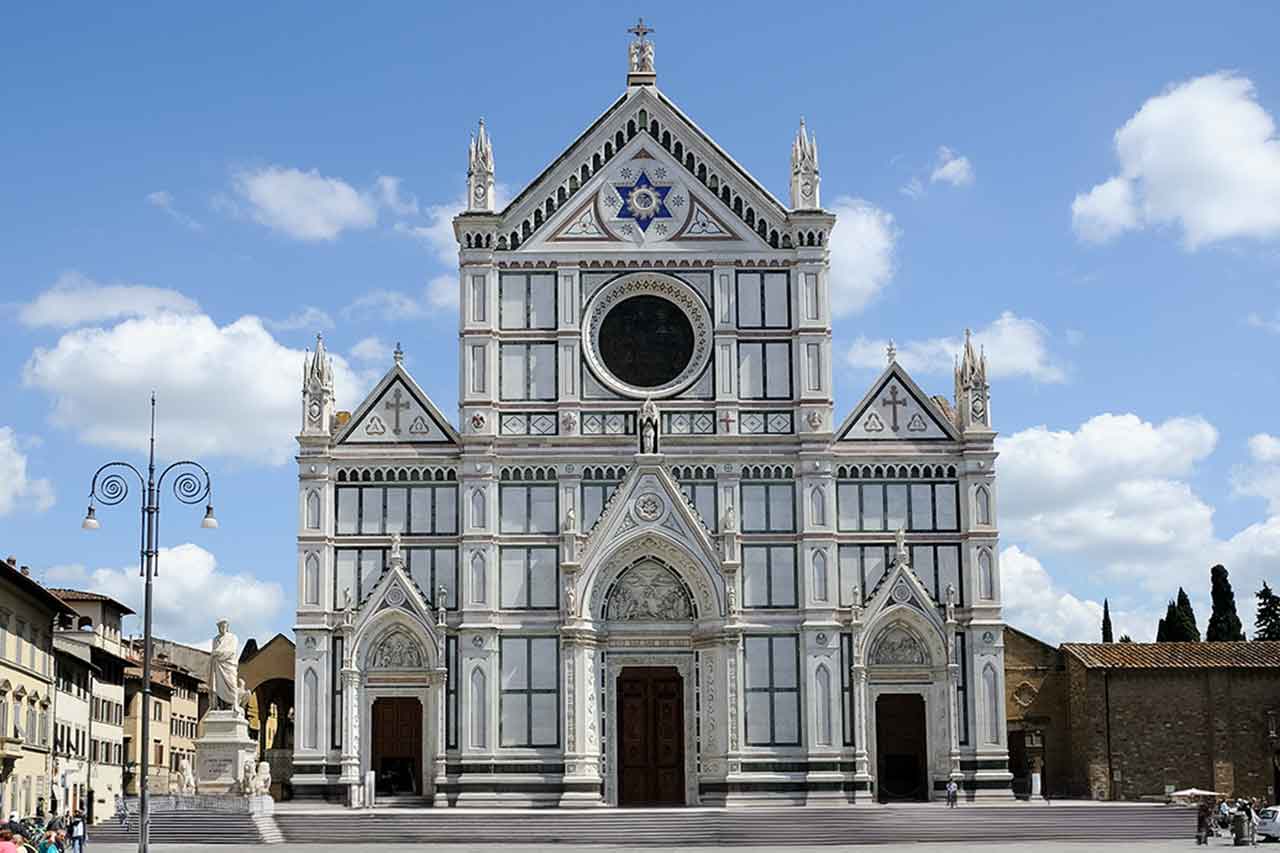
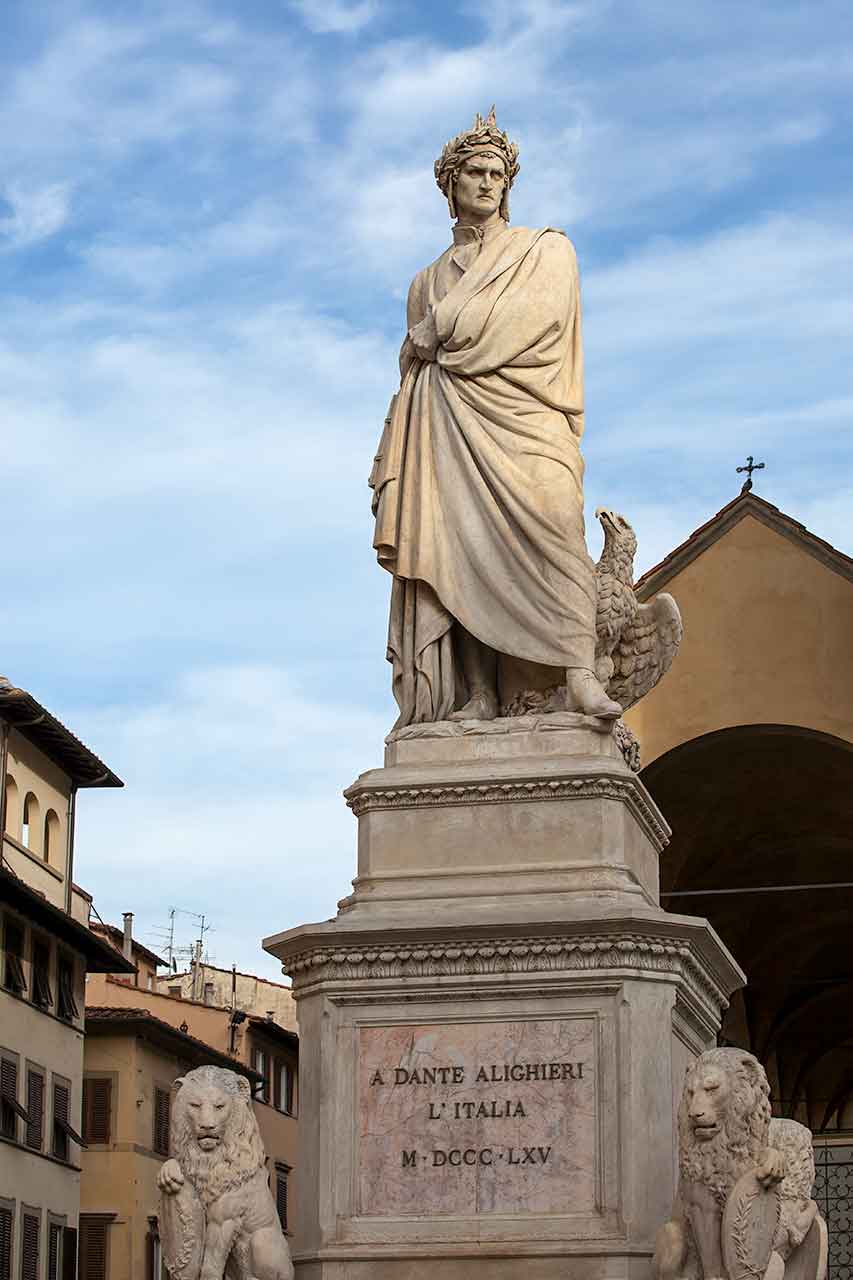
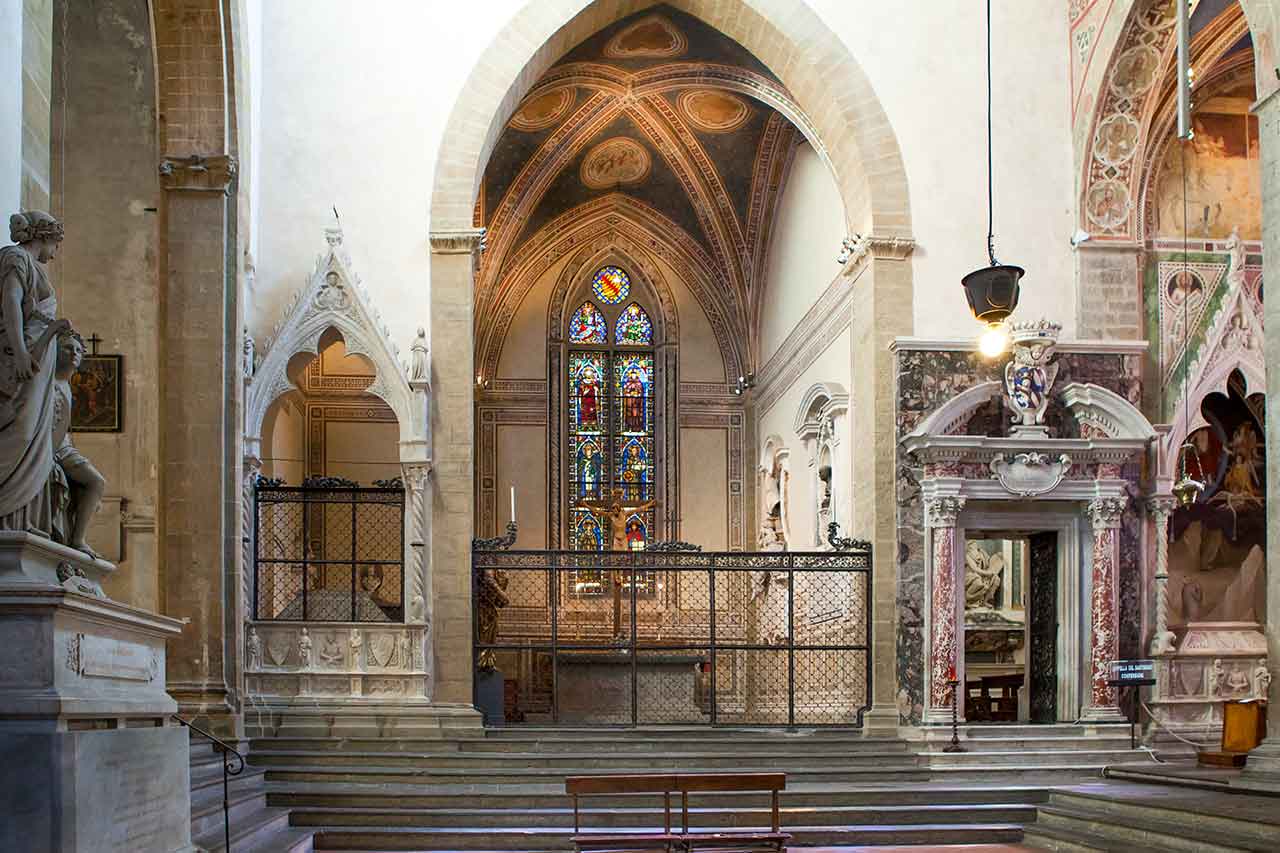
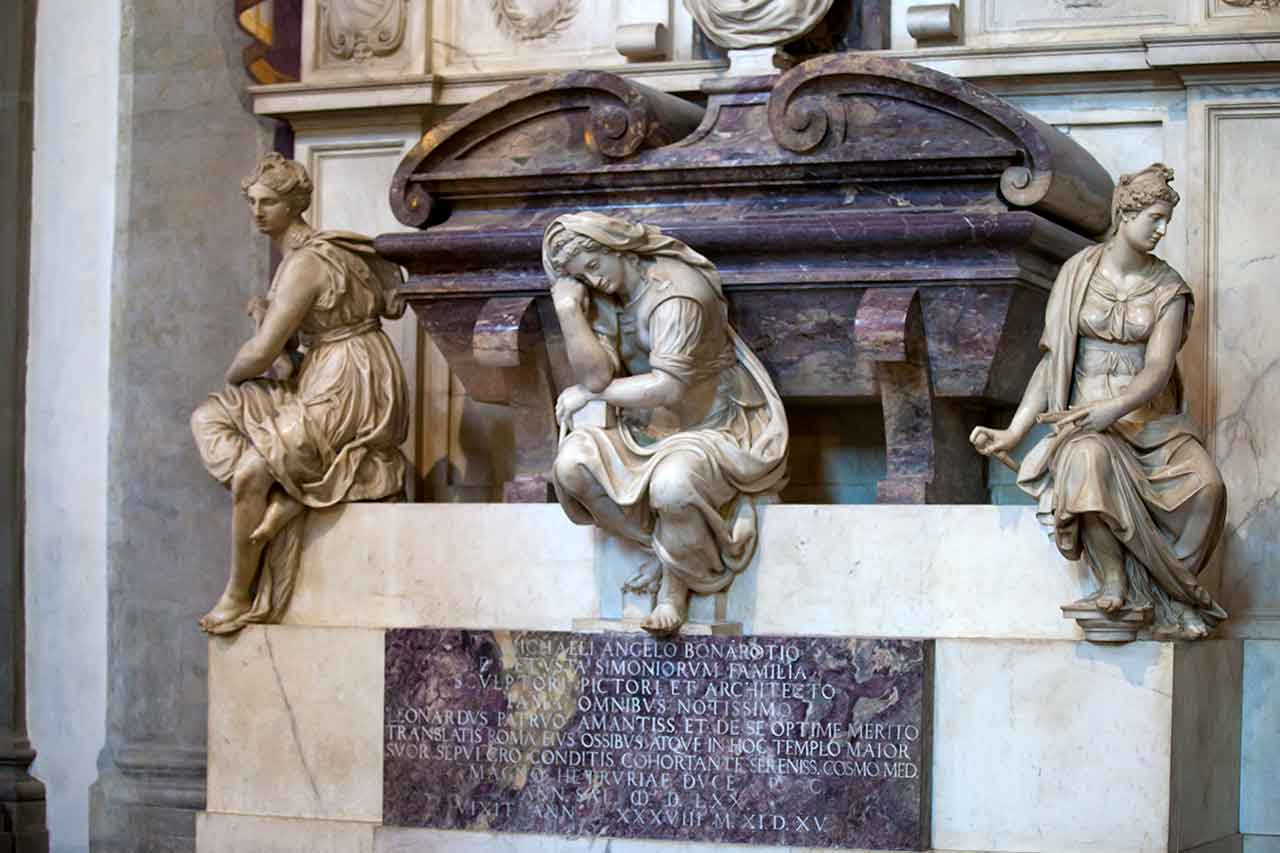
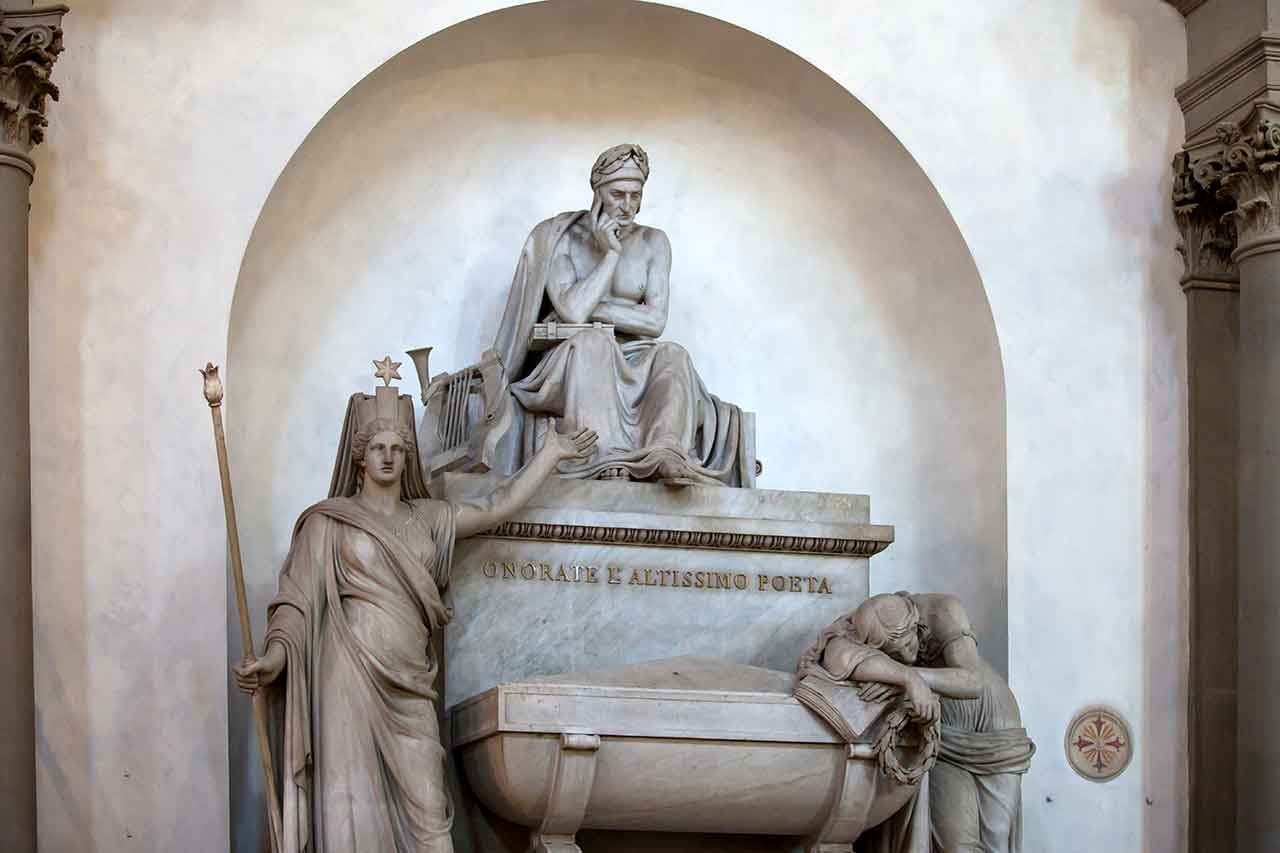
The final resting place of great minds such as Dante Alighieri, Michelangelo, Galileo, and Machiavelli. This Gothic basilica is a true museum, preserving works of art and captivating with its majestic interior. In front of the basilica, you’ll also see a monument to Dante Alighieri.
Basilica of Santa Maria Novella
The Basilica of Santa Maria Novella, located in the square of the same name, is a masterpiece of Gothic and Renaissance architecture. Started in 1279 and completed in the 14th century, this temple was designed by Dominicans and represents the first major Gothic holy building in Tuscany. The facade, the work of Leon Battista Alberti commissioned by the Rucellai family, was completed in 1458 and is considered one of the masterpieces of Florentine Renaissance.
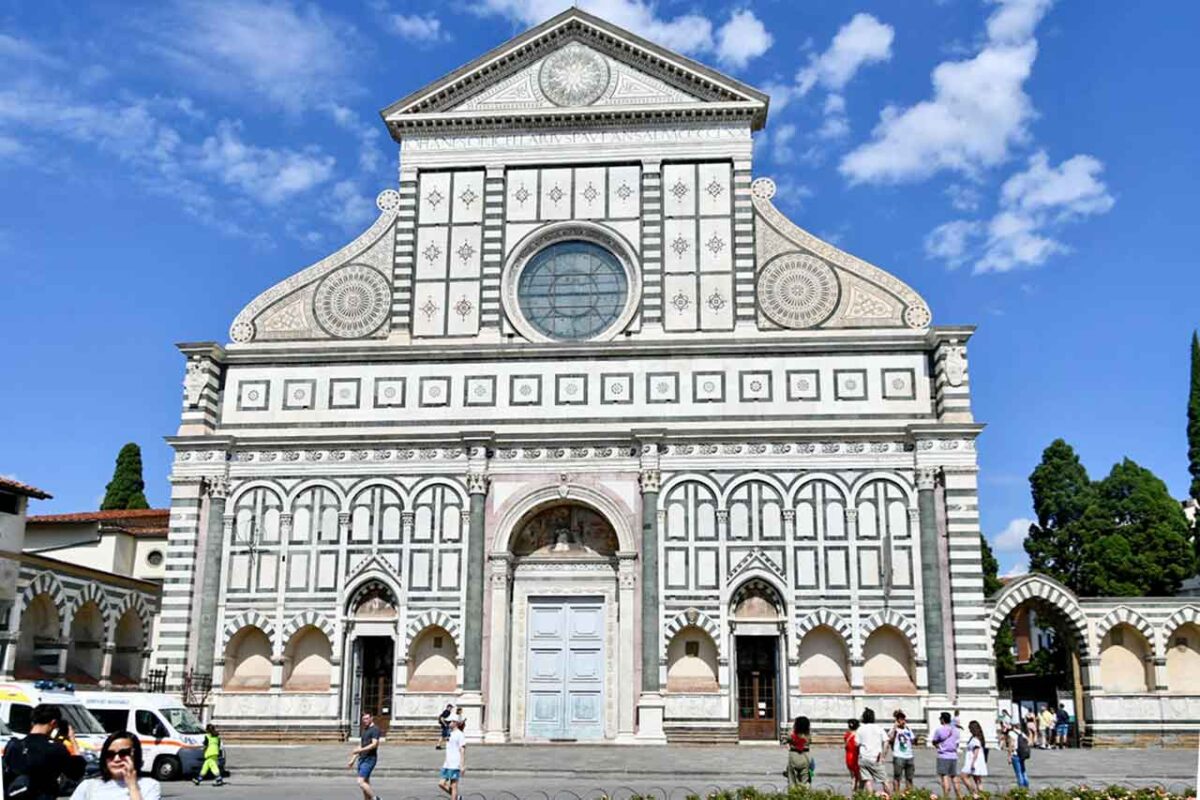
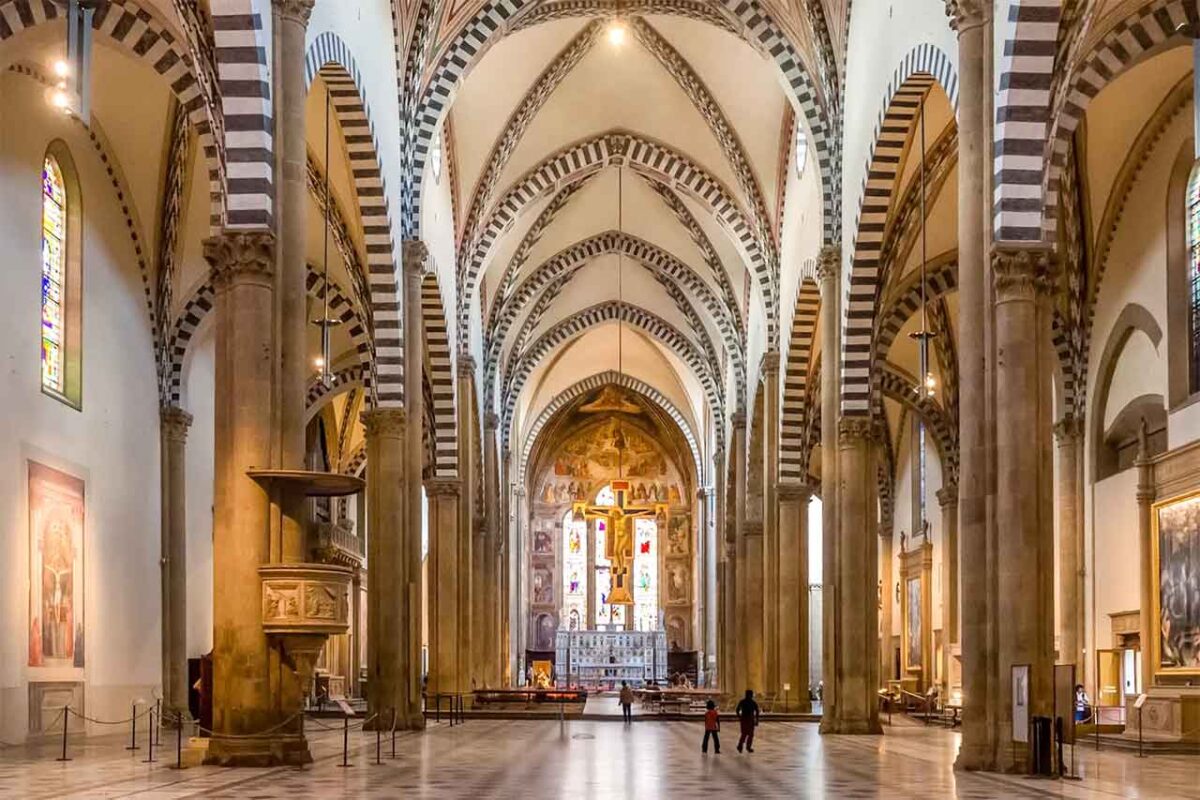
Inside the basilica are artworks such as The Holy Trinity by Masaccio, Crucifix by Giotto and Brunelleschi, and Ghirlandaio’s frescoes in the Tornabuoni Chapel. It also houses the tomb of Filippo Strozzi, created by Benedetto da Maiano. The facade features unique elements like the equinox arm and the astronomical quadrant, works of the Dominican Ignazio Danti.
The Basilica of Santa Maria Novella is located very close to the Florence Santa Maria Novella train station and is easily accessible for those arriving in Florence by train.
San Miniato al Monte
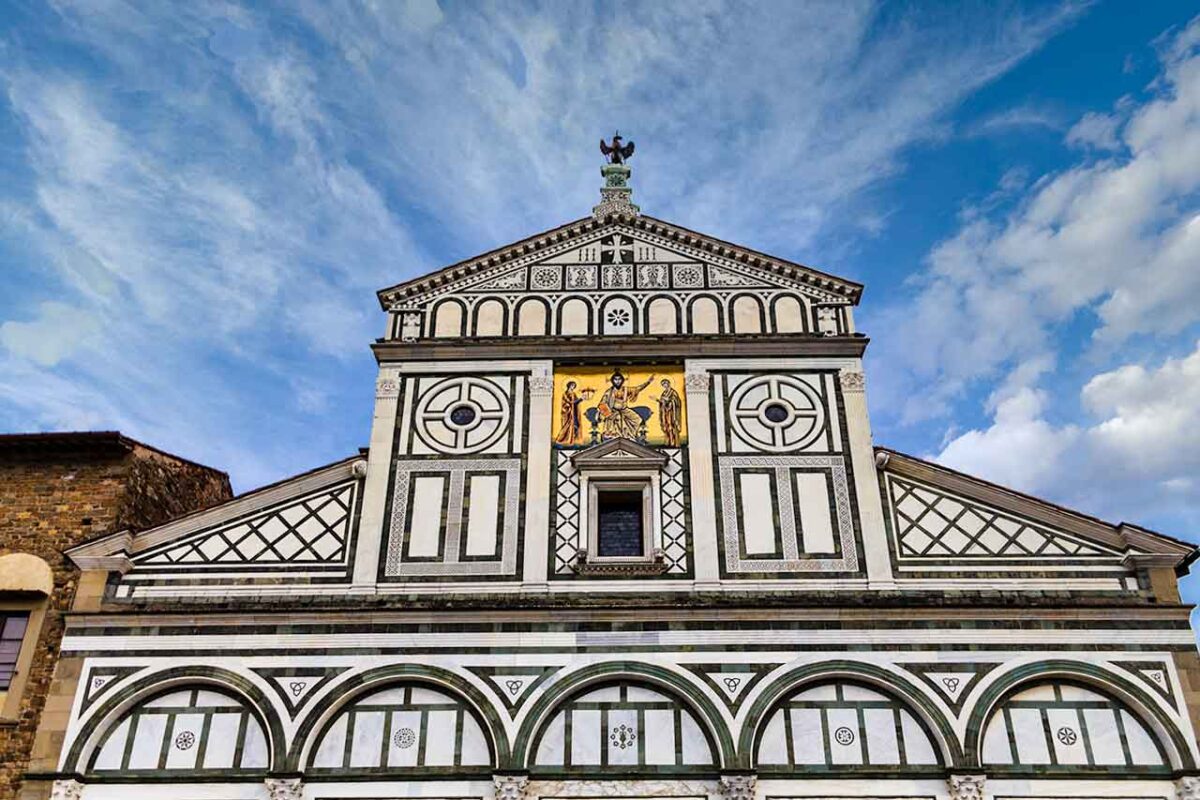
San Miniato al Monte is one of the most fascinating basilicas in Florence, situated at one of the city’s highest points. Renowned for its Romanesque architecture, construction began in 1013 and was completed in 1207. The facade of white and green marble with geometric patterns is a splendid example of Romanesque style. Inside, there is a high crypt and an elevated choir, adorned with ancient mosaics.
Legend has it that Saint Minias, an Armenian prince and Christian martyr, picked up his own head after being beheaded and walked to the site where the basilica now stands. Besides being a place of worship, San Miniato al Monte is a cultural landmark in Florence, offering breathtaking views of the city and an abbey run by Olivetan monks who produce liqueurs, honey, and herbal teas.
The basilica can be easily reached on foot from the center of Florence through the famous Piazzale Michelangelo. The basilica is open to visitors every day, and admission is free.
Basilica of San Lorenzo in the center of Florence
The Basilica of San Lorenzo, located on the square of the same name in the heart of Florence, is one of the city’s oldest and most important places of worship. Originally built in the 4th century as an early Christian church, it was reconsecrated in 1059 and transformed into Renaissance style by Filippo Brunelleschi in 1418. This church served as Florence’s cathedral for three hundred years before passing the baton to the Church of Santa Reparata.
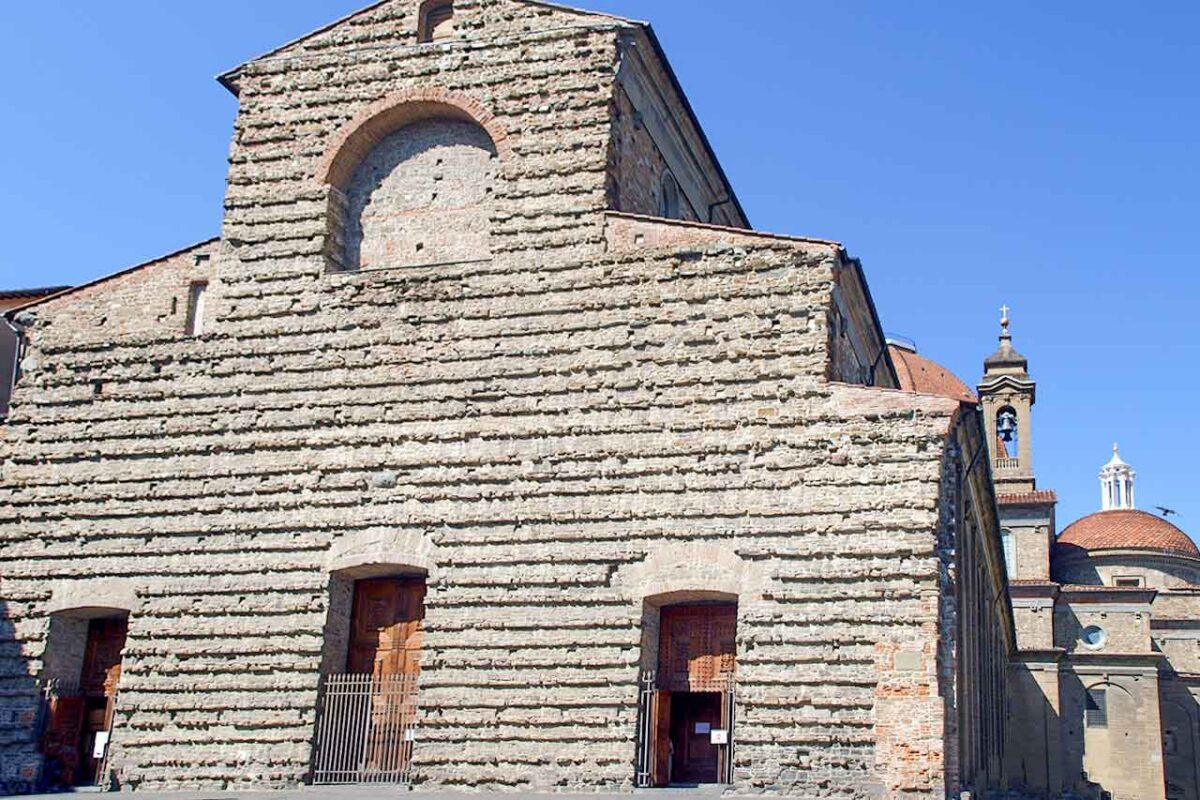
The Basilica of San Lorenzo is known as the mausoleum of the Medici family, protagonists of the Florentine Renaissance. Inside are Brunelleschi’s Old Sacristy and Michelangelo’s New Sacristy, as well as masterpieces such as Donatello’s pulpits and works by Rosso Fiorentino and Bronzino. Despite its significance, the basilica’s facade remains unfinished – the project entrusted to Michelangelo in 1518 was never realized.
Today, the San Lorenzo complex also includes the Laurentian Library, the Chapel of Princes, and the Medici Chapels, adorned with sculptures by Michelangelo.
Vasari Corridor
The Vasari Corridor (Il Corridoio Vasariano), designed by Giorgio Vasari and constructed in 1565 on the orders of Duke Cosimo I de’ Medici, is an elevated and enclosed passageway connecting the Palazzo Vecchio with the Palazzo Pitti, passing over the Uffizi Gallery and crossing the Arno River on the Ponte Vecchio. This corridor was built to provide the Grand Dukes with a safe and private means of transit between the seat of government and their private residence. Along its route, the corridor offers panoramic views of the city and originally housed a collection of artworks, functioning as an art gallery.
Closed in 2016 for modernization work and to comply with safety and accessibility regulations, the Vasari Corridor is set to be reopened to the public. Visits are possible only with a guide.
Viewpoints over Florence and Tuscany
The panoramic viewpoints in Florence, from which you can admire breathtaking panoramas of the city and its surroundings, are numerous and diverse. Here are some of them:
Piazzale Michelangelo
This is probably the most famous viewpoint in Florence. Located on a hill on the left bank of the Arno, it offers a full view encompassing the Duomo, Ponte Vecchio, Palazzo Vecchio, and many other historical monuments.
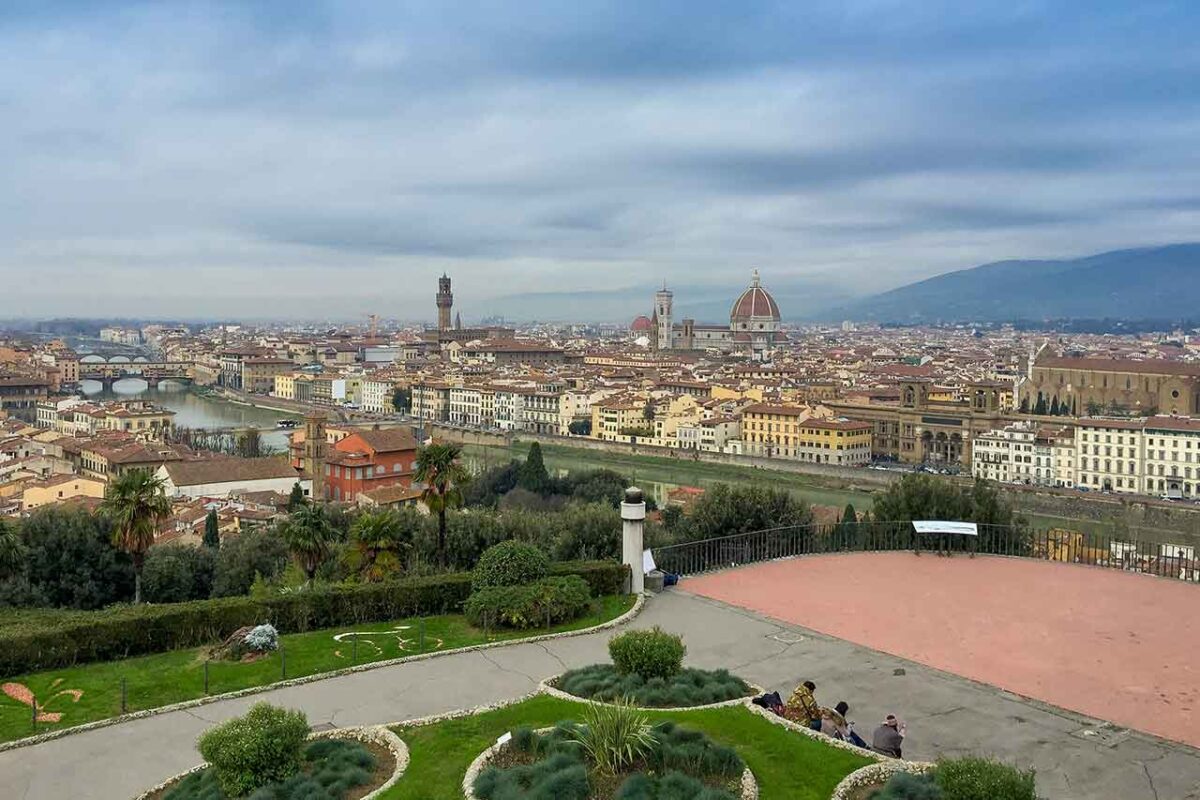
San Miniato al Monte (see above)
Located even higher than Piazzale Michelangelo, this place offers a spectacular view of Florence and its skyline.
Forte Belvedere
Built at the end of the 16th century, the fort not only holds a rich history but also provides a panoramic view of Florence. It is especially popular in the summer due to its exhibitions and art events.
Brunelleschi’s Dome
Climbing the dome of the cathedral in Florence offers a unique perspective on the city and the complex architecture of the cathedral.
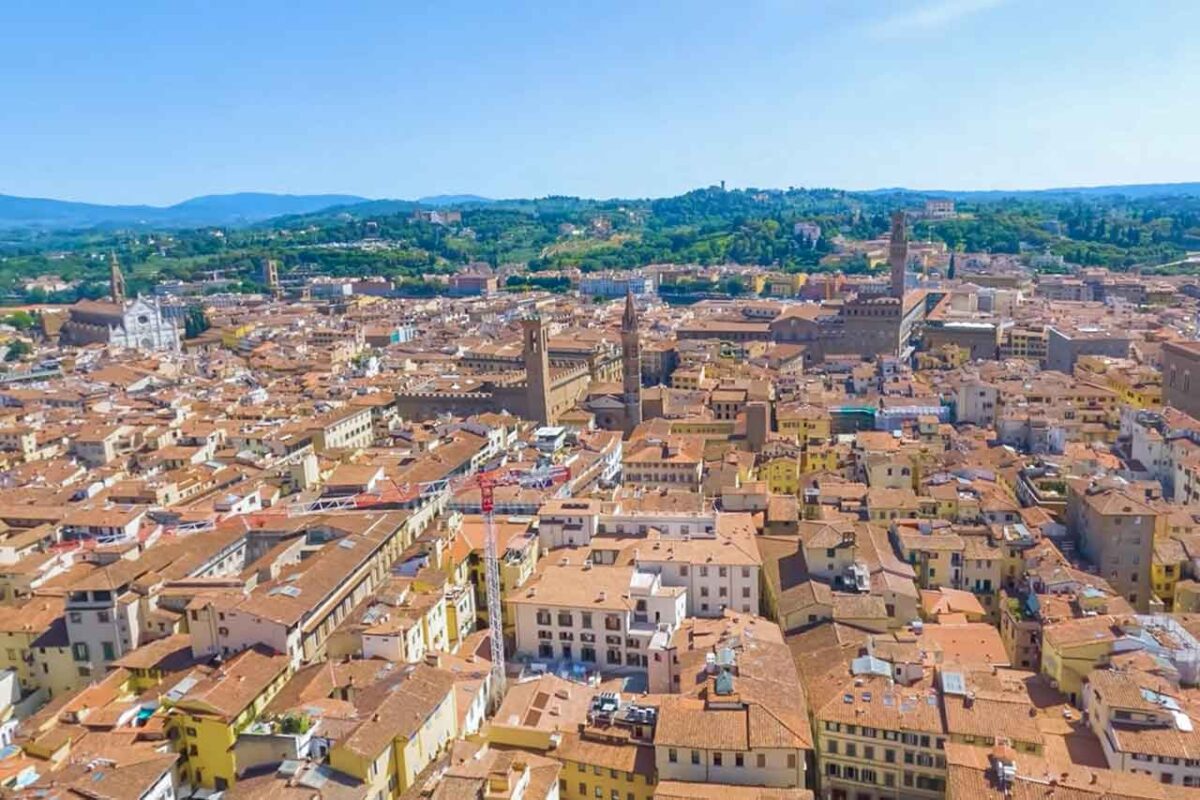
Giotto’s Campanile (see above)
Giotto’s Bell Tower is another high vantage point in the very center of Florence, from which you can admire the city from the mountains. The climb is challenging, but the view rewards the effort.
Bardini and Boboli Gardens
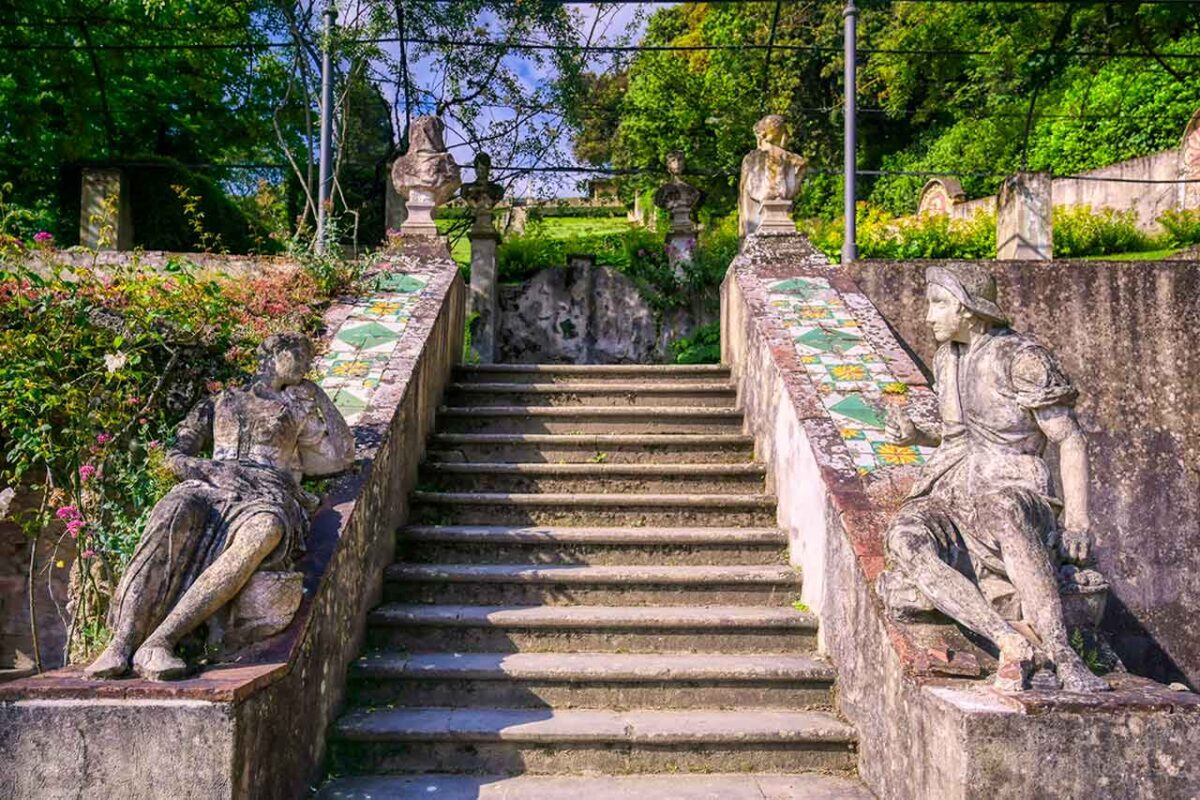
These gardens offer not only green and peaceful corners but also viewpoints over the center of Florence. Particularly, the Bardini garden has a terrace with a unique view.
Terrazza delle Oblate
Less known than other viewpoints, this terrace is located in the center of Florence and offers a direct view of the Duomo’s dome.
Giardino delle Rose (Rose Garden)
Another charming place from which to admire the panorama of Florence surrounded by roses and works of art.
Fiesole
This hilltop town near the center of Florence offers spectacular views of the city and the surrounding Tuscan landscapes.
Practical advice for tourists
Best time to visit Florence
The ideal time to visit Florence changes depending on personal preferences and planned activities. The months of April, May, September, and October are considered the best for exploring the city and museums, due to the mild climate and less crowding than in the peak summer season.
However, January and February are perfect for cultural holidays, with the possibility of visiting the most famous museums, such as the Uffizi and the Galleria dell’Accademia, without crowds.
Summer, particularly July and August, is the least recommended period due to the heat, which can make cultural visits and city sightseeing less enjoyable.
In autumn and winter, prices are usually lower, and the main attractions are less crowded.
Transport: getting around the city
Florence is a city well-suited for walking, thanks to its intimate, traffic-free historic center.
However, for longer trips or reaching the suburbs, you can use public transport, such as buses and trams.
For those who prefer bicycles, there are bicycle rentals and cycling routes available.
Getting to Florence from Firenze-Peretola Amerigo Vespucci Airport
To get to the center of Florence from the Amerigo Vespucci Airport (FLR), there are several options available:
Getting to Florence from Pisa Airport
To get from Pisa Airport (PSA) to the center of Florence, there are options available:
Getting to Florence from Bologna airport
To get to the center of Florence from Bologna airport, you can use the following options:
You can also reach Florence from all three airports by taxi, ordering private transportation or renting a car.
Accommodation in Florence
Florence offers a wide range of accommodations, from luxurious five-star hotels to cozy family-run guesthouses.
For those seeking affordable options, it is advisable to stay slightly outside the city center. Areas such as Oltrarno and Santo Spirito offer unique experiences and are somewhat cheaper.
The Santa Maria Novella area is strategic due to its proximity to the train station and main attractions.
If you book at least 6-8 weeks in advance, you have a better chance of finding inexpensive accommodations.
For those looking for budget accommodations, guesthouses, hostels, and self-catering apartments are available both in and near the historic center.
Interesting Facts about Florence
Florence’s fascinating trivia allows you to view the city in a somewhat different and compelling way, revealing extraordinary aspects and hidden stories that enrich tourists’ experiences. Here are some lesser-known facts and attractions of Florence:
The backward clock in the Duomo cathedral
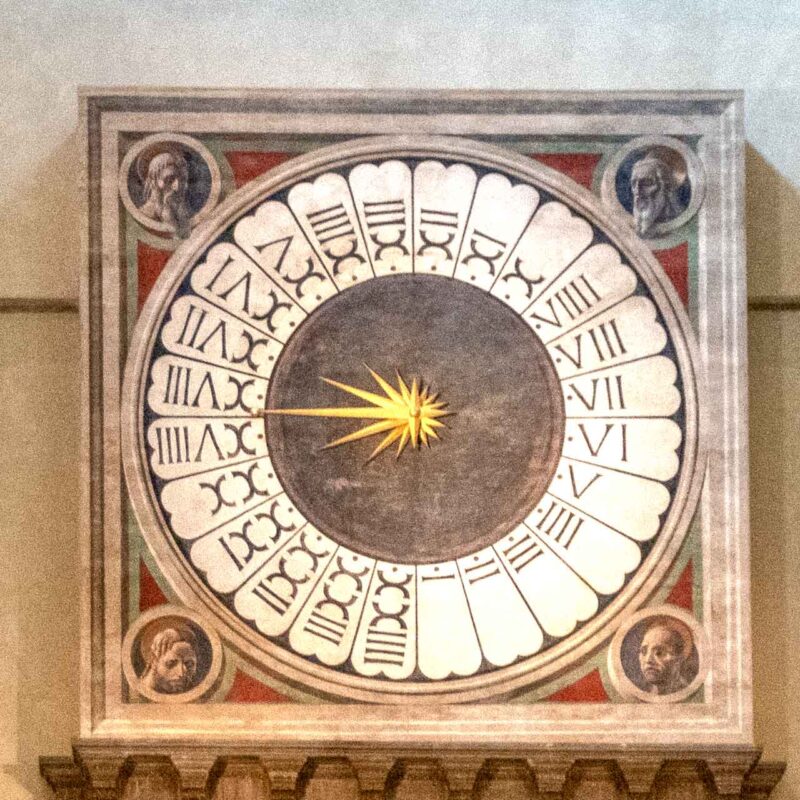
Located on the opposite facade of the cathedral in Florence, the clock painted by Paolo Uccello operates in the opposite direction to contemporary clocks. Its unique feature is that the hours are counted according to the liturgical calendar, and their length changes depending on the time of year.
Improper stone in the Pitti Palace
An interesting detail of the Pitti Palace is the 10-meter stone block, much larger than the others, inserted into the facade at the behest of Luca Pitti, who wanted to demonstrate his own greatness and wealth, in contrast to the Medici.
Wine Windows
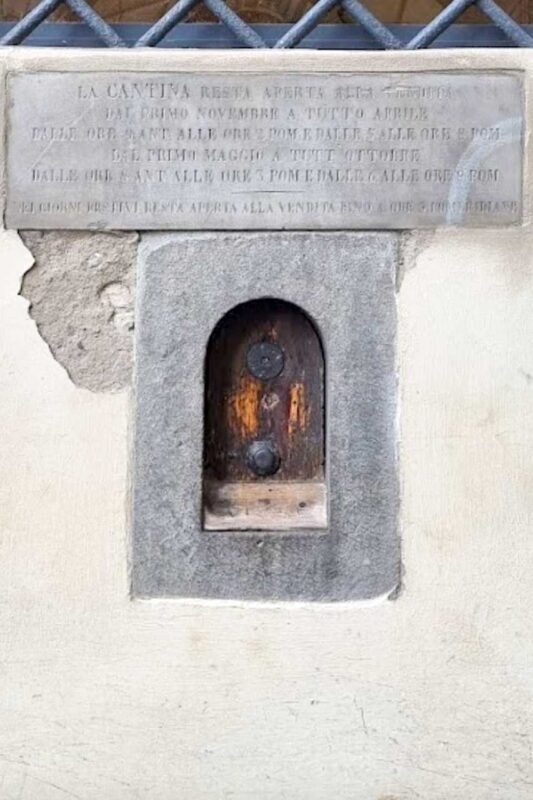
Walking through the historic center, one can notice small openings in the walls of old buildings, used in the past to sell wine directly from the cellars without passing through taverns.
Bovine head carved on the Duomo
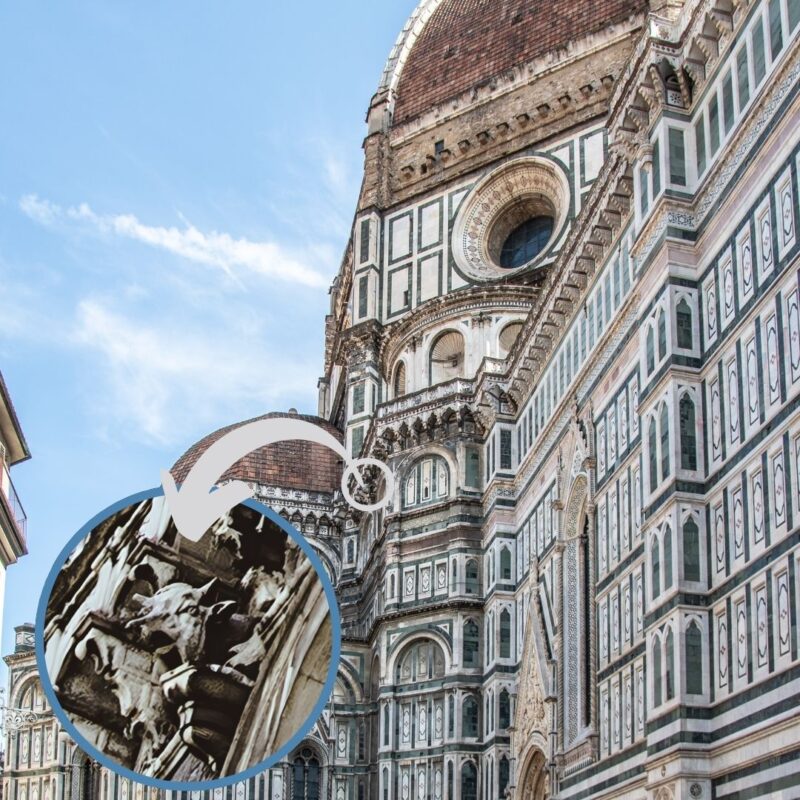
There are two main interpretations regarding the presence of this sculpture. One version suggests that it is a tribute to the draught animals used during the construction of the Duomo, appreciating their contribution to transporting essential materials.
However, a more suggestive and humorous version speaks of a love betrayal and an unusual revenge. According to the legend, a carpenter, involved in an affair with the wife of a local shopkeeper, decided to take revenge on the betrayed husband by placing a bull’s head so that its horns pointed towards the man’s shop, symbolizing the betrayal.
Loggia del Bigallo
This Gothic structure, located opposite the cathedral, is often overlooked by tourists despite its historical significance as the seat of the Brotherhood of Mercy (Arciconfraternita della Misericordia).
The Stone of Dante
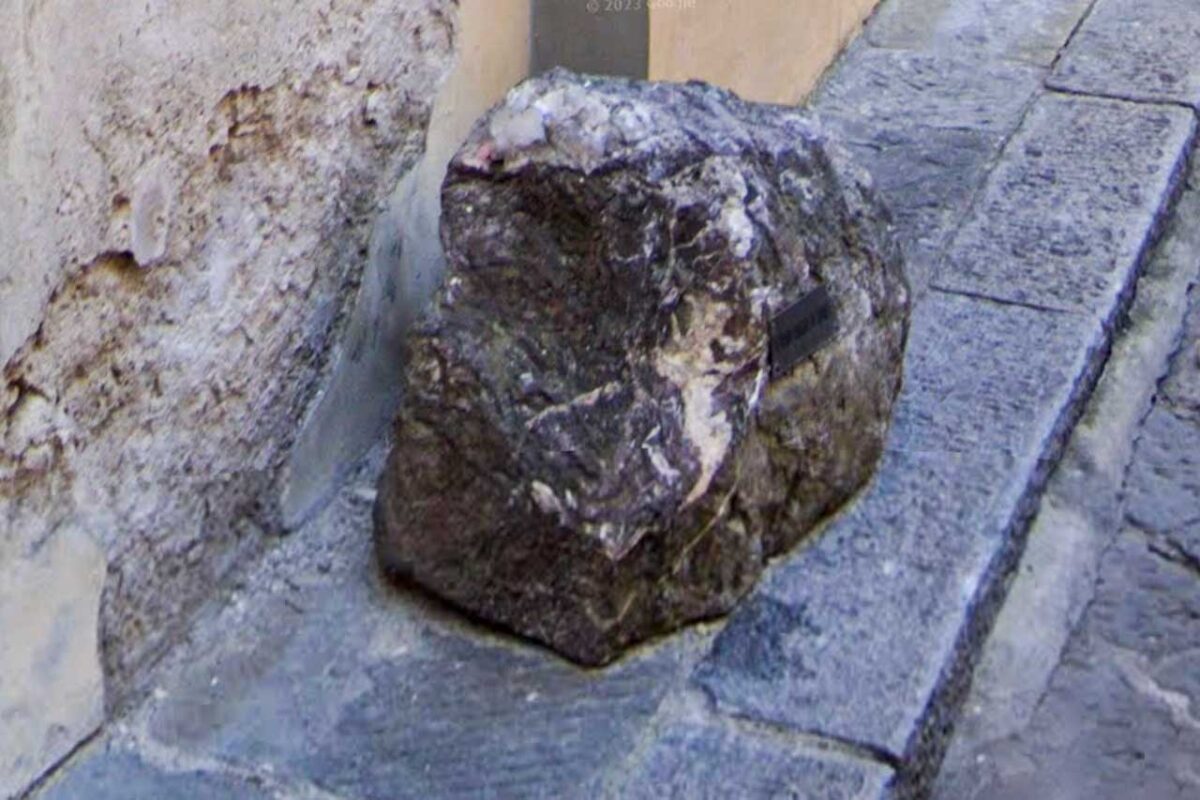
The Stone of Dante is considered the place where the poet liked to sit and ponder. This boulder, located near the church of Santa Maria dei Cerchi, is described as a spot from which Dante could observe the construction work on the new cathedral or simply meditate on his verses or Beatrice, his inspiring muse.
Fontana del Porcellino (Piglet Fountain)
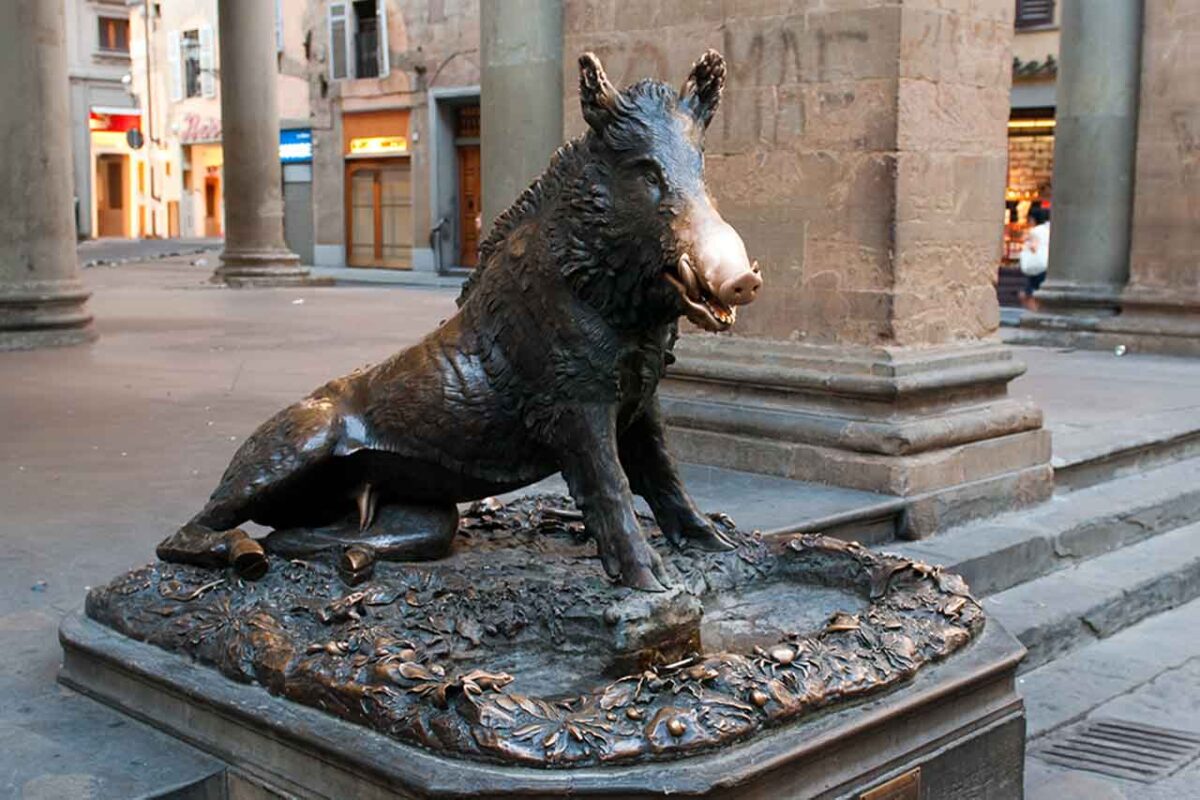
This fountain is famous for a ritual that is said to bring good luck. Tradition has it that rubbing the boar’s nose and placing a coin in its mouth brings luck: if the coin falls through the grate beneath the statue, you will be lucky; if not, you will not. This ritual is so popular that the boar’s nose is now extremely shiny.
The fountain is located on one side of the Mercato Nuovo loggia, near the Ponte Vecchio.
Sun Dial on Ponte Vecchio
If you find yourself on the Ponte Vecchio in Florence (and you surely will), pay attention to a fascinating detail that many visitors often overlook: an ancient sundial. This sundial, embedded directly in the architecture of the bridge, is made of a white marble basin, divided by small columns indicating canonical hours. The gnomon, a vertical element, casts a shadow on the divisions, indicating the local solar time.
Originating from the period after the 1333 flood, which led to the rebuilding of the bridge, the sundial is a symbol of Florence’s long history and its key role in science and art during the Renaissance.
Red and black numbers in addresses
A peculiarity of Florence was the presence of two types of numbering: black (or blue) numbers for residential entrances and red numbers for commercial entrances. This system facilitated distinguishing between residences and businesses, but caused considerable confusion. Therefore, it’s worth double-checking the address before entering it into navigation 😉
These are some of the curiosities that not only offer a fuller and more insightful picture of Florence but also invite us to explore the city beyond its well-trodden tourist paths, uncovering hidden corners and fascinating stories that testify to the cultural and historical richness of this iconic Renaissance city.
Summary
Florence is a city that captivates visitors with its cultural richness, artistic beauty, and rich history. Walking the streets of Florence is a journey through centuries of history, where every corner reveals Renaissance masterpieces and architectural treasures. Visiting Florence is a unique experience: one can admire the impressive Duomo cathedral with Brunelleschi’s dome, be inspired by Michelangelo’s mastery in David, or get lost among the artworks in the Uffizi. The city also offers moments of relaxation in historic cafes, restaurants serving authentic Tuscan cuisine, and tranquil gardens like Boboli.