Italiano
 Polski

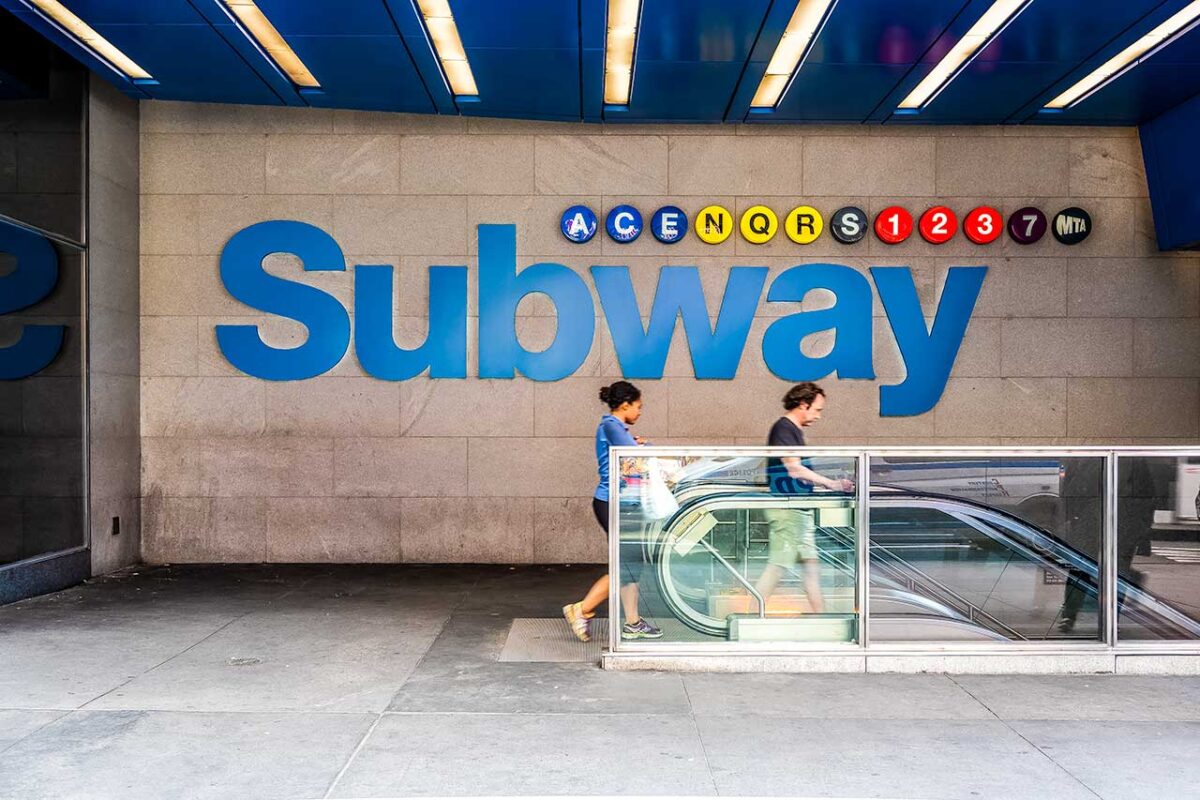
New York is too big to walk and too expensive to use Uber continuously. The subway remains – sometimes dirty, sometimes noisy, but absolutely irreplaceable. With 3 dollars you have access to the entire city: from the beaches of Coney Island, through the skyscrapers of Manhattan, to the stadiums of Queens. The system transports over 4.5 million people a day and connects virtually every point worth reaching.
It’s just that the New York subway works completely differently from European systems. There are no fare zones, there are no nice modern stations (with few exceptions), and the map looks like colorful spaghetti at first glance. I remember my first time at Times Square station: going down the stairs, I felt like I was immersed in a parallel world where everyone knows where they’re going while I was there with my phone trying to find the right platform.
There is also good news. After two or three trips, everything starts to make sense. And after a week, getting around the city becomes natural. This guide aims to make sure your first trips aren’t stressful but interesting.
Subway in NYC in 30 seconds
Before reading further, these five things are enough to get started. Pay with a contactless card or with your phone (the OMNY system), the trip costs 3 dollars regardless of the distance. To plan your routes, use Google Maps or Citymapper. Remember the difference between the local train (stops at every station) and the express train (skips smaller stops), as this is the most common cause of frustration. Before you “tap” at the turnstile always check the direction: uptown is northbound, downtown is southbound. And finally: on weekends the MTA performs maintenance on the lines, so Saturday schedules may differ from Friday’s.
How the New York Subway Works
There are a few things to know before going underground. I’m not talking about the subway’s history (it opened in 1904, in case anyone asks), but about how to logically understand what at first glance seems like chaos.
Lines, colors, letters, and numbers
On the NYC subway map, you will see colored lines marked with letters or numbers. Here’s the first trick: the color does not indicate a single line. The color represents a group of trains that travel the same route through Manhattan. For example, the red line includes trains 1, 2, and 3, but each one continues in different directions at the ends of the route.
New Yorkers never say “take the red line.” They say “take train 2” or “take the A.” It’s helpful to think the same way: the letter or number of the train is the reference point, not the color.
Main color groups to know:
|
Color |
Lines |
Where they travel in Manhattan |
|---|---|---|
|
Red |
1, 2, 3 |
7th Avenue (west side) |
|
Green |
4, 5, 6 |
Lexington Avenue (east side) |
|
Blue |
A, C, E |
8th Avenue (west side) |
|
Orange |
B, D, F, M |
6th Avenue (midtown) |
|
Yellow |
N, Q, R, W |
Broadway (midtown) |
|
Purple |
7 |
42nd Street (crosstown) |
|
Gray |
L |
14th Street (crosstown) |
Local and express trains: an important distinction
Many lines run two types of trains: local (local), which stop at every station, and express (express), which skip smaller stops.
How to recognize them on the map? Stations marked with a black circle are stops only for local trains. Stations with a white circle are express stops, where both express and local trains stop.
In practice: if you take train 2 (express) from 34th Street, the next stop is 14th Street. Train 1 (local) will stop at 28th, 23rd, and 18th instead. On longer routes, the express saves about 10-15 actual minutes.
Uptown, downtown directions and what they mean
In Manhattan the directions are simple:
The entrances to smaller stations often lead to the platform in only one direction. Don’t worry, in large transfer stations (Times Square, 14th Street-Union Square, Fulton Street) platforms for both directions are connected underground, so there’s no problem. In smaller stations, it’s different: if you enter from the wrong side of the street, there is no underground passage to the other side. You have to exit, cross the street, and re-enter (which means re-validating your ticket). Therefore, before entering, take a look at the sign at the entrance: it always indicates the direction (Uptown or Downtown).
Subway 24/7: but not always the same
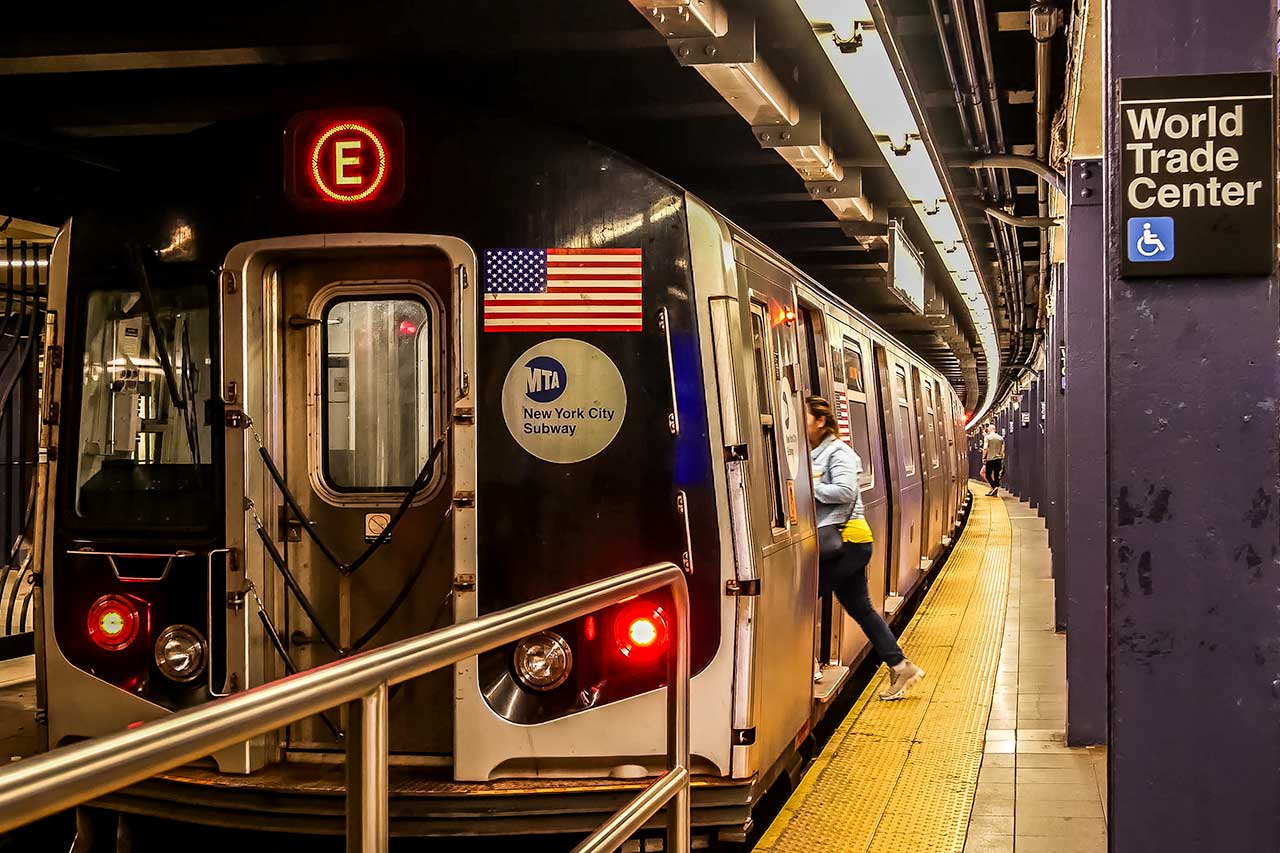
New York’s subway operates 24 hours a day, 7 days a week, 365 days a year. It’s unique worldwide. But the night network is different from the daytime one: there are fewer trains, longer intervals (every 20 minutes instead of every 3-5), and some lines change routes. The train that runs express during the day might stop at all stations at night.
During weekends and nights, maintenance work also alters routes or replaces subway sections with buses (shuttle bus). It’s useful to check current changes on the MTA (mta.info) website or in the app.
How much does the subway cost in New York and which ticket to choose
Fare price in 2026
Starting January 4, 2026, a single subway ride costs 3.00 USD (about 12-13 PLN). With this fare, you can travel from one end of the city to the other, regardless of distance or number of transfers (within a single system entry). There are no zones or additional fees.
The fare also includes a free bus connection within 2 hours of the “tap-in” (provided you use the same card or device).
OMNY, how to pay for your ride
Starting January 2026, the MetroCard (the yellow plastic card you might recognize from photos) will be discontinued. It will no longer be possible to buy new ones after the end of 2025, but if you have an old card with balance, you can continue using it to pay for rides (MTA has not yet announced the exact date when MetroCard will no longer be accepted in 2026). You can also transfer funds from the MetroCard to the OMNY card at customer service points. The new payment system is called OMNY (One Metro New York) and works via contactless technology (tap-and-go).
Payment methods:
When the weekly card is beneficial (capping)
The OMNY system includes a weekly limit mechanism (called capping). It works like this: from the moment you first scan your card in the week, a rolling 7-day window starts (it’s not a calendar week, but 7 days rolling from the first trip). Within this window, you will not pay more than 35 USD for local metro and bus rides. The first 11 trips cost normally 3 dollars each (33 USD), the twelfth is automatically reduced to 2 dollars (for an exact total of 35 USD), and the thirteenth and all subsequent trips within this window will be completely free. No subscription, no activation.
How much does the OMNY physical card cost
The OMNY physical card costs 1 USD as an initial promotion (data updated to February 2026). The price will increase to 2 USD when the MetroCard is completely phased out, which MTA expects by mid-2026. You can buy it from vending machines at any subway station. The card can be reloaded with cash or payment card, and unused funds are not lost (unlike the old MetroCard). The card is valid for 5 years.
There is also the option of the OMNY single-ride ticket (Single-Ride) for 3.50 USD, valid for 2 hours from purchase. But honestly? If you have a contactless card, it’s not worth buying.
Children in the subway
Children under 112 cm tall (44 inches) travel free when accompanied by a paying adult, with up to three children per adult.
How to buy a ticket and enter the subway step by step
Scenario: first time at the station
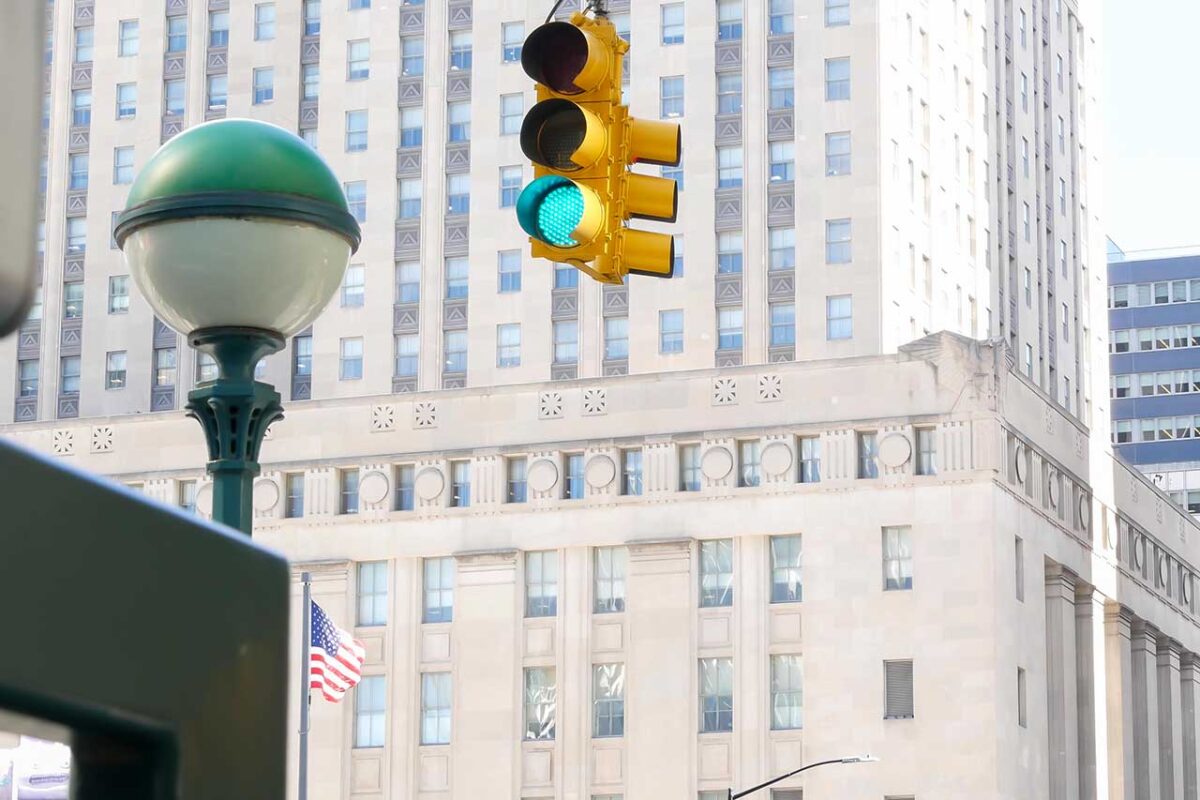
 Green globe marking a New York subway entrance and traffic light in Manhattan
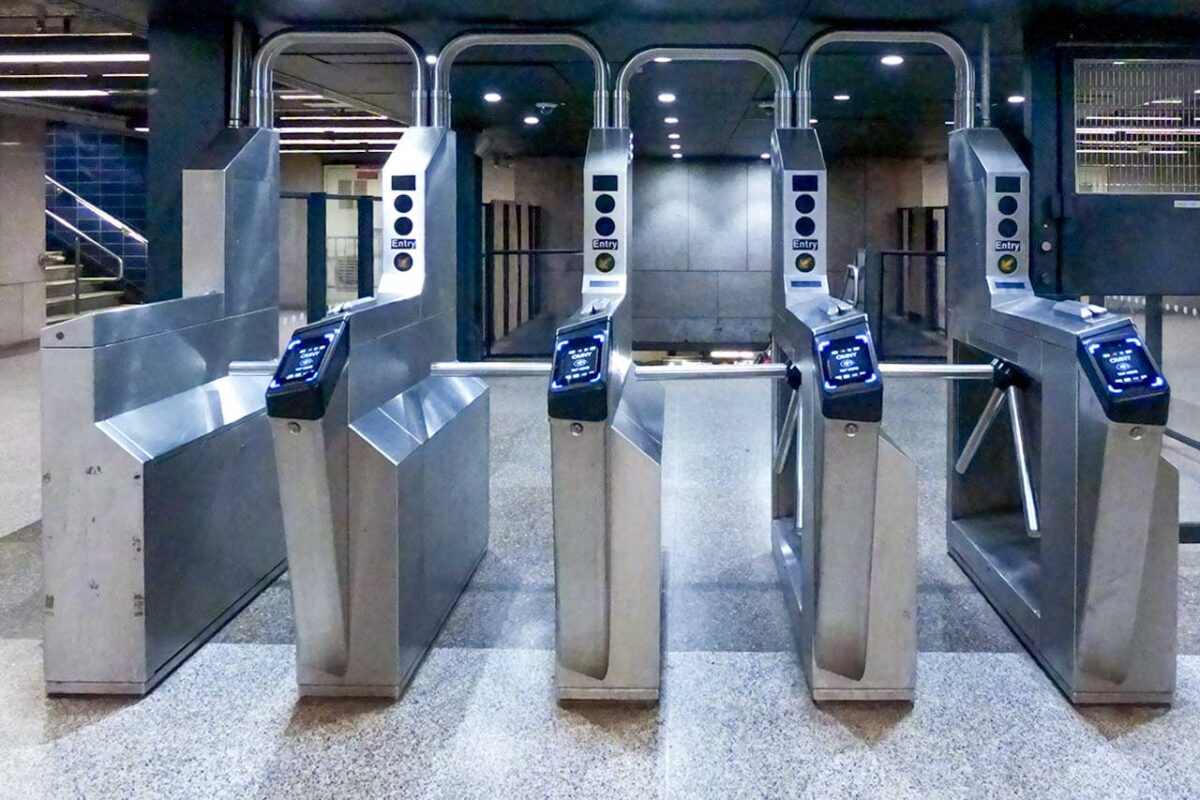
- Modern New York subway entry turnstiles with OMNY and MetroCard readers
What can go wrong with the turnstile
How to read the subway map (and not panic)
The official subway map of NYC looks like an abstract artwork, but after a few minutes it becomes possible to decipher it. Some rules that really help:
The best advice I can give you
Don’t try to memorize the whole map. Instead:
Planning trips: what really works in NYC?
Apps that make subway travel easier
Weekend works: an important detail to remember
Weekends in the New York subway are maintenance time. The MTA regularly closes sections of lines, changes train routes, or replaces them with shuttle buses. This is not an exception but the rule. Therefore:
Stations where it’s easy to get lost (and how to avoid it)
Not all subway stations are the same. Some are real underground labyrinths where even New Yorkers can get lost. If you plan a transfer, it is useful to know what to expect.
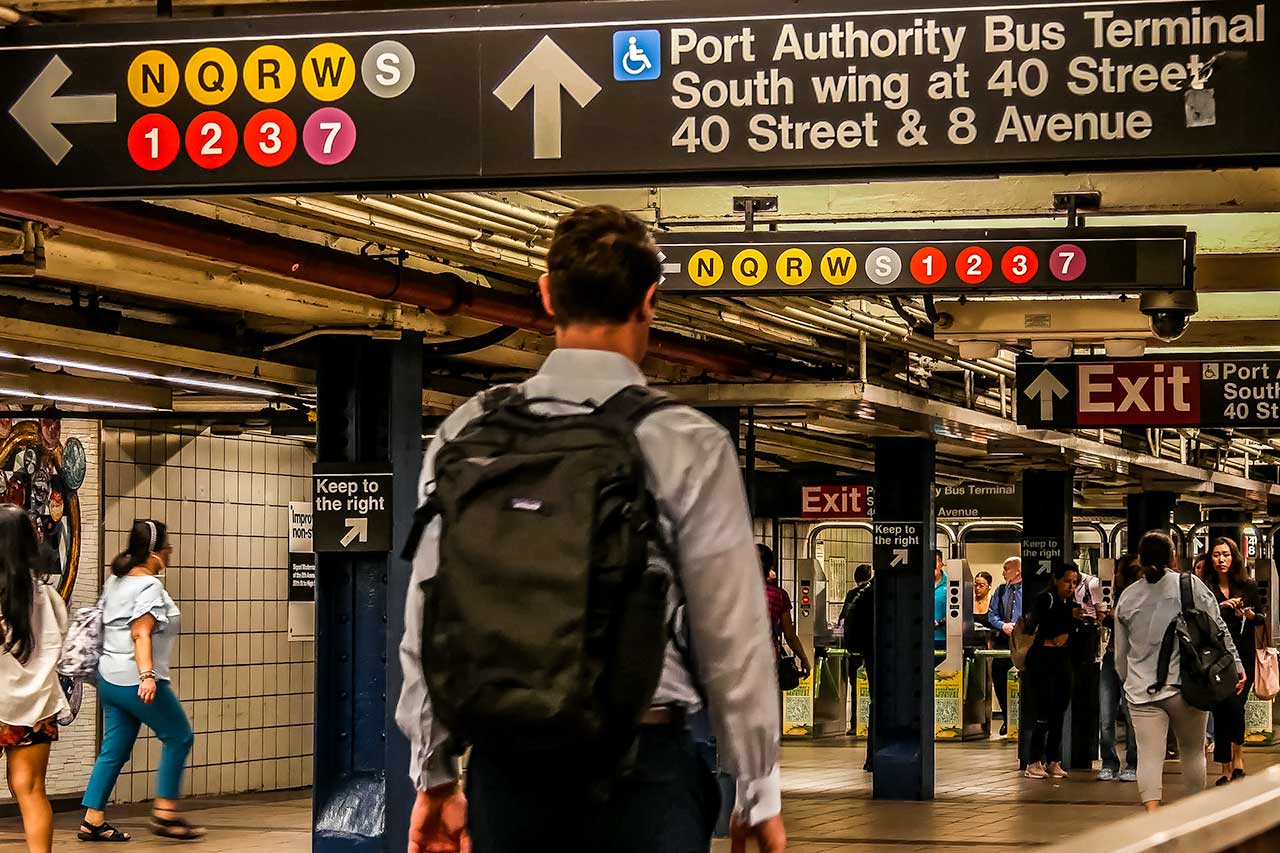
Times Square – 42nd Street / Port Authority is the largest hub of the system. It connects lines 1/2/3, N/Q/R/W, 7, A/C/E, and S (shuttle). The corridors literally extend for hundreds of meters, and crossing the tracks can take 10–15 minutes on foot. If you don’t need to transfer here, consider an alternative route.
Union Square – 14th Street connects lines 4/5/6, N/Q/R/W, and L. The station has many levels and entrances. Finding the right platform takes a moment, but at least it is well signposted.
Fulton Street in downtown Manhattan is a network of passages connecting several old stations into one. The modern dome of the Fulton Center on the surface is beautiful, but underground it’s easy to get lost.
Jamaica Station in Queens (connection to AirTrain for JFK) requires exiting the subway at street level and crossing to another building. It’s not difficult, but on your first visit with luggage, it can be stressful.
Practical tip? If you can choose between a transfer at one of these stations or a slightly longer route with a transfer at a smaller station, it’s often better to pick the latter. Smaller stations have only one platform, two tracks, and no corridors. The transfer takes a minute, not ten.
The most common mistakes tourists make in the subway
I’ve made almost all of them, so I’m happy to share 😉
Wrong direction (uptown instead of downtown)
Classic. You enter the station, scan your card, hop on the train, and after two stops realize you’re going in the wrong direction. In a large station: get off, cross the platform to the other side (underground), and travel in the right direction without paying extra. In a small station: you have to exit to the street, cross to the other side, and “tap” your card again (and pay again). Solution? Before scanning your card, check the direction on the board at the entrance.
Confusing the express with the local
You get on the train at 42nd Street because it’s going in the right direction. But it’s an express train and your stop is 23rd Street (local). The train doesn’t stop and only stops at 14th Street. You have to get off, go to the local train platform, and go back one stop. Annoying, but not tragic, because the local stops in Manhattan are very close.
Entering from the wrong side of the street
Good news: in large stations (Times Square, Union Square, Fulton Street, Penn Station, and many others) the tracks for both directions are connected underground, so even if you enter from the wrong side, you can simply cross to the other side without extra cost. The problem happens in smaller stations, where entering from one side of the street leads exclusively to the Uptown platform, and from the other side to the Downtown platform, with no connection between them. If you have already scanned your card and realize you are on the wrong platform, you have two options: go to the next big station, where you can change direction underground, or exit to the street, cross over, and scan your card again (unfortunately with an additional cost of 3 dollars).
Ignoring voice announcements
On the train, announcements are regularly made about route changes, delays, or skipped stops. The problem is that the audio system is often poor and even New Yorkers do not always understand what the conductor says. In the newer cars, there are LED displays with the name of the next station, and this helps.
Route too complicated with transfers
Three transfers to save 5 minutes? It’s not worth it. It’s better to travel a bit longer but with just one train. Every transfer means stairs, corridors, and waiting. Essentially, one extra transfer cancels out the time saved.
Subway Safety
Let’s start with the facts, not fear. The New York subway is safer than it has been in the last two decades. Crime has been decreasing for several consecutive years and record safety levels are expected by 2025/2026. The system is closely monitored: cameras operate in all stations and on all cars, lighting has been replaced with brighter LED lights throughout the network, and many stations have platform edge barriers installed. At night, trains are patrolled by NYPD two-person teams, and in the largest stations, patrols are visible almost all the time.
What to Watch Out For
What you don’t need to be afraid of
The New York subway is not an ’80s movie. The system is monitored, patrolled, and (despite the sometimes unusual appearance of some stations) safe for tourists. Millions of people use it every day, including families with children.
When the subway is not the best choice
The subway is great for long-distance trips, but it’s not always the best solution.
Subway and visit planning
The best strategy for getting around New York is to plan your day “by cluster”: group nearby attractions together and use the subway to travel between clusters.
Example:
This way you use the subway 2-3 times a day instead of 6-7, saving time on transfers and stairs/entrances at stations.
Choose accommodation near a subway station
It’s one of the most practical tips I can give you. When choosing a hotel or apartment, check which subway station is closest and which lines serve it. Staying near a station with express connections (for example at 34th Street-Penn Station with lines 1/2/3, A/C/E) guarantees quick access to the whole city. Staying near a station with only one local line means longer trips and more transfers.
How subway use really works: mini scenarios
From JFK Airport to Manhattan
Cheapest option: AirTrain from the terminal to Jamaica station (8.50 USD), then the E subway line to Midtown (3.00 USD). Total 11.50 USD and about 60-75 minutes. If you want to arrive faster: from Jamaica station transfer to the LIRR (Long Island Rail Road) train to Penn Station (5.25 USD off-peak, 7.25 USD during peak hours). Travel time to Manhattan: about 35-45 minutes.
Alternative route from JFK: AirTrain to Howard Beach, then the A subway line towards Manhattan. Slightly longer, but the A line stops at Fulton Street (Financial District) and continues to Penn Station and Times Square.
Morning trip from Upper West Side to Downtown
You live near 96th Street. Take the 2 or 3 (express) train at 96th Street station. In 20 minutes you’re at Fulton Street, in the heart of the Financial District. Taking the 1 (local) train the same route takes about 35 minutes.
Evening return after dinner to Williamsburg
You’re in Brooklyn on Bedford Avenue. Take the L train (gray line) to 14th Street-Union Square. There transfer to the 4/5/6 train heading uptown to your hotel. Total time: about 30 minutes.
From Midtown to Harlem for Sunday gospel
Take the A train (express) from 42nd Street-Port Authority to 125th Street. 15 minutes. Simple and direct route, no transfers.
FAQ: Frequently asked questions about the New York subway
Is the New York subway safe?
Yes. In recent years, crime in the New York subway has been steadily declining and is at its lowest level in nearly two decades. The system is monitored by cameras at all stations and in train cars, and police patrol the trains at night. Use standard precautions (keep your belongings close to you, avoid empty train cars at night) and you will be fine.
Does the subway run 24 hours a day?
Yes, the New York subway runs 24 hours a day, 7 days a week. At night, trains run less frequently (every 15-20 minutes instead of every 3-5 minutes), and some lines change their routes. Weekends are a time of frequent renovations. Check the schedule in the MTA app or Google Maps.
Can I pay with a European contactless card?
Yes! If your card has a contactless function (wave symbol on the card), simply tap it on the OMNY reader at the gate. Visa, Mastercard, and Amex are accepted. Please note that your bank will convert the fee from USD at its exchange rate and may add a commission for foreign transactions.
Is it worth buying an OMNY card?
If you have a contactless card (most European cards have this feature), a physical OMNY card is not necessary. However, it is useful if:
(a) you do not want to pay by bank card due to foreign transaction fees,
(b) you are traveling with children who need their own card to calculate their weekly limit, or (
c) you prefer to control your spending (the OMNY card works like a prepaid card).
How not to get lost in the subway?
Use Google Maps or Citymapper. Before entering the station, check the direction. On the platform, check the letter/number of the arriving train. In the car, watch the display showing the name of the next station (or just count the stops). If you make a mistake, don’t panic: get off at the next station and go back. It’s not the end of the world, just a little adventure.
How long does it take to travel across Manhattan by subway?
The express train from Downtown (Fulton Street) to Uptown (125th Street) takes about 25 minutes. The local train takes about 40 minutes. Traveling from one side of Manhattan to the other (crosstown) takes about 10-15 minutes if there is a direct connection (line L or 7).
Two things worth seeing underground
The New York subway is not a museum, but there are two reasons to choose a specific train.
Ride the Q train over the Manhattan Bridge
If I had to choose just one subway trip for the view, this would be it. The Q train (yellow line) that goes from Manhattan to Brooklyn crosses the Manhattan Bridge, and for a few dozen seconds, a panorama unfolds before you: Downtown Manhattan on one side, Brooklyn Bridge on the other, and the East River in between. It’s best to travel towards Brooklyn, sitting on the right side of the car. Late afternoon, when the sun lights up the skyscrapers, is the ideal time.
The abandoned City Hall station
At the end of the 6 line loop (green line, Brooklyn Bridge-City Hall station), something special is hidden. If you don’t get off at the last stop and stay on the train, it makes a U-turn passing through the closed City Hall station from 1904: vaulted ceilings, tiled arches, remnants of past elegance. You’ll pass through it in just a few seconds, but the view from the window leaves a lasting impression. It’s one of those local secrets few travel guides mention.
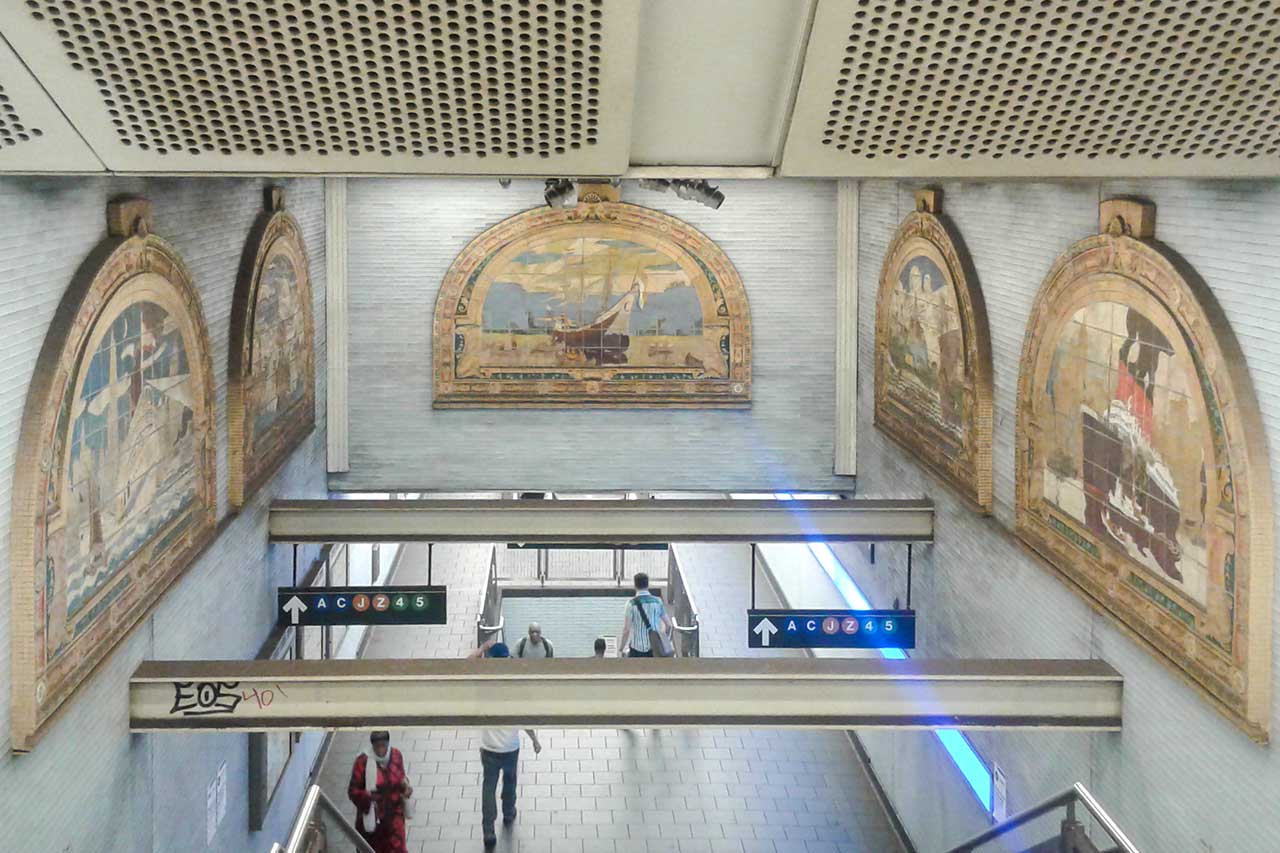
The New York subway hides much more: mosaics at 2nd Avenue station, bronze figurines by Tom Otterness at 14th Street, ceramic dinosaurs at 81st Street near the Museum of Natural History. It’s a topic for a separate article I plan to write soon.
Practical tip: the conductor’s car
In every subway train, there is a car where the conductor is located (conductor car), usually near the center of the train. You’ll recognize it because the conductor leans out the window when closing the doors. It’s the best spot for those who don’t feel safe: it’s more crowded (which paradoxically means safer), and if in doubt, you can ask the conductor for directions or confirm the travel direction. New York conductors are often taciturn, but they will answer a simple question like “Does this train stop at…?”.
The New York subway is not a tourist attraction. It’s a tool: fast, cheap, and efficient, opening the entire city for only 3 dollars. After a few rides, you’ll stop seeing it as a challenge and start taking it for granted. And that’s when New York will truly open up to you.
It’s worth checking for any changes on the official MTA website (mta.info) before traveling.
Sources and useful links
More articles about New York: