Italiano
 Polski

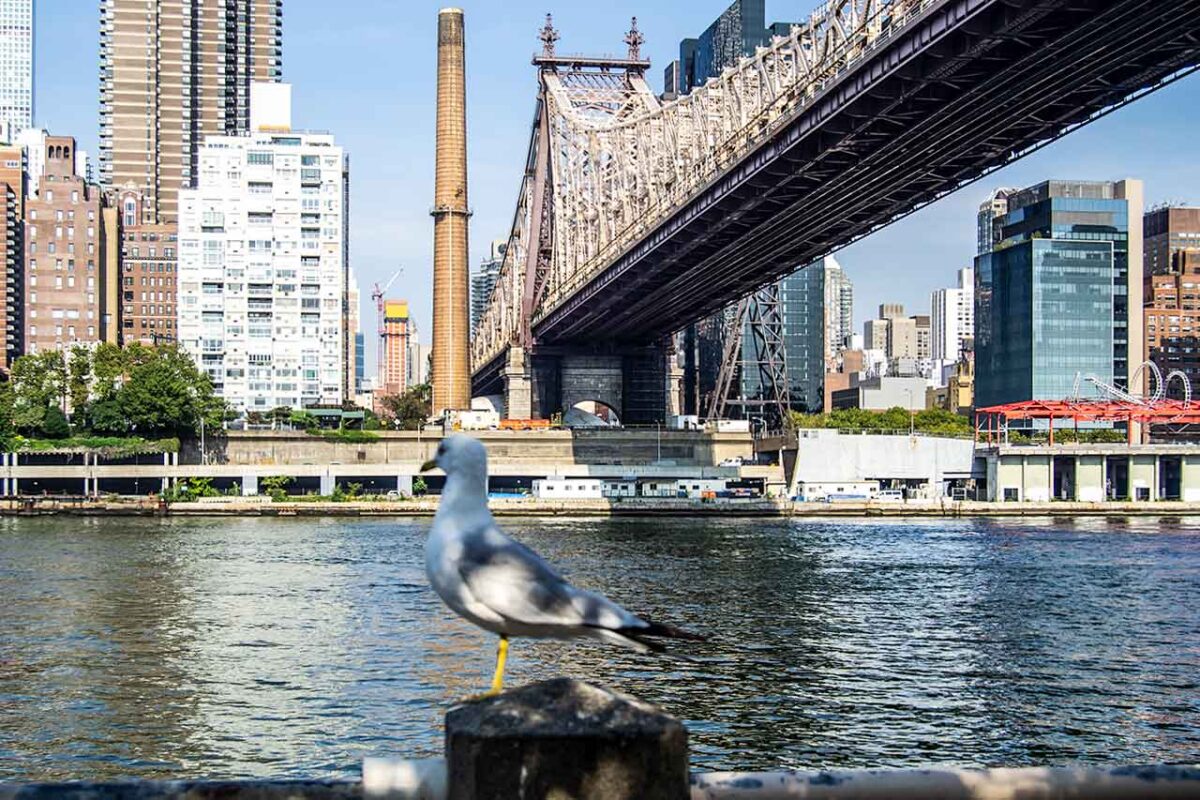
Three dollars. That’s the cost of a ride on the cable car to Roosevelt Island – the same red gondola Sylvester Stallone rides in Demolition Man. 76 meters above the East River, a view of Manhattan from every side, Queensboro Bridge within arm’s reach. You get off on the island and suddenly you’re in a different New York. A narrow strip of land in the middle of the river, quiet (relatively, for NYC), green parks by the water. And history you wouldn’t expect, hidden in the gothic ruins of a smallpox hospital, a park waiting forty years for development, and a house that has stood here since 1796.
How to get to Roosevelt Island – cable car and subway
Roosevelt Island Tramway – the only one of its kind in the USA and Canada
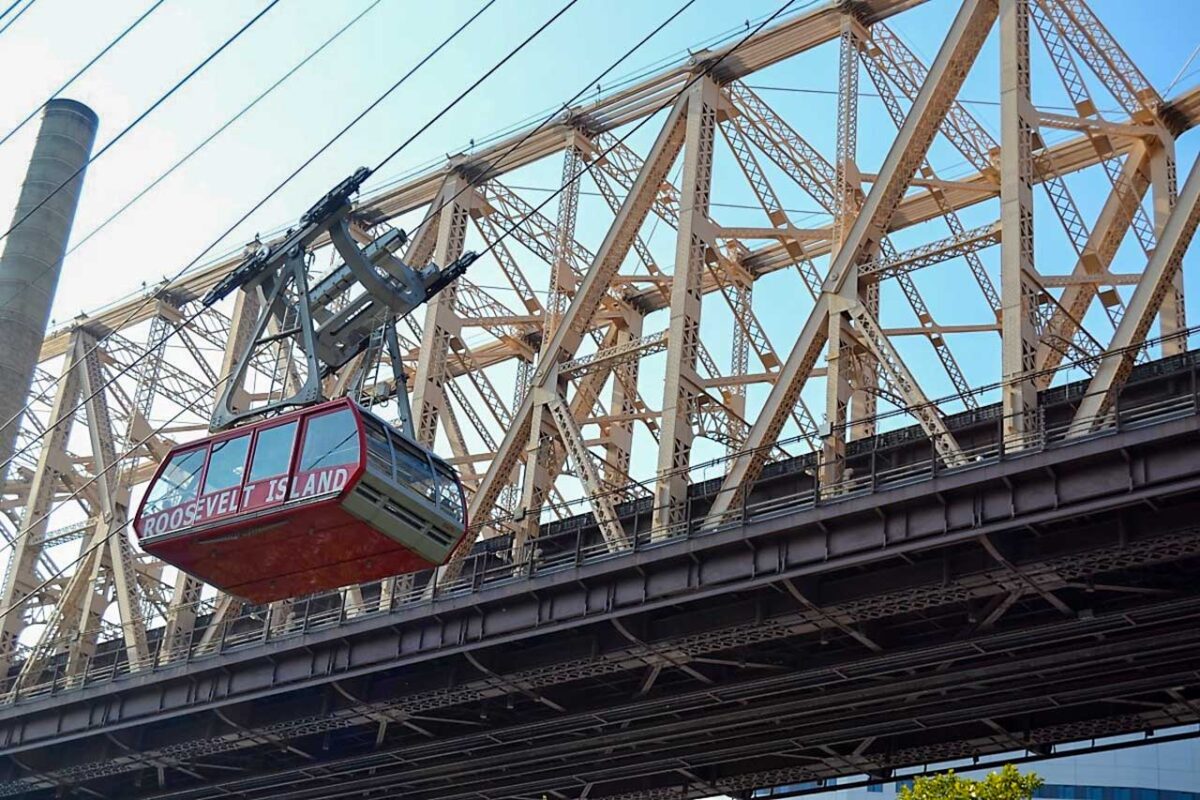
The Roosevelt Island Tramway is the only urban cable car in North America. The ride costs $3.00 and takes about 4 minutes.
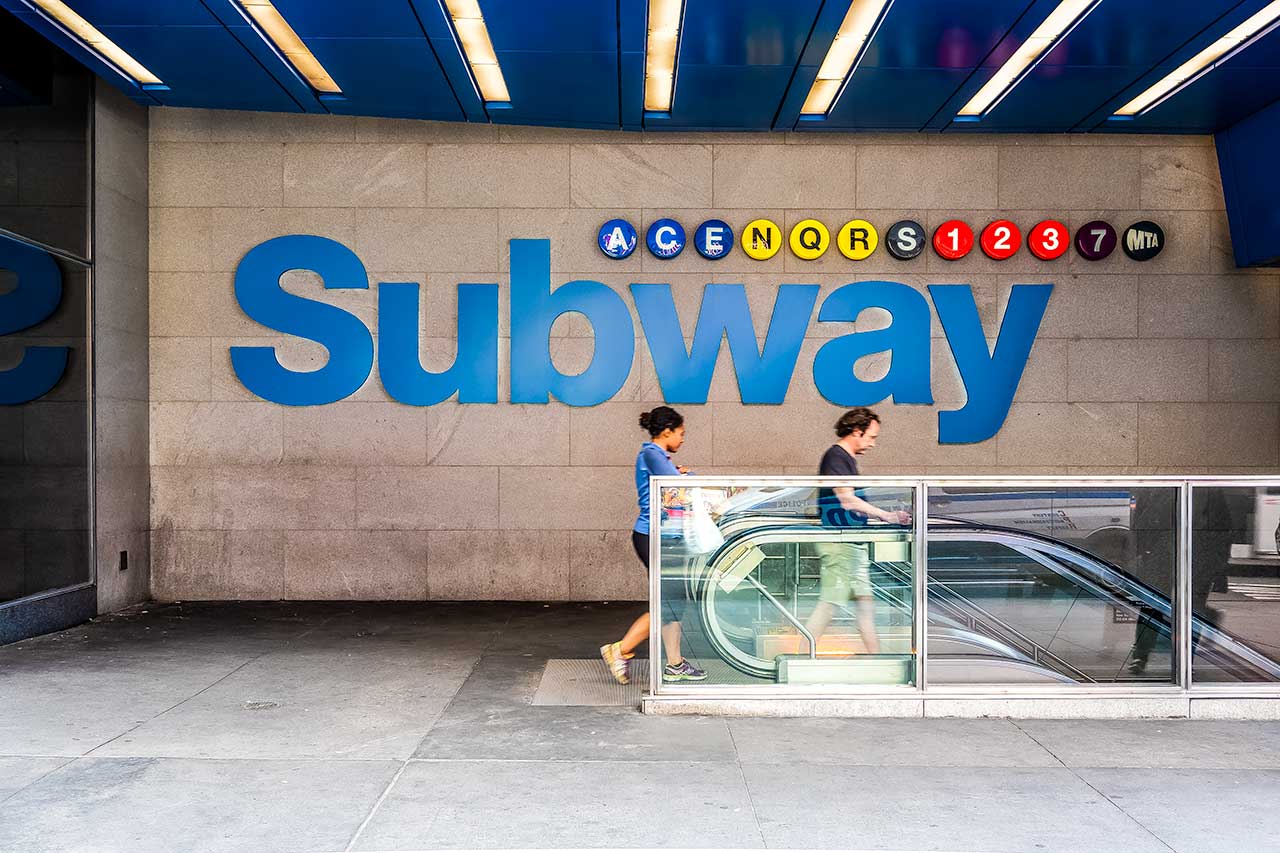
The cable car station on Manhattan is located on 2nd Avenue between 59th and 60th streets, right next to the Lexington Av/63 St subway station. It’s hard to miss because you can immediately see the red “gondola” suspended over the street.
Payment works like everywhere in New York transport: you tap your bank card, phone, or OMNY Card on the reader and that’s it. The old MetroCard still works, but the MTA is gradually phasing it out, so it’s worth getting used to OMNY now. If you have a weekly pass, the ride is included with no extra fees.
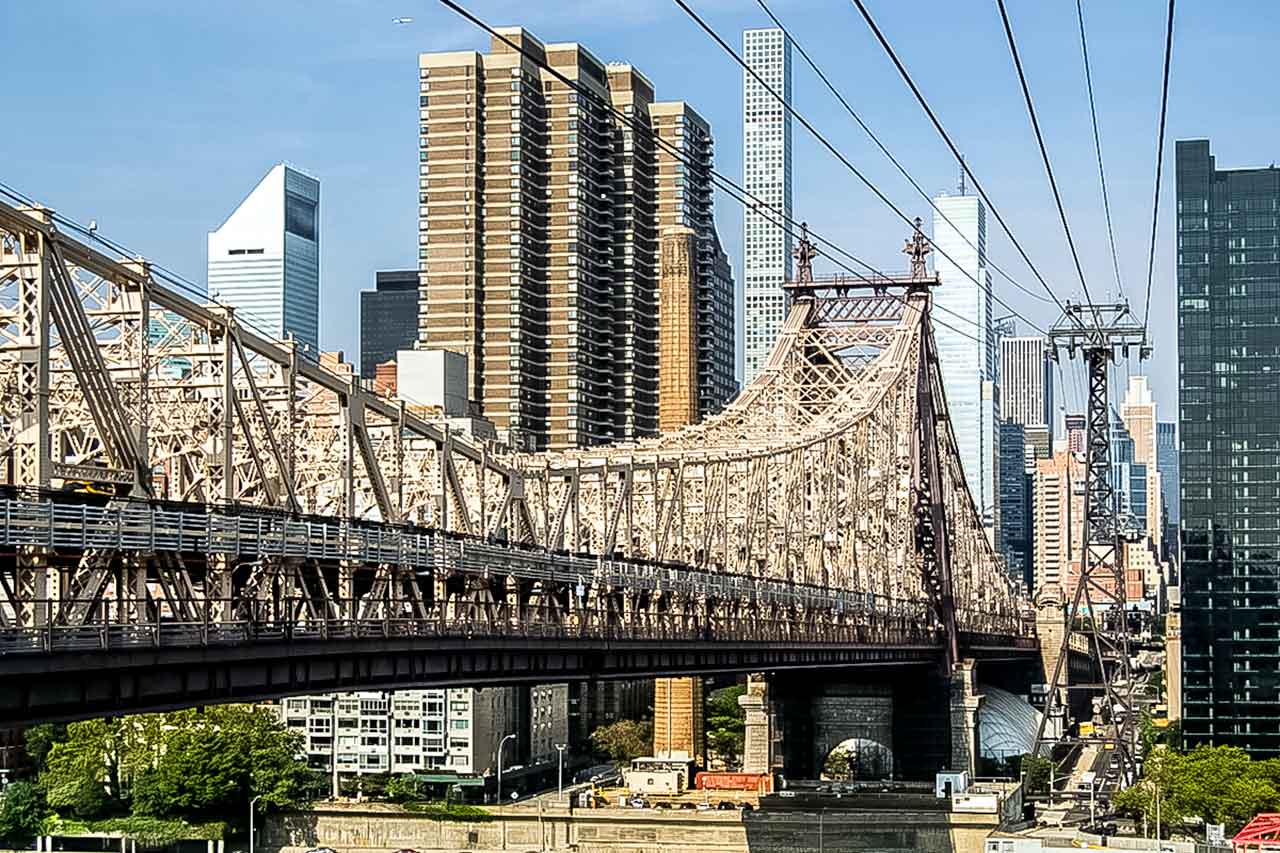
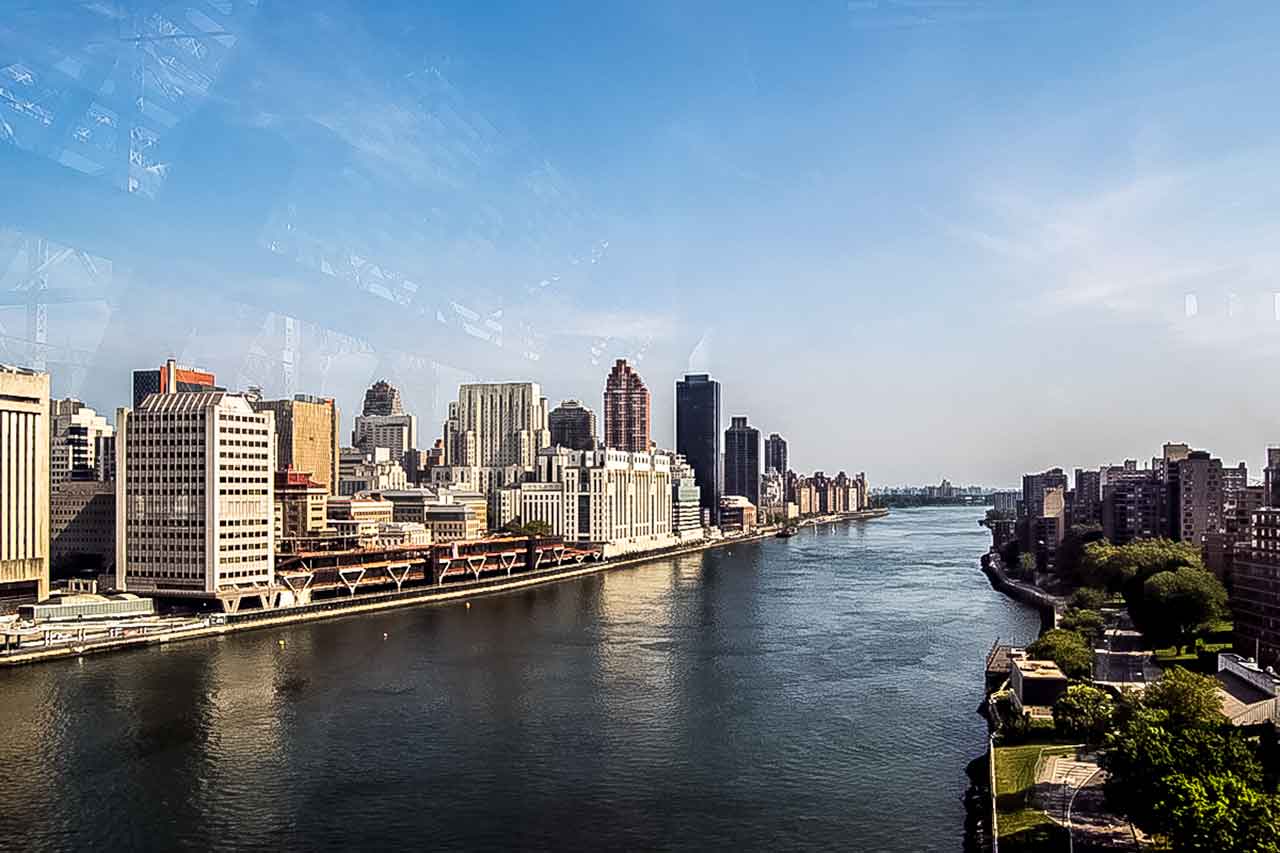
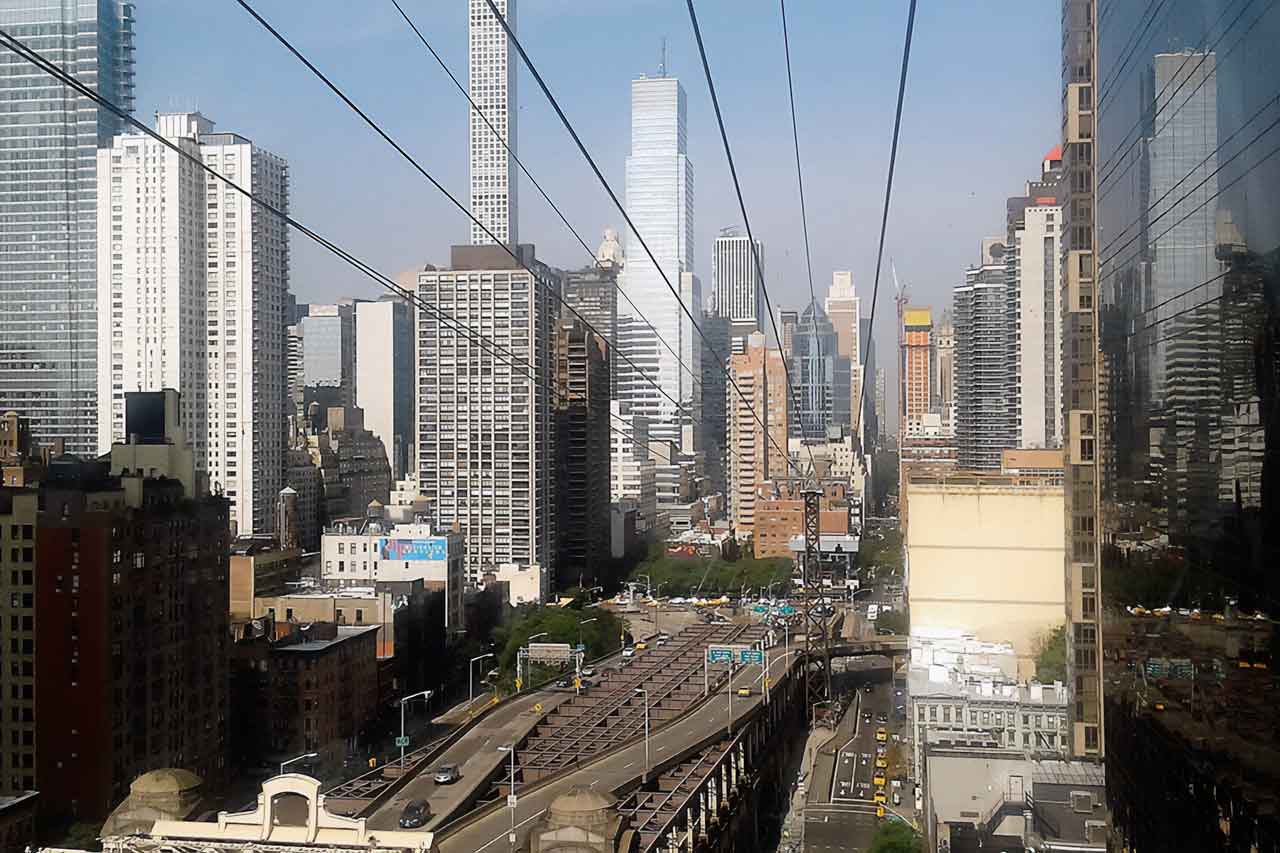
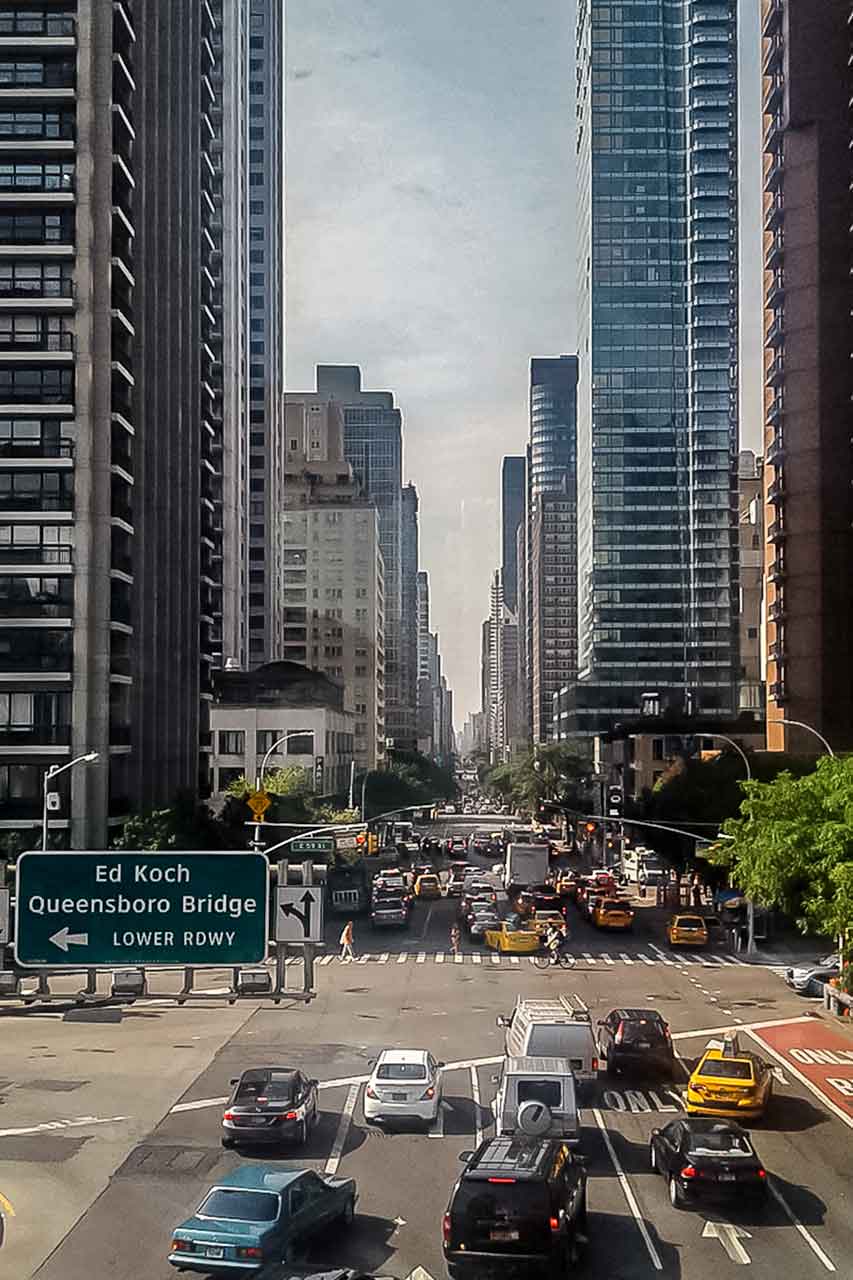
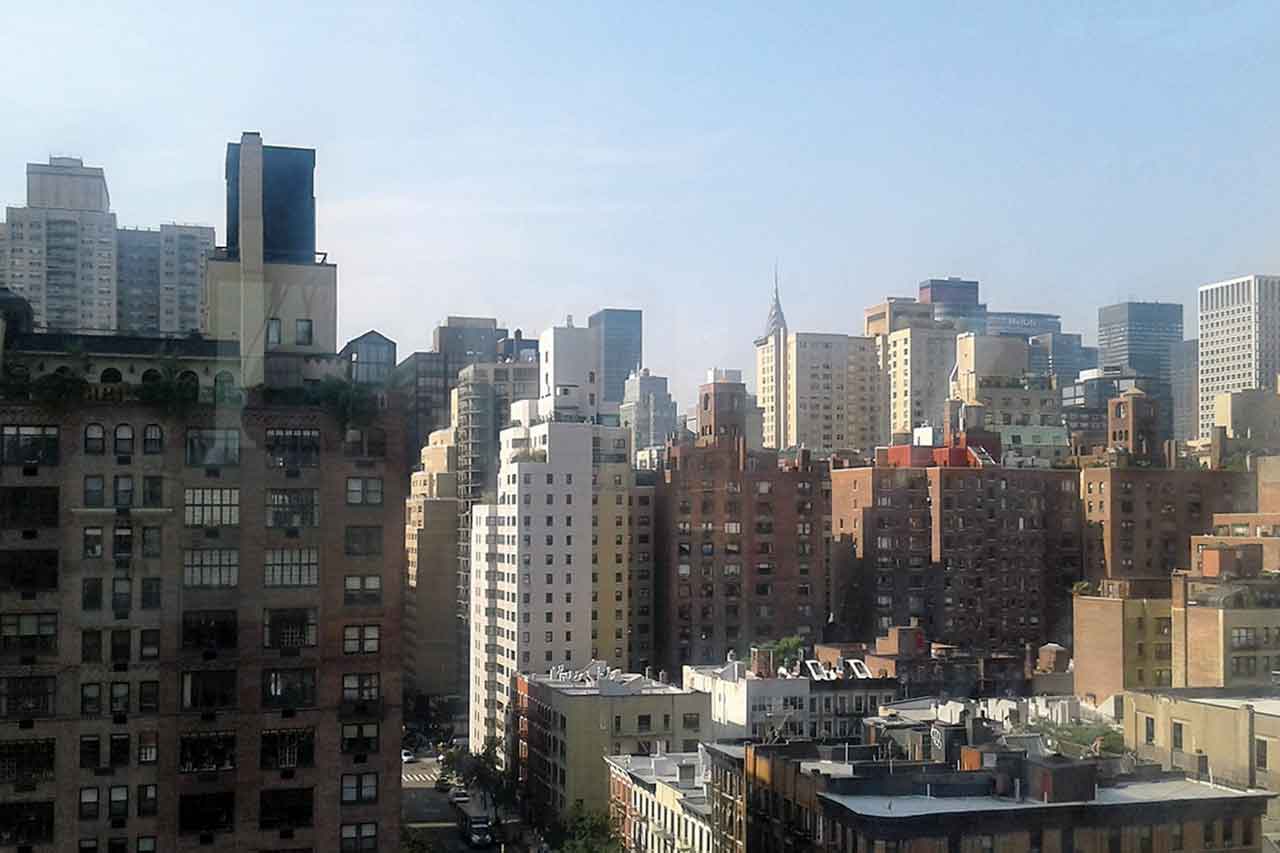
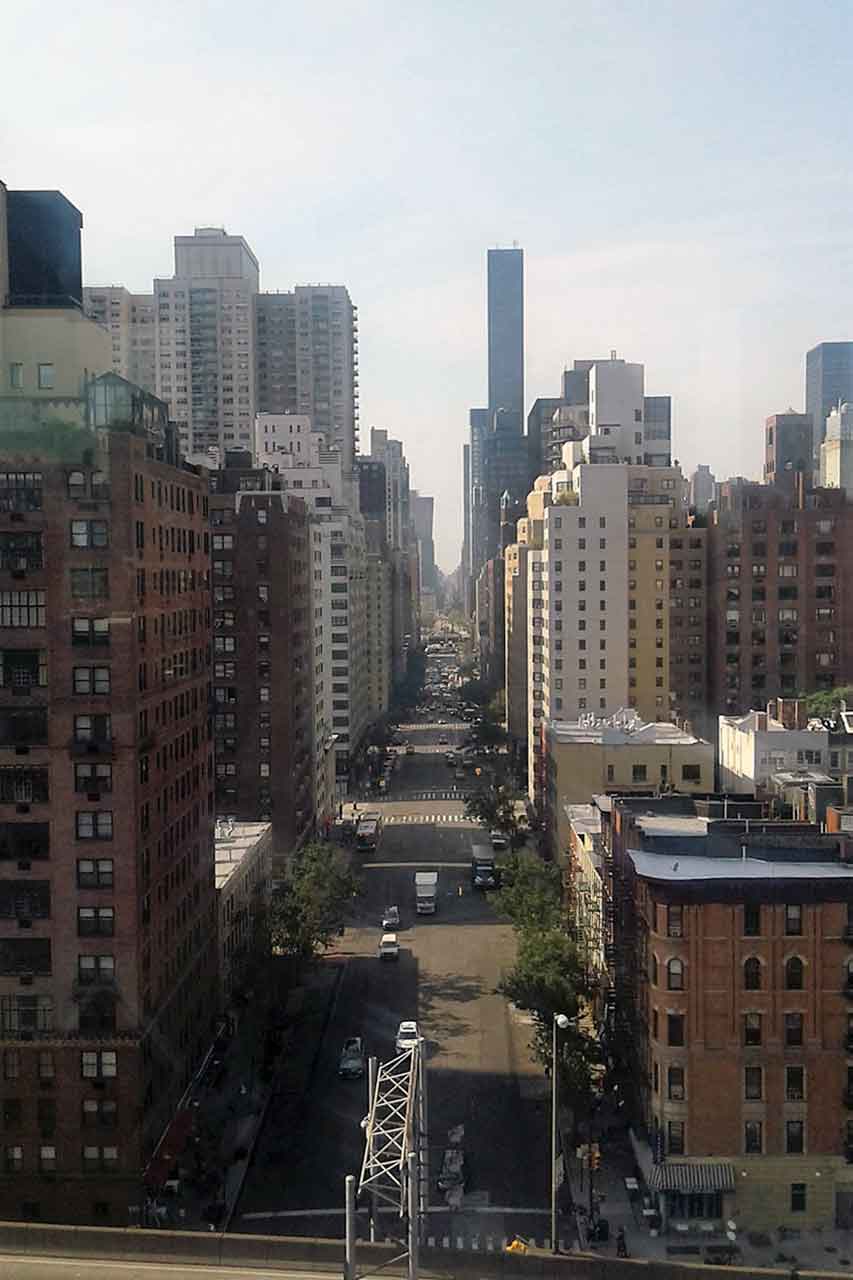
The cable car runs daily roughly from 6:00 am to 2:30 am, every 7.5-15 minutes (more frequently during rush hours). On weekend evenings with good weather, be prepared for a queue – the sunset views from the gondola are one of New York’s classics.
Practical details:
Metro F and M – a viewless alternative
You can also get there by subway: Roosevelt Island station is served by the F line and, from December 2025, the M line. This new option is especially useful if you want to get to/from downtown Manhattan and don’t care about views from above. Ticket as usual – $3.00, same card or OMNY.
What to see on Roosevelt Island – sightseeing plan
The island is only about 3 km long and approximately 240 meters wide. You can easily walk around it in 2-3 hours, unless you plan to stay longer in FDR Park.
Franklin D. Roosevelt Four Freedoms State Park
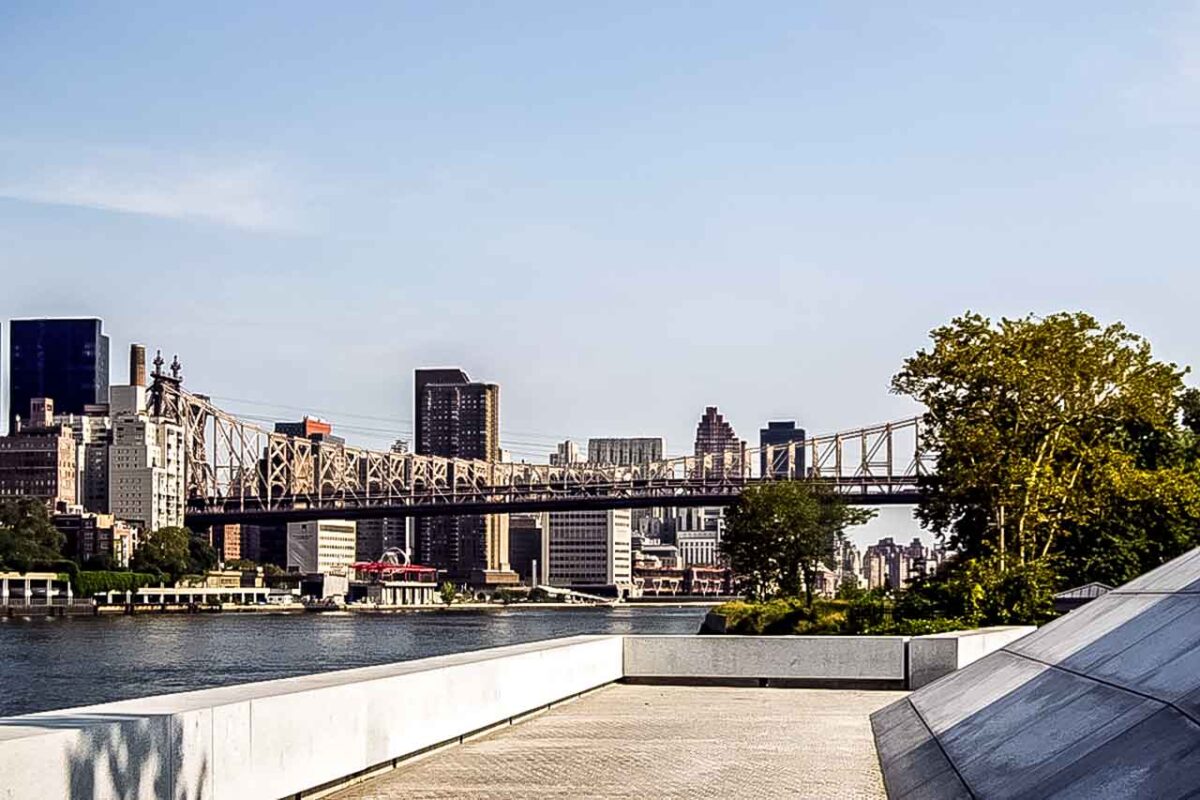
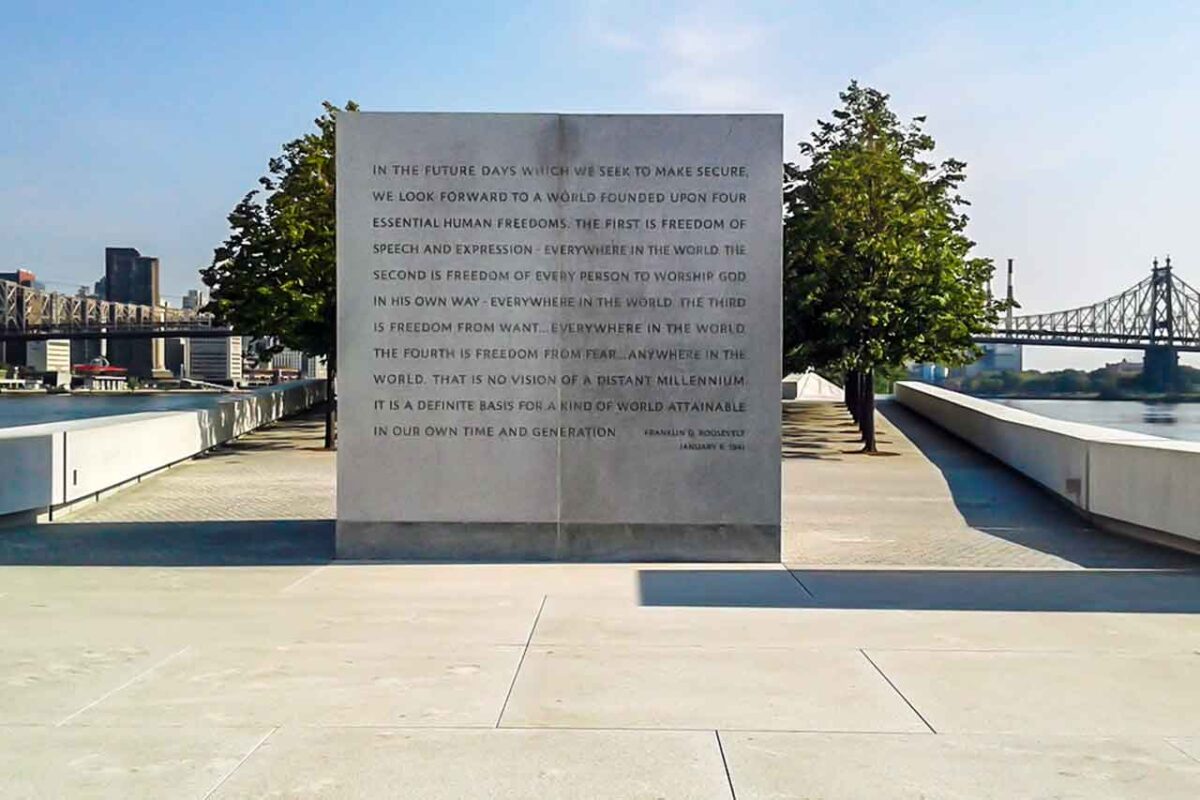
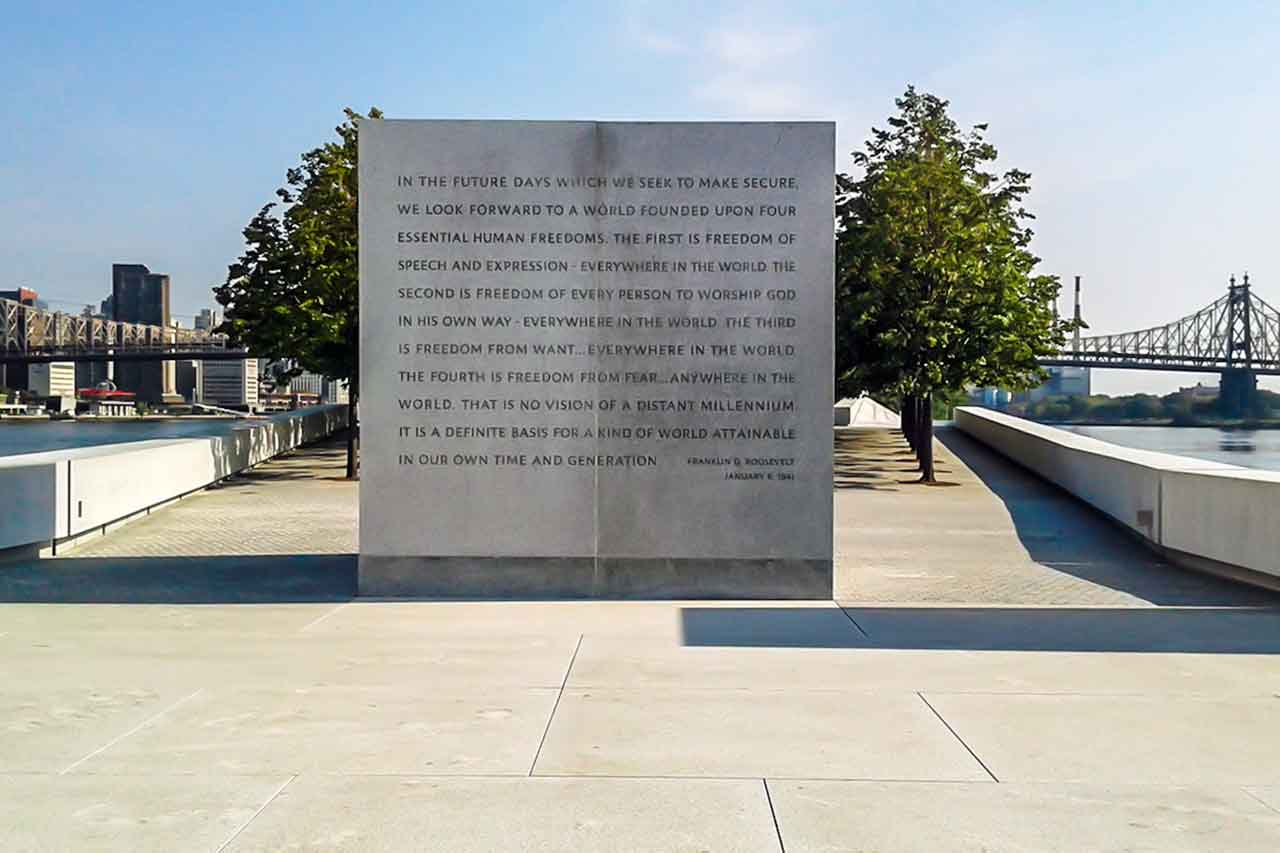
Four Freedoms Park is a free memorial to Franklin Roosevelt located at the southern tip of the island, overlooking the UN and the western Manhattan skyline.
It was designed by architect Louis Kahn in 1974, but construction only began in 2010, and the park opened in 2012. Kahn did not live to see it completed, having passed away in the 1970s. This history adds an emotional layer to the place.
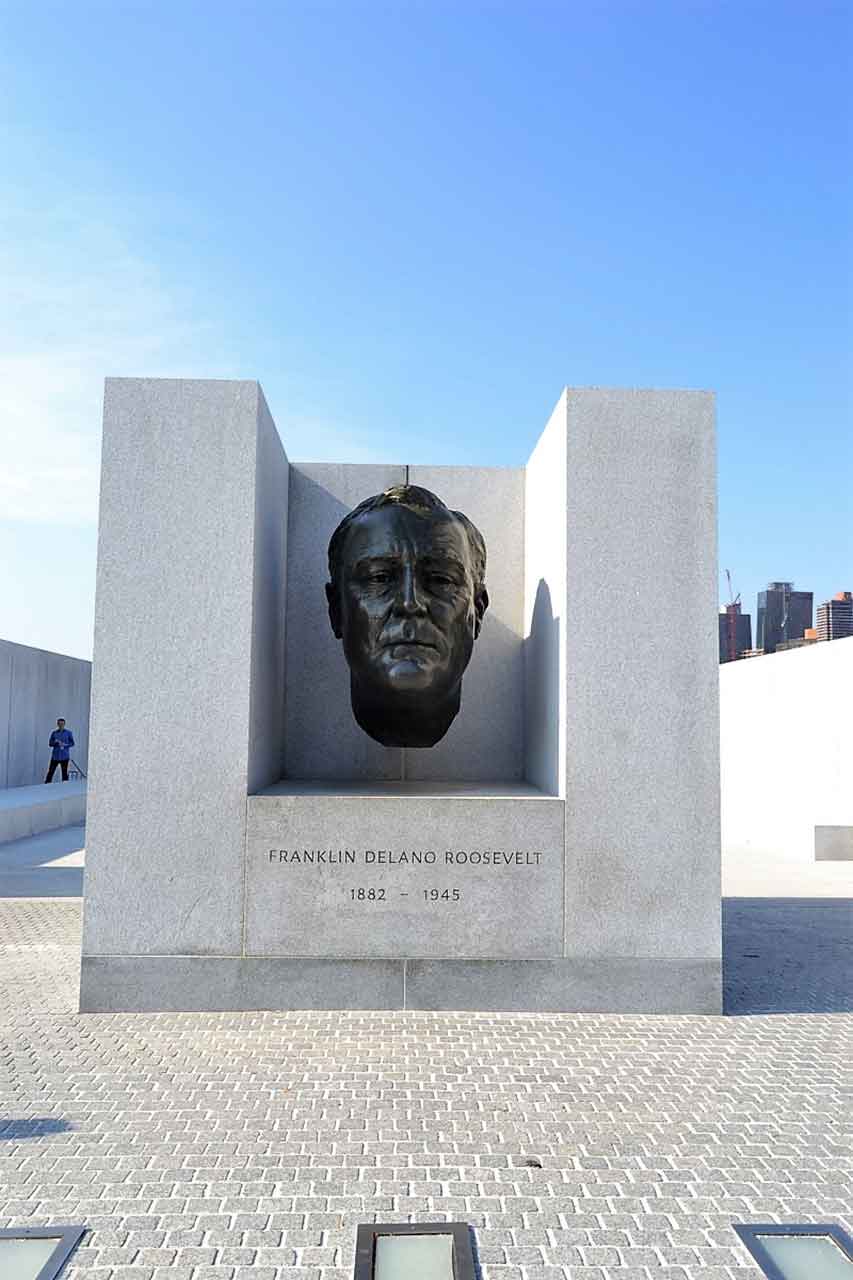
You enter through a linden avenue that gradually narrows and naturally guides your gaze toward the river. At the end is a granite plaza with a bronze bust of Roosevelt. From this spot, when you look at Manhattan, you simultaneously see the UN headquarters on the left and the Queensboro Bridge on the right. It’s worth sitting down for a moment.

Renwick Ruin – ruins of the Smallpox Hospital
Renwick Ruin is a neo-Gothic ruin of the Smallpox Hospital from 1856 – the only officially recognized ruin in New York City.
The hospital for smallpox patients, known as the Renwick Smallpox Hospital, is a historic site located at the southern tip of Roosevelt Island in New York. Designed by the renowned architect James Renwick Jr., the hospital opened in 1856, when the area was known as Blackwell’s Island.
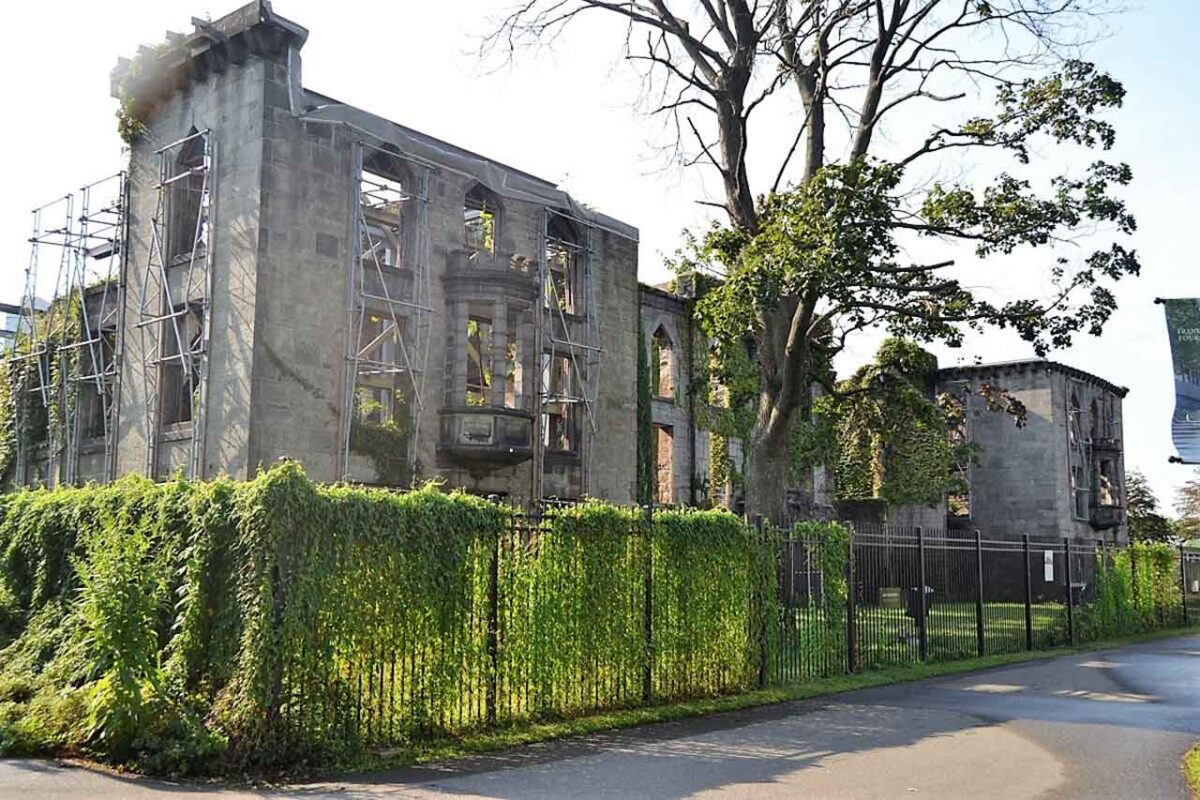
The hospital was the first facility of its kind in the United States, dedicated to the treatment of smallpox victims. The hospital building, designed in the neo-Gothic style, was originally a three-story, nine-bay structure with a granite facade. The hospital’s purpose was to isolate and treat patients infected with smallpox, and later it also served as a nursing school.
After the introduction of the smallpox vaccine in the late 19th century, the hospital was closed, and over time the building fell into ruin. Smallpox Hospital, now often referred to as the Renwick Ruin, is the only ruin in New York City with landmark status. Since 1995, the ruins have been illuminated at night to raise awareness and secure funding for stabilizing the structure. The collapse of a part of the north wing in 2007 accelerated the need to implement conservation plans.
The Blackwell Family Home (Blackwell House)
One of the most significant historic buildings on Roosevelt Island is the Blackwell House. Built in 1796 for the Blackwell family, whose name the island bore for many generations, this charming wooden house is the sixth oldest farmhouse in New York.
Blackwell House is the only building on the island that has survived from the time when it was still privately owned. It has now been restored and serves as a place where the island’s historical treasures are preserved, with its interiors functioning as an exhibition space telling the story of Roosevelt Island.
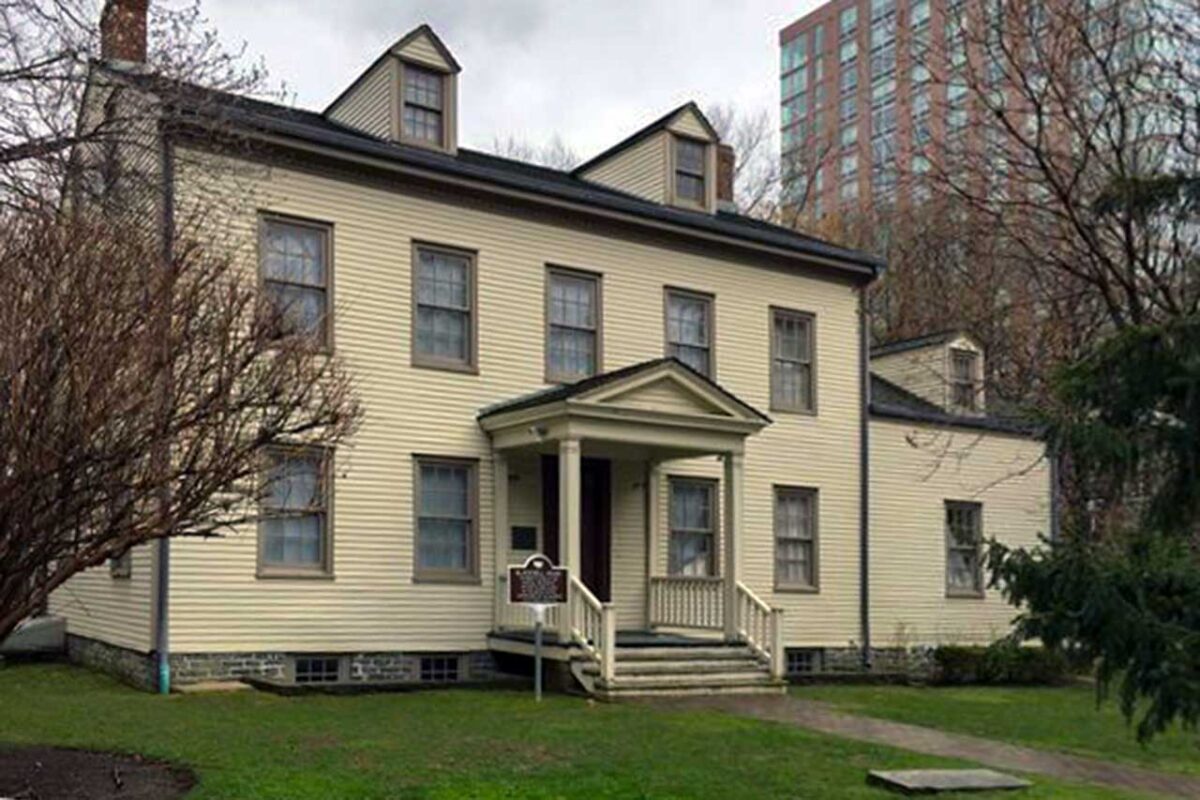
It is currently open for free visits from Wednesday to Sunday (11:00 AM – 4:00 PM), though it’s advisable to call ahead at 212-832-4540 to confirm availability.
Lighthouse Park and the Lighthouse on Roosevelt Island
At the northern tip of the island stands a 15-meter lighthouse built in 1872 by inmates of the local penitentiary. Today it is a historic monument and a charming viewpoint—a great destination if you want to walk across the entire island.
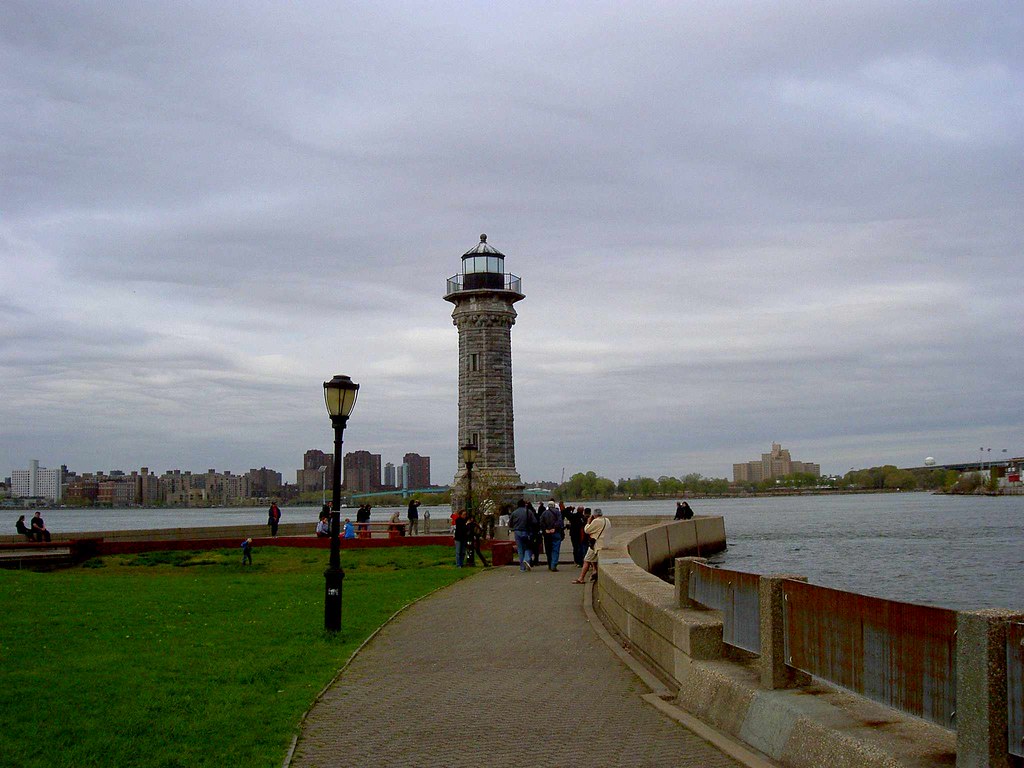
Built in the 19th century, this lighthouse symbolizes perseverance and adaptability. Originally designed to safely guide ships through the waters of the East River, over time it adapted to the changing environment and the development of New York City. Today, although it no longer serves its navigational role, it remains a key component of the island’s cultural and historical heritage, holding its place in the hearts of residents and visitors alike.
Cornell Tech Campus and its modern architecture
Visually striking (glass buildings contrasted with a historical relic) – you can walk through the area on foot, although it’s more of a point on the map than a standalone attraction.
At the opposite architectural end is the Cornell Tech campus, an example of modern architecture and innovation. This campus, part of Cornell University, opened in 2017 and is one of the most technologically and environmentally advanced campuses in the world. Designed to foster innovation and creativity, the Cornell Tech campus includes buildings such as The House at Cornell Tech, the first high-rise residential building constructed to Passive House standards, and the Tata Innovation Center, a corporate collaboration building housing innovative companies working alongside Cornell’s breakthrough academic teams.
Southpoint Park
Southpoint Park, located between the Cornell Tech campus and Franklin D. Roosevelt Four Freedoms State Park, is another green oasis on the island. This park, stretching over approximately seven acres, offers residents and tourists space for picnics, walks, and other outdoor activities. The park also features historical sites, such as the ruins of the Smallpox Hospital and Strecker Lab, adding a unique character to the area. Southpoint Park, with its expansive lawns and gardens, is an ideal place to relax with views of Manhattan and Queens.
History of Roosevelt Island
Roosevelt Island changed names and purposes over the centuries – it has hosted a farm, a prison, a psychiatric hospital, and a smallpox hospital.
The island, originally known as Minnahanonck by Native Americans, was purchased from the Canarsie tribe by a Dutch governor in 1633 and renamed Varckens Eylandt, meaning Pig Island, due to pig farming. After the British took control of the area, the island became the property of the Blackwell family, from whom it took its next name – Blackwell’s Island.
In 1828, New York City bought the island for $32,000 and started building institutions here that they did not want in the heart of Manhattan: a prison, a psychiatric hospital (Lunatic Asylum, 1839), a smallpox hospital (1856), and a refuge. The island gained a reputation as a place of isolation – it became the destination for those society did not want to see in the city center.
In the 20th century, it was renamed Welfare Island, and in 1973 to Roosevelt Island, in honor of Franklin Delano Roosevelt. In the 1970s, its slow transformation into a modern residential neighborhood began. In 1976, the aerial tramway was launched. Today, the island has about 12,000 residents, a university campus, and several parks.
How much time do you need for Roosevelt Island?
A walk across the entire island from south to north takes about 45 minutes at a leisurely pace. If you add:
That makes about 2.5-3 hours for a relaxed visit of the whole island. Most tourists arrive here by aerial tramway, visit Franklin D. Roosevelt Park, and return – that takes about 1.5 hours.
Is there anywhere to eat on Roosevelt Island?
Along Main Street, you’ll find a few cafés, a bar, and a restaurant—enough for lunch or coffee. There are no luxury restaurants or tourist dining infrastructure here. If you plan a longer stay, it’s worth bringing a sandwich and eating it in Four Freedoms Park; it’s still more pleasant than a street-side spot.
The Saturday market (Roosevelt Island Farmers Market) at the Chapel of the Good Shepherd is a good option from spring to fall, open roughly from 6:00 AM to 3:00 PM.
Roosevelt Island Tramway
While on Roosevelt Island, be sure to try the cable car Roosevelt Island Tram for the return trip to Manhattan. This is something I wholeheartedly recommend, especially if heights don’t scare you. This short but fascinating ride will offer you unique views of the river and the Manhattan skyline – views that are hard to experience from any other perspective.
Movie lovers will definitely recognize this cable car from various scenes, including Spiderman movies, where the city (and its various means of transport!) almost becomes a living character. Personally, traveling by this mode of transport reminds me most of a scene from “Night Hawk,” a film starring Sylvester Stallone. It’s true, it’s an older production, but the memory of that scene still resonates strongly.
History and role of Roosevelt Island Tramway
Roosevelt Island Tramway was opened in May 1976 and was the first cable car of its kind in the United States used for daily urban transportation. Initially, the tram was meant to be a temporary solution to provide transport for island residents while waiting for the completion of the subway connection. However, over time it became an integral part of the city’s transport system, serving millions of passengers and becoming a New York icon.
After many years of operation, in 2010 the tramway underwent a comprehensive modernization during which cabins and systems were updated to ensure even greater safety and travel comfort. Today, the Roosevelt Island Tramway is not only a witness to the history and development of Roosevelt Island but also a symbol of the city’s innovation and adaptation to the needs of its residents. The aerial tramway is an important transportation link connecting Roosevelt Island with the rest of New York and remains one of the more unique ways to admire the city from above.
Frequently Asked Questions about Roosevelt Island
How much does it cost to visit Roosevelt Island?
Entry to the island itself is free. You only pay for transportation – $3.00 for the aerial tramway or subway ride each way. Four Freedoms Park and walking around the island are both free.
Is Roosevelt Island worth visiting just for the tram ride?
Yes, the gondola ride 250 feet above the East River with views of the Queensboro Bridge and Manhattan skyline is impressive on its own. Add 30 minutes at FDR Four Freedoms Park, and you’ve got one of NYC’s best half-day outings for just $6 round-trip.
What are the operating hours for the Roosevelt Island Tramway?
Daily from about 6:00 AM to 2:30 AM, with rides every 7.5–15 minutes. Weekend evenings can see lines if the weather’s nice.
How to get to Roosevelt Island without the tram?
Take the F or M subway line (M starting December 2025) to the Roosevelt Island station. You’ll exit underground instead of from a gondola, but it’s faster and no waiting in potential lines.
Can you go inside the smallpox hospital ruins?
No, Renwick Ruin is closed to visitors for safety reasons. You can walk around the building exterior and photograph it through the fence.
How long is the tram ride?
About 4 minutes one way. Each cabin holds 110 passengers and runs roughly every 15 minutes.
Summary
Roosevelt Island, a narrow island located on the East River, is one of those places in New York worth visiting. Although it may not be as well known as other attractions in NYC, it offers unique experiences and amazing views that are hard to find elsewhere in the city.
The trip to the island on the Roosevelt Island Tramway provides unforgettable experiences with the possibility of admiring New York along with mountains. Crossing over the Ed Koch Queensboro Bridge offers passengers spectacular panoramas that stay in memory for a long time.
Roosevelt Island is not just a place with beautiful views. This island holds a rich history, from the times when it was known as Blackwell’s Island to contemporary attractions like the modern Cornell Tech campus. Thanks to its parks, such as Franklin D. Roosevelt Four Freedoms State Park and Southpoint Park, Roosevelt Island is an ideal place for a peaceful walk or picnic with a view of the vibrant city.
New York CityPASS® dostępny jest w 3 opcjach:
Nowy Jork: CityPASS® z biletami do 5 najlepszych atrakcji
Z New York CityPASS® możesz zaoszczędzić 40% kosztów na wstępie do 5 słynnych atrakcji Nowego Jorku. Obejmuje on obserwatorium na 86 piętrze oraz muzeum na 2 piętrze Empire State Building oraz Amerykańskie Muzeum Historii Naturalnej. Wybierz 3 dodatkowe atrakcje spośród tarasu widokowego Top of the Rock®, promu do Statuy Wolności i Ellis Island, Memoriału i Muzeum 9/11, rejsów wycieczkowych Circle Line, muzeum Intrepid Sea Air and Space Museum lub Muzeum Guggenheima. Wszystkie oferty są zależne od dostępności.
Links: